
Updated on 09-Apr-2026
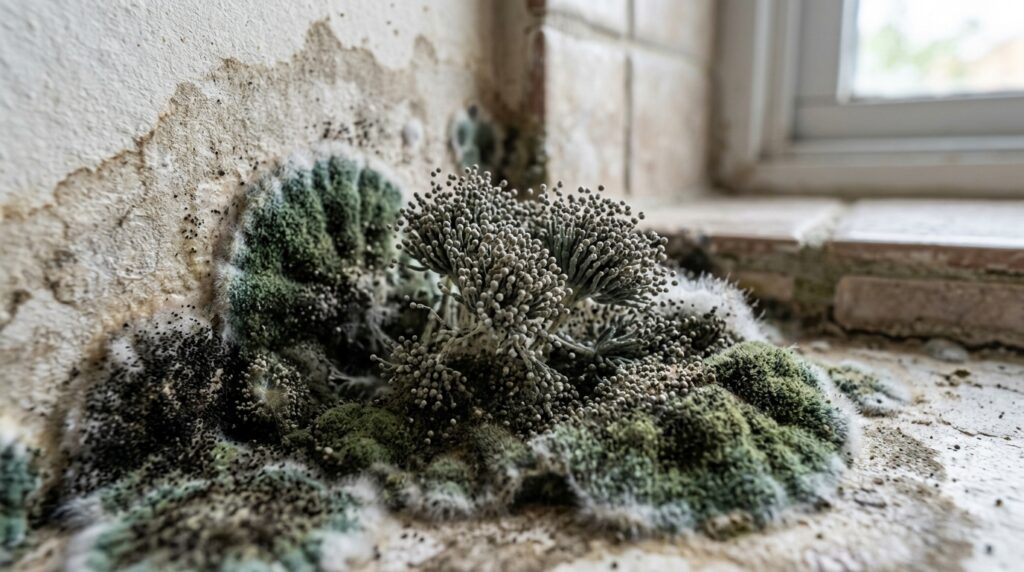
Mold can feel like it appears overnight, but in reality, it’s been growing quietly behind walls, under floors, or inside your HVAC system.
Understanding why mold spore levels suddenly spike in homes is essential to protecting both your health and your property.
A sudden spike in indoor mold spore levels can feel alarming especially if your home previously tested “normal.” But mold doesn’t appear randomly.
These sudden spikes often catch homeowners off guard.
The truth? Mold thrives in hidden conditions that build up over time.
These spikes are almost always tied to specific environmental changes, hidden moisture sources, or airflow issues that create ideal growth conditions.
In this guide, we’ll break down the real causes behind these spikes, supported by data and practical insights from Toronto mold removal specialists at Ultimate Mold Crew, so you can take action before things get worse.
Table of Contents
Understanding Sudden Mold Spikes
A sudden increase in mold spore levels inside a home is not random—it is a direct result of environmental changes that enable mold colonies to grow, reproduce, and disperse spores.
From a semantic SEO perspective, the core entities here are:
- Mold spores
- Indoor air quality (IAQ)
- Moisture / humidity
- HVAC systems
- Water damage
These entities are tightly connected through one dominant factor: moisture imbalance.
When indoor conditions shift—even slightly—mold can transition from dormant presence to active contamination, causing measurable spikes in air testing results.
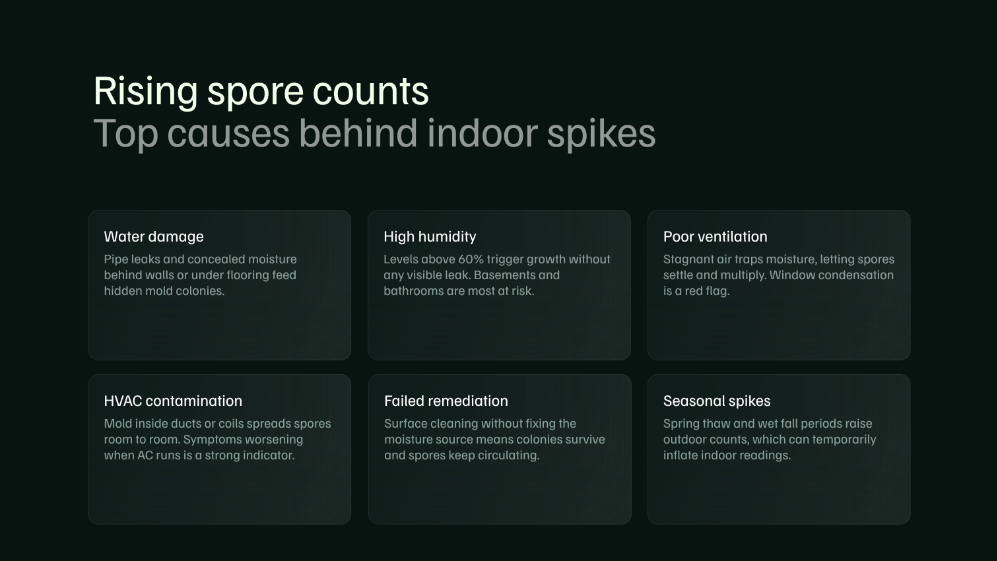
Primary Cause: Water Damage and Moisture Intrusion
Why Water Damage Leads to Spore Spikes
Water damage is the most critical trigger for sudden mold growth.
Even minor leaks—such as:
- Pipe leaks behind walls
- Roof seepage
- Appliance leaks
- Foundation cracks
can create hidden moisture reservoirs where mold colonies thrive.
Once established, these colonies release spores continuously into the air, increasing indoor counts rapidly.
Key Insight
Mold does not require visible water. It only needs:
- Organic material (drywall, wood, dust)
- Oxygen
- Sustained moisture
This makes hidden water damage one of the most dangerous and underestimated causes.
High Humidity (Above 60%) as a Standalone Trigger
When Humidity Alone Causes Mold Growth
Indoor humidity levels above 60% can independently support mold growth—even without leaks.
High-risk areas include:
- Basements
- Bathrooms
- Crawl spaces
- Laundry rooms
In these environments, airborne moisture condenses on surfaces, creating micro-wet zones ideal for mold colonization.
Supporting Entity Relationships
- Relative humidity → Condensation → Surface dampness → Mold growth
Practical Threshold
- Optimal indoor humidity: 30%–50%
- Risk zone: >60%
Poor Ventilation and Air Stagnation
How Airflow Impacts Mold Behavior
Poor ventilation allows:
- Moisture to accumulate
- Spores to settle and colonize
- Airborne contaminants to concentrate
Without adequate air exchange, even small moisture sources become amplified risks.
Warning Signs
- Stuffy or stagnant air
- Window condensation
- Persistent odors
- Uneven airflow between rooms
Semantic Connection
- Ventilation ↔ Air exchange ↔ Moisture control ↔ Mold prevention
HVAC Systems as a Distribution Mechanism
When HVAC Systems Spread Mold
HVAC systems can act as spore distribution networks when contaminated.
Common contamination points:
- Air ducts
- Evaporator coils
- Drain pans
- Filters
Once mold develops inside the system, spores are circulated throughout the home.
Key Indicator
If symptoms worsen when:
- Air conditioning runs
- Heating systems activate
this strongly suggests HVAC-related mold contamination.
Hidden Leaks and Concealed Mold Growth
Why Hidden Moisture Is Hard to Detect
Not all mold problems are visible.
Moisture can accumulate in:
- Wall cavities
- Under flooring
- Around plumbing lines
- Behind cabinets
These concealed environments provide ideal conditions:
- Darkness
- Stable humidity
- Minimal disturbance
Result
By the time mold spores spike, the colony may already be extensive.
Incomplete Mold Remediation
Why Mold Returns After Cleaning
Many mold issues persist due to surface-level remediation.
Common mistakes:
- Cleaning visible mold without fixing moisture
- Using sprays without removing contaminated materials
- Ignoring hidden sources
Outcome
Mold colonies survive and continue releasing spores, causing recurring spikes.
Seasonal Outdoor Mold Spikes
External Influence on Indoor Air
Outdoor mold spore levels fluctuate seasonally, especially during:
- Spring thaw
- Wet fall conditions
These spores enter homes via:
- Open windows
- Doors
- HVAC intake
Interpretation Tip
If indoor levels are lower than outdoor levels, the home is likely not the source.
How Widespread Are Mold Problems?
Key Statistics
- 45+ million U.S. buildings have unhealthy mold levels
- 47% of homes show evidence of dampness or mold (NIOSH, 2022)
- 85% of office buildings have experienced water damage (EPA BASE study)
- 40% of asthma episodes are linked to mold and allergens
- People in damp homes are 40% more likely to develop asthma
-
93% of chronic sinus infections attributed to mold - 4.6 million asthma cases from mold/dampness
- UNICEF: Clear the Air for Children report
Download this PDF about Mold spore levels, key stats and insights
Cost of Mold Remediation
- Average: $500 – $6,000
- Severe cases: $10,000+
Calculate the cost of mold removal in toronto using our free calculator tool here.
How to Interpret Your Mold Test Results
Scenario 1: Indoor Levels Lower Than Outdoor
- Indicates normal conditions
- No internal amplification
- Monitor seasonally
Scenario 2: Indoor Levels Higher Than Outdoor
- Suggests internal mold source
- Requires investigation
Scenario 3: Specific Species Dominant Indoors
- Strong indicator of localized growth
- Often tied to hidden moisture or HVAC contamination
What to Do If Mold Spore Levels Spike
Step-by-Step Action Plan
- Identify moisture sources
- Inspect plumbing, roofing, and foundations
- Measure indoor humidity
- Keep levels between 30–50%
- Improve ventilation
- Use exhaust fans and increase airflow
- Inspect HVAC systems
- Check ducts, coils, and filters
- Avoid superficial cleaning
- Address root causes, not just visible mold
- Consider professional inspection
- Especially for hidden or persistent issues
Conclusion: Mold Spikes Are Signals, Not Random Events
A sudden spike in mold spores is a diagnostic signal, not an isolated issue.
It indicates:
- Moisture imbalance
- Airflow problems
- Hidden contamination
- Or external environmental influence
Long-term control depends on resolving the root cause, not just reducing spore counts.
FAQs
Why did my mold levels suddenly increase?
Sudden increases are typically caused by moisture issues such as leaks, high humidity, poor ventilation, or HVAC contamination.
Can mold grow without a water leak?
Yes. Mold can grow when humidity exceeds 60%, even without visible water damage.
Is it normal for indoor mold levels to fluctuate?
Yes. Seasonal outdoor changes can temporarily affect indoor spore levels.
When should I be concerned about mold levels?
You should investigate if indoor levels are higher than outdoor levels or if specific mold species dominate indoors.
URL: https://pmc.ncbi.nlm.nih.gov/articles/PMC10190119/
https://iaqscience.lbl.gov/prevalence-building-dampness
