

Updated on 01-Apr-2026
Table of Contents
What Are Mold Spores?
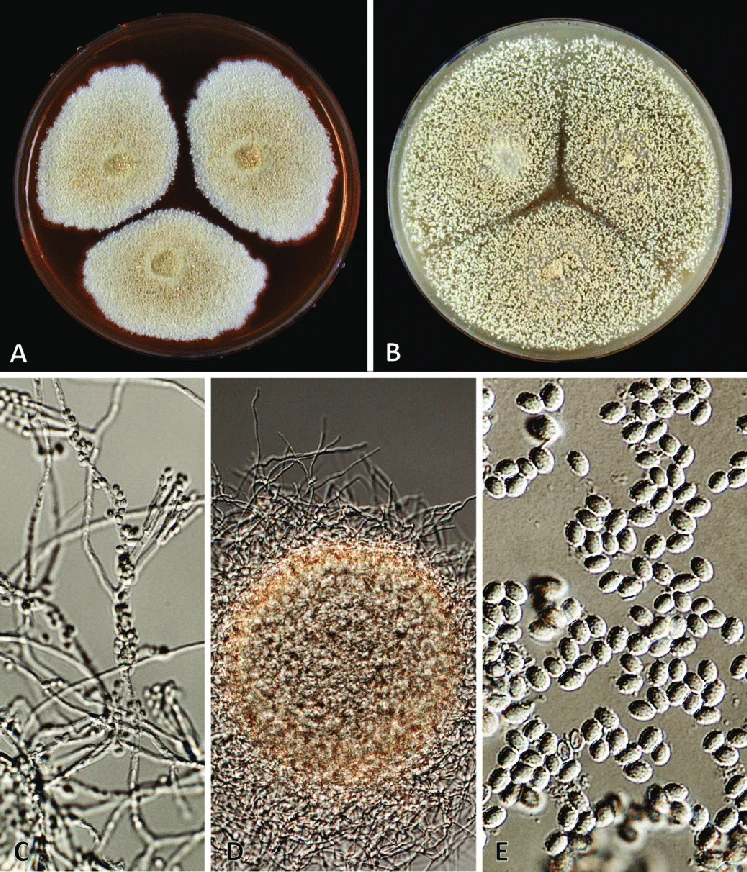
Mold spores are microscopic reproductive cells released by mold fungi. Mold spores travel through air and grow on surfaces with moisture, oxygen, and organic material. Indoor mold spores can trigger allergies and respiratory issues when concentrations exceed normal outdoor levels of 200–500 spores per cubic meter.
What Are Mold Spore Levels?
Have you just received a mold test report and felt confused by all those numbers… maybe even a bit worried?
You’re not alone. Most homeowners I speak to think any mold = danger, but that’s not how it works.
Let me simplify this for you.
Mold spores are microscopic particles released by fungi into the air. You breathe them every day. I do too.
Every home in Toronto, every condo, every office has mold spores floating around. That’s normal.
Here’s the truth most companies won’t explain clearly:
Mold spores → exist everywhere → but imbalance creates a problem
So the real question is not “Is mold present?”
The real question is “Are mold spore levels abnormal?”
In Plain English
Think of mold spores like dust.
- A small amount → normal
- Too much in one place → problem
- A specific type dominating → warning sign
Now let’s define it clearly using a simple relationship:
- Mold spores → measured as → spores per cubic meter (spores/m³)
- Air sample → reveals → quantity + type of mold spores
This is exactly how professionals test indoor air quality.
Why Mold Spore Levels Matter (Not Just Mold Itself)
Here’s where most people misunderstand things.
You can have:
- Visible mold → but low airborne spores
- No visible mold → but high airborne spores
That’s why testing focuses on airborne concentration, not just what you see.
Mold growth → releases → spores into air → affects indoor air quality
And when those levels rise, that’s when problems begin:
- Allergies
- Respiratory irritation
- Musty smell
- Hidden contamination behind walls
A Quick Reality Check (Most Important Insight)
Let me say this clearly:
👉 Seeing mold is not the main issue
👉 Breathing in elevated mold spores is
Did You Know?
- Outdoor air often contains more mold spores than indoor air
- A “clean” home still has mold spores
- Problems start when indoor levels exceed natural outdoor balance
What Is a Normal Mold Spore Level Indoors?
Now let’s answer the question you actually care about:
“Are my mold levels normal… or should I be concerned?”
Standard Mold Spore Level Ranges
| Spore Count (spores/m³) | What It Means for You |
|---|---|
| 0 – 200 | Very clean air, minimal spores |
| 200 – 500 | Normal indoor environment |
| 500 – 1,000 | Slightly elevated, monitor |
| 1,000 – 3,000 | Warning zone, possible mold source |
| 3,000+ | High likelihood of active mold growth |
Indoor air → should be → equal to or lower than outdoor air
This is the golden rule.
Real Example
Let’s say your report shows:
- Outdoor: 1,200 spores/m³
- Indoor: 400 spores/m³
👉 This is completely normal.
Now look at this:
- Outdoor: 800 spores/m³
- Indoor: 2,200 spores/m³
👉 This indicates a probable indoor mold problem
Because mold is part of the natural ecosystem.
Outdoor environment → acts as → baseline reference
Indoor environment → should reflect → controlled version of outdoor air
When that balance breaks, it signals:
- Hidden moisture
- HVAC contamination
- Wall cavity growth
- Basement humidity issues
From my experience, the biggest mistake homeowners make is focusing only on total counts.
But what really matters is:
- Relative difference (indoor vs outdoor)
- Type of mold present
- Dominance of a single species
Before You Jump to Conclusions…
Even “elevated” numbers don’t always mean danger.
Sometimes it’s:
- Seasonal outdoor spikes
- Poor ventilation
- Temporary humidity
That’s why interpretation matters more than raw data.
Now here’s what you’re probably still wondering:
“Okay… But when do Mold Spore Levels actually become dangerous?”
So now you’re looking at your report thinking…
“At what point do these numbers actually become harmful?”
This is where most people get misled.
There is no single “danger number” that applies to every situation. What matters is mold exposure + type + duration.
Let’s break it down clearly.
What Actually Makes Mold Dangerous
Instead of focusing on just numbers, understand this to know if mold is dangerous:
Mold spores → become harmful when → concentration + exposure time + sensitivity increase
That means:
- Low levels over long exposure → can still cause symptoms
- High levels short term → can trigger immediate reactions
- Certain mold types → are more aggressive than others
Danger Thresholds (Practical Interpretation You Can Use)
Here’s how professionals actually interpret mold risk in real-world situations:
| Spore Level | Risk Level | What It Means for You |
|---|---|---|
| Under 500 | Low | Safe for most people |
| 500 – 1,500 | Mild concern | Sensitive individuals may react |
| 1,500 – 3,000 | Moderate risk | Possible hidden mold source |
| 3,000 – 10,000 | High risk | Strong indicator of indoor contamination |
| 10,000+ | Severe | Immediate action recommended |
Here’s what matters more than the count:
1. Type of Mold Present
Some molds are relatively harmless. Others are not.
For example:
- Cladosporium → usually low risk
- Penicillium → indicates moisture issues
- Aspergillus → can trigger respiratory issues
- Stachybotrys chartarum → associated with serious health concerns
So even a lower count of the wrong mold can be more concerning than a high count of a common one.
2. Dominance Pattern (Huge Red Flag Most People Miss)
If your report shows:
- One mold type dominating heavily indoors
- But not present outdoors
That’s a strong sign of active indoor growth
- Mold species → dominating indoors → indicates → source inside the property
3. Your Personal Sensitivity
Not everyone reacts the same.
Higher risk groups include:
- Children
- Elderly individuals
- People with asthma
- Anyone with weakened immunity
For these groups, even moderate levels can feel severe
What Dangerous Mold Exposure Actually Feels Like
This is where real-world experience matters.
When levels are too high, people usually notice:
- Persistent coughing or throat irritation
- Headaches that don’t go away
- Musty or damp smell in specific areas
- Worsening allergies indoors
- Fatigue without clear reason
Elevated mold spores → affect → respiratory system + indoor comfort
Hidden Danger Zones Inside Homes
Here’s where high mold spore levels usually come from:
- Basements with poor ventilation
- Bathrooms without exhaust fans
- Behind drywall after leaks
- HVAC systems spreading spores
- Attics with trapped moisture
Moisture → drives → mold growth → increases airborne spores
Most homeowners think:
“If I don’t see mold, I’m fine.”
That’s not true.
Some of the worst cases involve:
- No visible mold
- But extremely high airborne spore counts
This is why mold testing becomes critical when symptoms or smells exist.
How to Read a Mold Test Report (Step-by-Step)
Step 1: Check the Outdoor Sample First
This is your baseline. Always start here.
Outdoor air tells you what’s “normal” for that day.
If your report says:
- Outdoor: 900 spores/m³
That becomes your reference point.
👉 Everything indoors gets compared to this.
Step 2: Compare Indoor Counts Room by Room
Now look at each indoor sample.
Ask one simple question:
👉 Is indoor higher than outdoor?
- Lower than outdoor → usually fine
- Similar to outdoor → acceptable
- Higher than outdoor → potential issue
Indoor air → should stay → balanced with outdoor environment
Step 3: Look for Dominant Species (This Is Critical)
This is where most people mess up.
Don’t just look at totals. Look at what type of mold is showing up repeatedly.
If one species dominates indoors but is low outdoors:
👉 That’s a strong sign of indoor growth.
Example:
- Outdoor: mixed spores
- Indoor: mostly Aspergillus
👉 That imbalance matters more than the total number.
Step 4: Identify Abnormal Spikes
Compare rooms side by side.
- Living room: 400
- Bedroom: 600
- Basement: 3,200
👉 That spike in the basement is not random.
Localized spike → points to → localized mold source
Step 5: Connect Results to Moisture
Mold does not grow without moisture. Ever.
So once you see abnormal levels, ask:
- Any leaks recently?
- High humidity?
- Poor airflow?c
Moisture → enables → mold growth → increases spores
Real-World Example
Let’s say your report shows:
- Outdoor: 1,100
- Main floor: 500
- Basement: 2,800 (high Penicillium)
Here’s the interpretation:
- Main floor → safe
- Basement → active mold likely
- Cause → probably moisture or past water damage
Common Misconceptions About Mold Spore Levels
Now let’s clear the myths that cause most bad decisions.
“Any Mold Is Dangerous” → False
Mold exists everywhere.
You breathe it daily.
The issue is not presence. It’s imbalance.
“Low Numbers Mean No Problem” → False
You can have:
- Low total count
- But high concentration of a problematic species
Example:
- Low count but presence of Stachybotrys chartarum
Still a concern.
“Air Tests Always Detect Mold” → False
Air quality testing is a snapshot.
It can miss:
- Hidden mold behind walls
- Intermittent spore release
- Settled spores not airborne
That’s why mold inspection matters too.
“Bleach Solves Mold” → False
This is one of the worst myths.
- Does not penetrate porous materials
- Can actually feed mold in drywall
It might clean the surface. It does not solve the problem.
Why This Section Matters
Most homeowners don’t have a mold problem.
They have a misinterpretation problem.
And that’s where bad decisions happen:
- Overpaying for unnecessary remediation
- Ignoring real issues
- Trusting wrong advice
Where This Leaves You
At this point, you now know:
- How to read your report
- What actually matters
- What to ignore
But here’s the next layer you won’t find in most articles:
What does this look like in real Toronto homes?
Reading numbers is one thing.
Seeing how this actually plays out in real properties across Toronto is where it clicks.
👉 Because most mold issues don’t look obvious at first.
Below are real-world scenarios that show how mold spore levels behave in different situations.
Case 1: Condo HVAC Contamination (Downtown Toronto)
Situation:
A client in a downtown condo complained about:
- Constant throat irritation
- Worse symptoms when AC was running
- No visible mold anywhere
Air test results:
- Outdoor: 850 spores/m³
- Indoor (living room): 900 spores/m³
- Indoor (bedroom): 1,100 spores/m³
- Dominant species: Aspergillus
What Most People Would Think
👉 “Numbers aren’t that high… probably fine.”
What Was Actually Happening
This is where experience matters.
- Indoor levels slightly higher than outdoor
- Same species repeating across rooms
- Symptoms tied to HVAC usage
HVAC system → circulating → contaminated air → spreading spores
Root cause:
- Mold growth inside fan coil unit + ducts
👉 No visible mold. But still a real problem.
Key Insight From This Case
Even “moderate” numbers can matter when pattern + source + symptoms align
Case 2: Basement Leak (Mississauga / GTA Typical Scenario)
Situation:
Homeowner noticed:
- Musty smell in basement
- Slight discoloration near baseboards
- No major visible mold
Air test results:
- Outdoor: 1,200 spores/m³
- Basement: 4,600 spores/m³
- Main floor: 700 spores/m³
- Species detected: Chaetomium + Penicillium
What This Tells You Immediately
This is not subtle.
- Basement levels way above outdoor
- Presence of water-damage indicator mold
- Clear localized spike
Water intrusion → creates → hidden mold colonies → increases airborne spores
Root Cause
- Slow foundation leak behind finished wall
- Moisture trapped for months
Outcome
- Section of drywall removed
- Full containment + remediation
- Moisture source repaired
Post-remediation test normalized completely.
Key Insight From This Case
👉 Certain mold types like Chaetomium almost always mean active or past water damage
Case 3: False Alarm (Spring Season in Toronto)
Situation:
Client panicked after receiving results:
- Outdoor: 3,800 spores/m³
- Indoor: 2,900 spores/m³
- No visible mold
- No symptoms
What They Thought
“These numbers are crazy high… something is wrong.”
What Was Actually Happening
This was tested during peak spring season.
- Outdoor spore levels naturally spike
- Indoor levels still LOWER than outdoor
Seasonal change → increases → outdoor mold spores → affects test results
Outcome
- No remediation needed
- Advised improved ventilation + monitoring
Key Insight From This Case
High numbers alone don’t mean a problem. Context always matters more than raw data.
The Real Takeaway
Across all Toronto homes, the pattern is consistent:
- Mold problems are rarely obvious
- Numbers without context mislead people
- Species + pattern + source = real diagnosis
Now you’re not just reading numbers…
You’re understanding what they actually mean in real homes.
Why Do Mold Spore Levels Suddenly Go Up in Your Home?
You checked your report. Numbers are higher than expected.
So what actually caused it?
Mold doesn’t just appear randomly. There is always a trigger.
Once you understand the cause, you stop guessing and start fixing the right problem.
Let’s break this down into the real drivers behind rising spore counts.
1. Water Damage (The #1 Root Cause)
This is the most common reason. By far.
Even a small leak can create a hidden mold problem.
- Water intrusion → creates → damp surfaces → enables mold growth
Common sources:
- Pipe leaks behind walls
- Roof leaks in attics
- Window seepage
- Flooding or past water damage
The problem is not always visible. Mold often grows inside walls before you ever see it outside.
2. High Indoor Humidity (Above 60%)
Humidity alone can trigger mold growth without any leak.
Humidity above 60% → creates → condensation → supports mold growth
Where this happens most:
- Basements
- Bathrooms without exhaust
- Laundry rooms
- Poorly ventilated condos
Even clean homes develop mold if moisture stays trapped in the air.
3. Poor Ventilation (Air Gets Trapped)
Airflow matters more than people think.
When air doesn’t move:
- Moisture builds up
- Spores settle and multiply
Poor airflow → traps → humidity + spores → increases concentration
Red flags:
- Stuffy rooms
- Condensation on windows
- Persistent musty smell
4. HVAC Contamination (Hidden Spore Distribution System)
This one surprises most homeowners.
Your HVAC system can actually spread mold across your entire home.
HVAC system → circulates → contaminated air → distributes spores
How it happens:
- Mold grows inside ducts or coils
- System runs → pushes spores room to room
Common mold found in these cases:
- Aspergillus
- Cladosporium
If symptoms get worse when AC or heat turns on, this is a strong clue.
5. Hidden Leaks (The Silent Problem)
These are the hardest to detect.
No visible damage. No obvious signs. But mold is growing behind surfaces.
Hidden leak → sustained moisture → concealed mold growth → elevated spores
Typical areas:
- Behind drywall
- Under flooring
- Around plumbing lines
- Inside bathroom ceilings
By the time you notice it, it’s usually already spread.
6. Past Mold That Was Never Fully Removed
This is more common than people think.
Someone cleaned the surface… but didn’t fix the source and mold just came back soon after removal.
Incomplete remediation → leaves behind → active mold colonies
Result:
- Spores keep circulating
- Problem keeps coming back
7. Seasonal Outdoor Spikes (Toronto-Specific Factor)
Sometimes, the issue isn’t even inside your home.
Spring season → increases → outdoor mold spores → impacts indoor air
This is especially common in Toronto during:
- Early spring thaw
- Wet fall periods
- After snow melt
Outdoor levels rise → indoor air reflects that increase
How Does Toronto’s Climate Affect Mold Spore Levels in Your Home?
If you’ve ever wondered why mold issues seem to show up “randomly,” they don’t.
In Toronto, the climate plays a direct role.
👉 Different seasons = different mold behaviour
Let’s break it down so you know what to expect.
Spring → Outdoor Spikes
This is when most people panic after testing.
Spring thaw → releases → massive outdoor mold spores
What happens:
- Snow melts
- Organic matter decomposes
- Outdoor spore counts rise sharply
👉 This is usually normal.
Key insight: If indoor levels are still lower than outdoor, your home is likely fine.
Summer → Humidity-Driven Growth (Real Problems Start Here)
This is peak mold season indoors.
High humidity → creates → moisture-rich environment → supports mold growth
Toronto summers bring:
- Humidity above 60%
- Warm temperatures
- Poor ventilation in closed homes
Common problem areas:
- Basements
- Condos with poor airflow
- Bathrooms
Fall → Damp Conditions + Lingering Moisture
Fall is overlooked, but important.
Cool + damp conditions → maintain → moisture → sustain mold growth
Leaves, rain, and reduced airflow contribute to:
- Persistent dampness
- Slow drying surfaces
Mold that started in summer often continues growing here.
Winter → Condensation Problems (Hidden Moisture)
Winter doesn’t stop mold. It changes how it forms.
Cold surfaces + warm indoor air → creates → condensation → hidden moisture
Where this happens:
- Windows
- Exterior walls
- Attics
You may not see mold, but moisture is building behind surfaces.
What You Should Actually Do
- Spring → don’t panic, compare indoor vs outdoor
- Summer → control humidity (this is critical)
- Winter → watch for condensation
Mold problems are predictable when you understand the cycle.
Need Help Interpreting Your Mold Test in Toronto?
If you’re staring at a mold report and not sure what’s real vs overhyped. That’s exactly where most homeowners get stuck. Our Toronto mold removal specialists are here to help you out.
At Ultimate Mold Crew, the focus is simple:
- No scare tactics
- No unnecessary remediation
- Just clear, honest interpretation
Here’s What You Get
- Professional mold inspection + air testing
- Clear breakdown of your report (no confusing jargon)
- Identification of real moisture sources
- Targeted remediation only if needed
👉 If your indoor air is out of balance, you’ll know exactly why and what to do next.
Book a mold inspection in Toronto today and get real answers, not guesses.
FAQs: Mold Spore Levels Explained
What is a safe mold spore level indoors?
A safe indoor level is typically:
- 200 to 500 spores/m³
But the real rule is:
- Indoor air should be equal to or lower than outdoor levels
Is 1,000 spores per cubic meter dangerous?
Not always.
- If outdoor levels are higher → usually safe
- If indoor levels exceed outdoor → potential issue
Context matters more than the number itself.
What mold level requires remediation?
You should consider action when:
- Indoor levels exceed outdoor
- Counts go above 1,000–3,000 spores/m³
- Problematic species are present
- Symptoms exist
It’s a combination of factors, not just one number.
Can mold grow without high spore counts?
Yes.
Mold can exist:
- Behind walls
- Under floors
- In early stages
Air tests may not always capture it immediately.
Should indoor air always be lower than outdoor?
Yes. This is the baseline rule.
- Indoor ≤ Outdoor = normal
- Indoor > Outdoor = investigate
References (Mold Spore Levels )
- American Conference of Governmental Industrial Hygienists (ACGIH). (2024). https://www.acgih.org
- Centers for Disease Control and Prevention. https://www.cdc.gov/mold
- Health Canada. (2023). Residential Indoor Air Quality Guidelines: Mould. https://www.canada.ca/en/health-canada/services/publications/healthy-living/residential-indoor-air-quality-guidelines-mould.html
- (2024). Mold and Moisture in Homes – indoor mold spore levels and health risks. https://www.epa.gov/mold
- A Brief Guide to Mold, Moisture, and Your Home (EPA 402-K-02-003). https://www.epa.gov/mold/brief-guide-mold-moisture-and-your-home
- World Health Organization. (2009). WHO Guidelines for Indoor Air Quality: Dampness and Mould. ISBN 978-92-890-4168-3. https://www.who.int/publications/i/item/9789289041683
- World Health Organization. (2010). WHO Guidelines for Indoor Air Quality: Selected Pollutants. https://www.who.int/publications/i/item/9789284134914
Peer-reviewed research for Mold Spore Levels
| # | Citation | Key Focus |
|---|---|---|
| 1 | Mendell, M. J., & Adams, R. I. (2025). The 1000 spores/m³ mould threshold revisited: Perspectives and reinforcement from post-2023 literature. | 2025 review in Journal of Bacteriology & Mycology reinforcing the 1,000 spores/m³ threshold as a critical indicator of indoor dampness and potential health risk, while accounting for seasonal outdoor spikes. |
| 2 | Summerbell, R., & Scott, J. (2025). Emerging Human Health Problems Caused by Pathogenic and Immuno-activating Fungi. | Comprehensive 2025 study on the health effects of Aspergillus, Penicillium, and Stachybotrys, detailing how even moderate airborne concentrations can trigger respiratory and immune responses in sensitive individuals. |
| 3 | Saghir, S. A., et al. (2026). Molds and mycotoxins indoors: Toxicological perspective and current issues. | 2026 research in Archives of Clinical Toxicology discussing the toxicological mechanisms of mycotoxins and the clinical link between indoor mold exposure and chronic respiratory diseases. |
| 4 | Cervantes, R., et al. (2025). Critical insights on fungal contamination: A comprehensive review of assessment methods. | Peer-reviewed review in Frontiers in Public Health evaluating the accuracy of air sampling versus surface testing for identifying hidden mold sources and assessing overall indoor air quality. |
| 5 | SafeAir Certified Mold Inspection (2026). Expert Guide: How Accurate Are Air Mold Tests and What Reliable Results Require. | 2026 technical guide explaining the “golden rule” of indoor vs. outdoor spore ratios and how to interpret localized spikes in specific rooms like basements or HVAC systems. |
| 6 | Baxter, D. M., et al. (2005). A regional comparison of mold spore concentrations outdoors and inside “clean” and “mold contaminated” buildings. | Landmark study in the Journal of Occupational and Environmental Hygiene establishing the baseline for “clean” building spore counts (typically 200–500 spores/m³) and the significance of species dominance. |
| 7 | Aspergillosis Trust (2025). Potential respiratory hazards of fungal exposure in the residential indoor environment: A systematic review. | 2025 systematic review detailing how indoor fungi exacerbate asthma, COPD, and hypersensitivity pneumonitis, emphasizing the risk to children and the elderly. |
| 8 | Applied Sciences (2025). Assessment of Mold-Specific Volatile Organic Compounds (mVOCs) and Hidden Microbial Contamination. | 2025 research in Applied Sciences demonstrating how mVOCs and airborne spore patterns can detect hidden mold growth behind walls or in HVAC systems even when no visible mold is present. |
