
Updated on 09-Mar-2026
Table of Contents
How To Remove Mold From Antique Old Furniture Safely
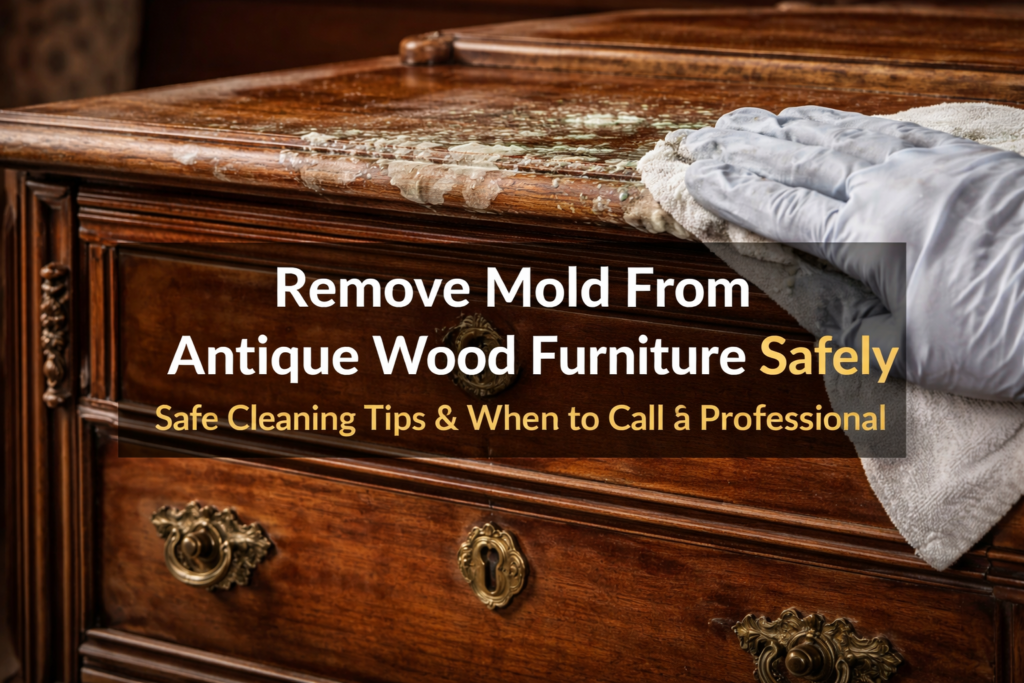
Antique wood furniture requires a very different approach to mold than modern furniture or building materials.
Older wood, historic finishes, and traditional joinery are far more sensitive to moisture, chemicals, and abrasion. When mold appears on an antique piece, the goal is not just removal. It is preservation.
This guide explains why mold forms on antique wood furniture, how to assess the risk safely, and how to determine whether careful DIY cleaning is appropriate or professional mold removal help is required.
Why Mold on Antique Wood Furniture Is Different
Antique furniture was built using materials and finishes that behave differently from modern products.
Key differences include:
- Older finishes such as shellac, oil, or wax are water-sensitive
- Natural wood fibers are often more porous due to age
- Traditional glues and joints can weaken when exposed to moisture
- Patina and surface wear contribute significantly to value
Unlike modern factory furniture, antiques were not designed to tolerate aggressive cleaners or repeated wetting. Improper mold removal can permanently strip finishes, raise wood grain, loosen joints, or reduce value beyond repair.
Common Causes of Mold on Antique Wood Furniture
Mold growth on antiques is almost always linked to storage conditions, not neglect.
The most common causes include:
- Basement storage with elevated humidity
- Poor airflow in storage rooms or against exterior walls
- Unheated or seasonal properties where temperatures fluctuate
- Flooding or minor water intrusion that was never fully dried
- Long-term storage in plastic wraps or sealed containers
Mold does not require visible water. Prolonged humidity above safe levels is enough to trigger growth.
Where Mold Commonly Appears on Antique Furniture
Mold often forms in areas that receive less airflow or are harder to inspect.
Pay close attention to:
- Drawer interiors and undersides
- The back panels of cabinets and dressers
- Undersides of table tops
- Joints, corners, and carved details
- Areas where furniture contacts walls or floors
A musty smell is often the first warning sign, even before mold is visible.
Identifying the Type of Mold Growth
Not all mold growth on antique furniture carries the same risk.
Surface Mold (Light Bloom)
- Appears as powdery white, grey, or light green residue
- Often wipes away easily when dry
- Typically linked to recent humidity exposure
Surface mold may be addressed carefully if the wood and finish are intact.
Embedded Mold (Higher Risk)
- Dark staining that penetrates wood grain
- Persistent odour even after surface cleaning
- Mold inside joints, seams, or drawer cavities
- Softened or weakened wood fibers
Embedded mold suggests prolonged moisture exposure and requires professional evaluation.
Health and Preservation Considerations
Mold on antique furniture presents two distinct risks:
- Health exposure from airborne spores, especially when disturbed
- Preservation damage if incorrect cleaning methods are used
Dry brushing, aggressive scrubbing, or wet cleaning can release spores and damage finishes at the same time. This is why assessment matters before action.
If mold covers a large area, returns quickly, or appears inside structural joints, DIY attempts often make the situation worse.
When to Pause Before Cleaning
Stop and reassess if:
- The furniture has high monetary or sentimental value
- The finish appears fragile or flaking
- Mold is inside joints or under veneers
- The piece smells strongly musty even after airing
In these cases, preservation-focused professional help is the safer option
What You Should Never Use on Antique Wood Furniture
This is the section that prevents irreversible damage.
Never use the following on antique wood furniture affected by mold:
- Bleach or chlorine-based cleaners
These strip finishes, discolor wood, and do not penetrate mold roots safely. - Excess water or soaking
Moisture swells wood fibers, loosens joints, and can cause veneer failure. - Household disinfectant sprays
Many contain alcohol or solvents that dissolve shellac and wax finishes. - Scrub brushes or abrasive pads
These remove patina and permanently reduce value. - Heat guns, hair dryers, or fans blowing directly on mold
This can spread spores and crack aged wood.
If a method feels aggressive, it probably is.
Safe DIY Mold Removal for Antique Wood (Limited Scope Only)
DIY mold removal is appropriate only for light surface mold where the finish and wood are stable.
Before You Start
-
Move the piece to a dry, well-ventilated area
-
Wear gloves and a respirator mask
-
Avoid working indoors if possible
Step 1: Dry Removal First
Use a HEPA vacuum with a soft brush attachment.
-
Gently vacuum mold while it is dry
-
Avoid pressing into the surface
-
Dispose of the vacuum contents immediately
Dry removal limits spore spread and avoids introducing moisture.
Step 2: Spot Test Any Cleaner
If further cleaning is needed, always test first in a hidden area.
A commonly used preservation-safe option is:
-
A lightly dampened cloth with diluted isopropyl alcohol (not soaking)
Gently wipe only the affected area. Stop immediately if:
-
Finish softens
-
Colour transfers
-
Surface becomes tacky
Never scrub.
Step 3: Allow Thorough Drying
Let the furniture dry naturally in a controlled environment.
-
No direct heat
-
No fans blowing on the surface
-
Maintain steady airflow in the room
Drying too quickly can cause cracking or warping.
When DIY Mold Removal Becomes Unsafe
DIY should stop immediately if:
- Mold reappears within weeks
- Odour persists after cleaning
- Mold is inside joints or drawers
- Wood feels soft or compromised
- The piece has high financial or historical value
At this stage, preservation-first professional help is recommended.
How Professionals Handle Mold on Antique Furniture
Professionals approach antiques differently than structural mold.
Typical methods include:
- Low-moisture cleaning techniques
- Controlled environments to prevent spore spread
- No blasting, sanding, or aggressive chemicals
- Focus on stabilizing wood and finishes
The goal is mold control without loss of integrity or value.
Preventing Mold From Returning
Prevention is critical after cleaning.
Environmental Control
- Maintain indoor humidity between 40–50 percent
- Avoid basements unless climate-controlled
- Elevate furniture off floors
- Keep space between furniture and walls
Storage Best Practices
- Never wrap antiques in plastic
- Use breathable covers if needed
- Inspect stored pieces seasonally
- Address musty smells immediately
Mold returns when humidity problems remain unresolved.
Final Thoughts
Removing mold from antique wood furniture requires patience, restraint, and respect for the material.
The safest approach is:
- Identify the type of mold
- Limit DIY to light surface growth
- Avoid moisture and harsh chemicals
- Seek professional help when preservation is at risk
When handled correctly, many antiques can be cleaned safely and preserved for decades to come.
Concerned About Mold on Valuable Furniture?
If you are unsure whether mold on an antique piece can be safely removed, Ultimate Mold Crew Toronto provides professional mold assessment and remediation services in Toronto.
We focus on:
- Preservation-safe methods
- Minimal disruption
- Preventing future mold growth
An inspection can help you decide the safest next step before damage occurs.
Scientific-Based Citations for Mold on Antique Wood Furniture
| # | Source | Key Focus | |
|---|---|---|---|
| 1 | Blanchette, R. A. (2025). Evaluation of Wood Decay and Identification of Fungi Found in Historic Woods. | Discusses the specific degradation mechanisms of fungi on historic wood and the importance of identifying species for preservation. | |
| 2 | American Institute for Conservation (AIC). BPG Mold: Identification, Evaluation, and Treatment. | Professional conservation wiki detailing the identification and treatment of mold on cultural heritage materials, including wood. | |
| 3 | National Park Service (NPS). Curatorial Care of Wooden Objects (Appendix N). | Authoritative guidelines on the environmental control and cleaning of historic furniture to prevent fungal growth and structural damage. | |
| 4 | Huijbregts, Z., et al. (2012). A proposed method to assess the damage risk of future climate change to museum objects in historic buildings. | Research linking fluctuating humidity and temperature to mold growth risks on furniture in historic structures. | |
| 5 | Singh, J. (1994). Humidity and moisture in historic buildings: the origins of building and object conservation. | A foundational study on how moisture levels in historic buildings directly impact the preservation of furniture and the growth of mildew. | |
| 6 | Conservation Center for Art & Historic Artifacts (CCAHA). Managing a Mold Infestation: Guidelines for Response. | Provides technical protocols for responding to mold in collections, emphasizing the need for professional conservators for valuable items. | |
Related posts:
- How To Identify & Remove Mold On Wooden Furniture?
- How to Remove Mold On Leather – Suede, Jackets & Furniture
- Brown Mold On Walls – Causes, Risks, Removal & Prevention
- Mold in Sink Drain – Risks, Triggers & Safe Removal [Guide]
- Mold in Apartments: Causes, Risks, Prevention & Removal [2026]
- Kitchen Mold – Causes, Risks, Detection, Removal & Prevention
