
Updated on 30-Dec-2025
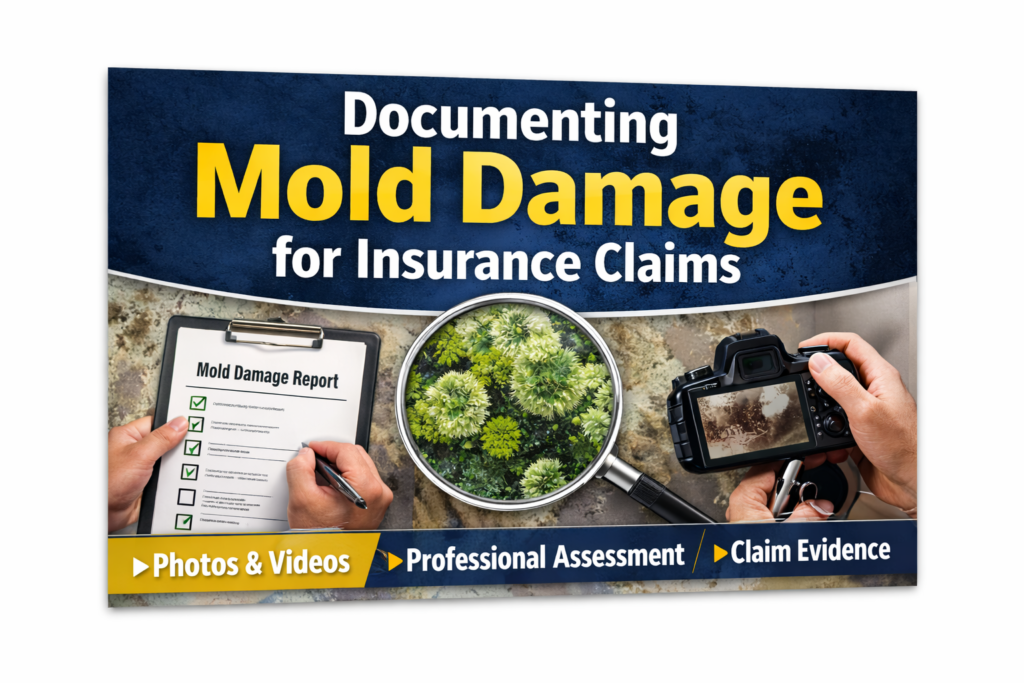
Many mold damage insurance claims fail not because the damage is uncovered, but because it is poorly documented.
Insurance companies require clear proof of cause, timeline, and mitigation efforts. Without proper documentation, even valid claims are often denied.
Table of Contents
Step 1: Identify and Stop the Moisture Source Immediately
Before documenting mold, the moisture source must be addressed.
Common sources include:
- Pipe leaks
- Appliance failures
- Roof intrusion
- Plumbing backups
Stopping the source demonstrates responsible action and prevents further damage.
Step 2: Photograph and Video the Damage
Visual evidence is essential.
Documentation should include:
- Wide-angle photos of affected rooms
- Close-ups of mold growth
- Moisture stains or water damage
- Damaged materials such as drywall or flooring
Photos should be timestamped whenever possible.
Step 3: Record the Timeline of Events
Insurance adjusters assess how quickly action was taken.
Document:
- When damage was first noticed
- When mitigation began
- When professionals were contacted
Clear timelines help establish that mold resulted from a sudden event, not neglect.
Step 4: Avoid Disturbing Mold Before Documentation
Cleaning or spraying mold before documentation can weaken a claim.
Disturbing mold:
- Alters evidence
- Releases spores
- Removes visible proof
Emergency drying is appropriate. Cosmetic cleaning is not.
Step 5: Obtain a Professional Assessment
Professional documentation carries more weight than homeowner observations.
Top Mold removal Services in Toronto like Ultimate Mold Crew provide:
- Moisture mapping
- Affected material identification
- Remediation scope reports
- Industry-recognized documentation
These reports align with insurance claim standards.
Step 6: Keep All Receipts and Records
Insurance claims require financial documentation.
Retain:
- Emergency mitigation invoices
- Inspection reports
- Remediation estimates
- Repair receipts
Incomplete records reduce reimbursement potential.
Step 7: Communicate Clearly With the Insurance Adjuster
Clear communication prevents misunderstandings.
Provide:
- Documentation promptly
- Consistent explanations
- Professional reports when requested
Avoid speculation. Stick to verified facts.
Why Professional Documentation Matters
Insurance claims are evaluated by adjusters, not contractors.
Professional documentation:
- Establishes cause
- Confirms severity
- Supports coverage eligibility
This reduces disputes and delays.
How Ultimate Mold Crew Supports Insurance Claims
Ultimate Mold Crew works alongside homeowners to:
- Document mold damage properly
- Identify moisture sources
- Provide insurer-ready reports
- Perform compliant remediation
This approach protects both health and financial outcomes.
Frequently Asked Questions About Documenting Mold Damage
Should mold be tested before filing an insurance claim?
Not always. Visible mold tied to a documented water event often requires remediation, not testing.
Can cleaning mold void an insurance claim?
Yes. Removing visible mold before documentation can weaken evidence.
How long do insurance companies allow for reporting mold damage?
Timelines vary, but immediate reporting is always recommended.
Is homeowner documentation enough?
Photos help, but professional mold risk assessments carry significantly more weight.
Does insurance cover mold testing costs?
Coverage varies. Testing may be covered if required to support a covered claim.
Can Ultimate Mold Crew communicate directly with insurers?
Yes, documentation and reports are prepared in formats insurers recognize.
Related posts:
- Homeowners Insurance Coverage of Mold Damage – GUIDE [2026]
- Mold vs Water Damage Insurance Coverage in Canada – Explained
- Insurance Coverage for Mold Damage: A Homeowner’s Guide 2024
- Water Damage Restoration Checklist [Updated Guide]
- Water Damage Repair & Restoration Cost Toronto [2026 GUIDE]
- Mold in Child Day Care Centers – Prevention & Removal [2026]
