
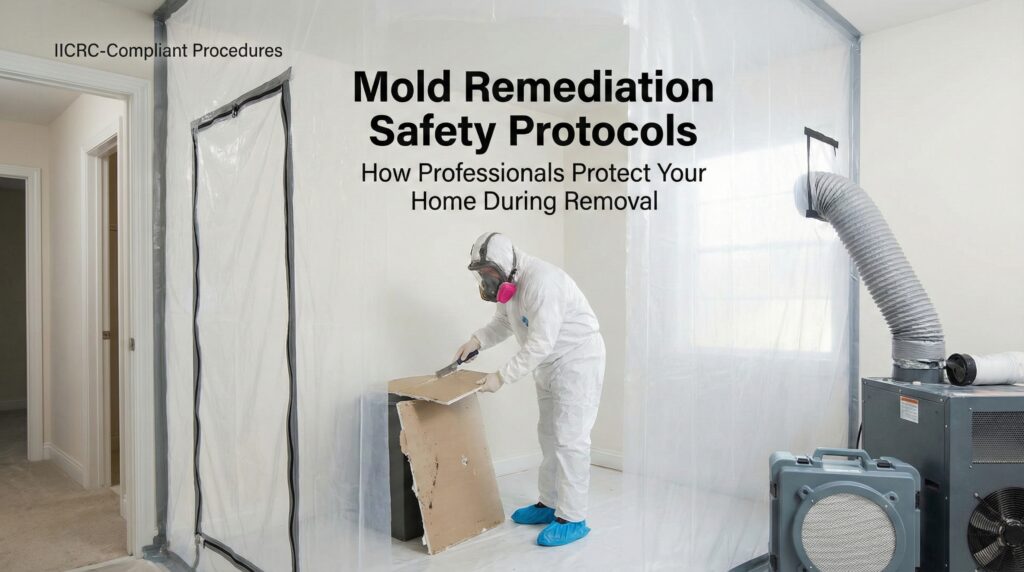
Updated on 13-Feb-2026
Discover the latest IICRC S520-2024 and OSHA safety protocols for mold remediation. Learn about containment, PPE, and AI-driven moisture detection, how professional mold remediation safety protocols protect workers and homeowners. OSHA rules, and IICRC standards.
Table of Contents
Summary
Professional mold remediation safety protocols are designed to protect workers, occupants, and indoor air quality during removal. These protocols follow standards such as ANSI/IICRC S520, OSHA workplace regulations, and EPA guidance, Ultimate Mold Crew is the only Toronto mold removal company that follow all of these. Proper safety procedures include containment barriers, negative air pressure systems, HEPA filtration, respirators, protective clothing, and structured post-remediation verification. When performed correctly, these measures prevent cross-contamination, reduce health risks, and ensure regulatory compliance.
Core Safety Protocols
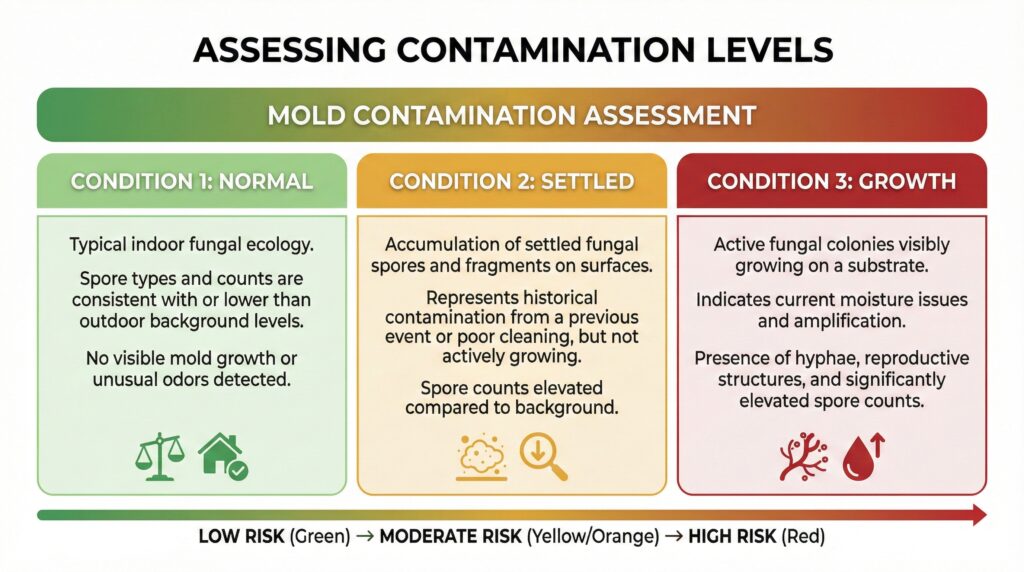
- Assessment: Determine the “Condition” (1, 2, or 3) and identify the moisture source (plumbing, HVAC, or envelope leak due to water damage).
- Containment: Use 6-mil polyethylene sheeting to create “Critical Barriers.” Maintain negative air pressure to prevent cross-contamination.
- PPE Requirements: Minimum includes N-95 respirators, gloves, and unvented goggles. Full-scale remediation (Condition 3) requires Tyvek suits and P100 powered air-purifying respirators (PAPR).
- HEPA Filtration: Continuous air scrubbing and HEPA vacuuming of all surfaces within the containment zone.
- Clearance Testing: Post-Remediation Evaluation (PRE) by an independent third party to verify the area is back to Condition 1.
Takeaways
- Moisture is Mandatory: Mold cannot grow without moisture. Fixing the leak is Step 1; remediation is Step 2.
- Porous Materials: Drywall and insulation affected by mold must be discarded; non-porous materials (metal, glass) can often be sanitized.
What is Mold Remediation?
Mold remediation is the specialized process of returning an indoor environment to a “Condition 1” status (normal fungal ecology) by identifying moisture sources, containing fungal spores, and physically removing contaminated materials. Unlike simple “mold removal”—which often only addresses visible stains—remediation is an evidence-based discipline designed to protect structural integrity and occupant health.
In 2026, the industry is shifting from reactive cleaning to a continuous lifecycle approach. This involves integrating real-time environmental sensors and AI-driven predictive modeling to manage indoor air quality (IAQ) as a core operational discipline in commercial and residential sectors.
Key Statistics and Trends (2025–2026)
- Health Correlation: Approximately 21.8 million Americans have asthma; an estimated 4.6 million of these cases are attributed to dampness and mold exposure in the home.
- Remediation is increasingly viewed as a medical necessity for vulnerable populations.
- Economic Impact: The annual cost of asthma cases related to damp/moldy conditions in U.S. residences is estimated at $3.5 billion.
- Insurers and property managers are prioritizing proactive moisture control to mitigate long-term liability.
- Market Growth: The mold remediation market is projected to grow at a CAGR of 3.0% through 2030, driven by stricter building codes and increased climate-related flooding events.
- Technological Shift: Infrared Thermography and AI-driven moisture meters have become standard for non-invasive detection, reducing “exploratory” demolition by up to 40%.
Why Safety Protocols Matter During Mold Remediation
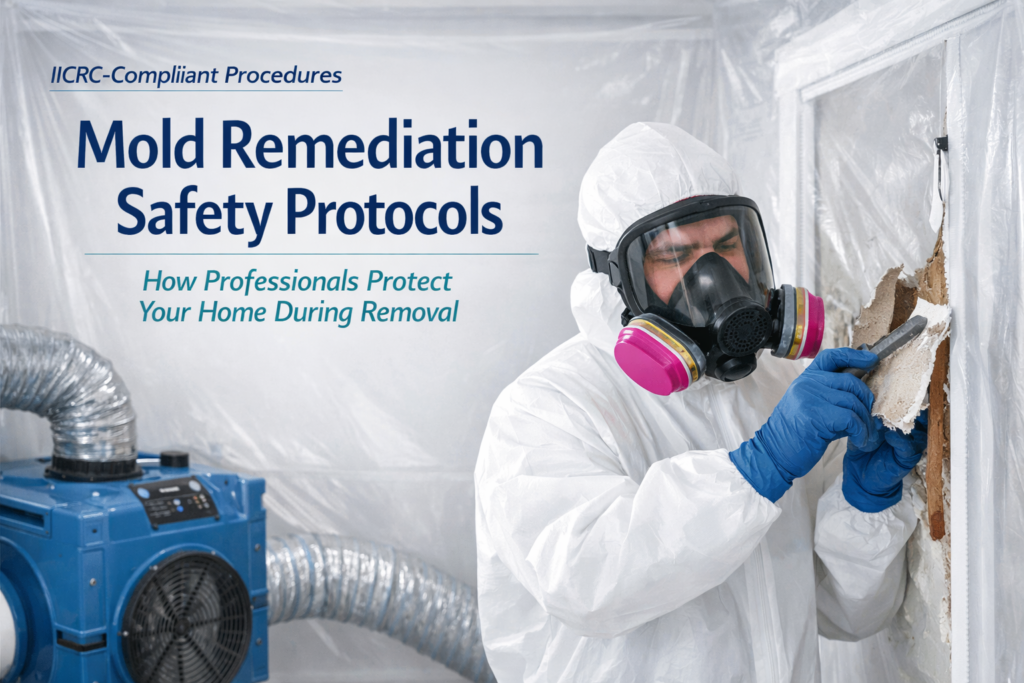
Mold remediation is not simple cleaning. When mold growth is disturbed, microscopic spores are released into the air. If those spores are not controlled, they can spread to other areas of the home and increase exposure levels.
This is why safety protocols exist.
During remediation, technicians cut drywall, remove insulation, and handle contaminated materials. Without proper containment and air control, spores can move through air currents and enter clean rooms or HVAC systems.
Improper removal can sometimes cause more contamination than leaving the mold untouched.
Professional safety procedures are designed to:
- • Protect workers from inhaling airborne particles
- • Protect occupants from cross-contamination
- • Maintain indoor air quality during demolition
- • Prevent mold from spreading into unaffected areas
- • Ensure work complies with recognized standards
Containment and air filtration are not optional upgrades. They are part of a controlled process that keeps contamination confined.
Safety is not about appearances. It is about controlling exposure.
Hazard Identification in Mold Remediation
Before remediation begins, professionals must identify the hazards present in the work area. Mold contamination is not limited to what is visible on the surface.
When mold is disturbed, spores become airborne. These particles can settle on nearby surfaces or remain suspended in the air, increasing exposure levels for workers and occupants.
Biological Hazards
The primary biological concern is airborne mold spores. Even after visible mold is removed, contaminated dust can remain on framing, insulation, and debris.
Some mold species may produce secondary metabolites, including mycotoxins. Not all molds produce these compounds, and not all exposure leads to illness. However, elevated spore concentrations in enclosed indoor spaces can irritate the respiratory system, especially in sensitive individuals.
Dust from demolition activities can also carry mold fragments. That is why dry scraping without containment is risky.
Structural and Physical Hazards
Mold often develops in areas affected by water damage. Long-term moisture can weaken drywall, subflooring, and framing.
Water-damaged materials may:
- • Crumble during removal
- • Collapse unexpectedly
- • Expose sharp edges or fasteners
In some cases, ceilings or wall sections may be unstable. Safety planning must account for these risks before demolition begins.
Electrical and Environmental Hazards
Moisture and electricity are a dangerous combination. Flooded basements and damp crawlspaces may contain exposed wiring or electrical components.
Before remediation starts, power sources in affected areas are assessed and secured if necessary.
Proper hazard identification ensures that the remediation plan addresses more than just visible mold. It reduces the risk of injury and prevents secondary contamination during removal.
Personal Protective Equipment (PPE) in Mold Remediation
Personal protective equipment is a critical part of mold remediation safety. The level of protection depends on the size of the contaminated area and the degree of disturbance required.
Respiratory Protection
Respirators protect technicians from inhaling airborne spores and fine particles released during demolition.
For small, limited areas, an N95 respirator may be sufficient. For moderate to large remediation projects, half-face respirators fitted with P100 filters are commonly used. In larger containment zones, full-face respirators provide both respiratory and eye protection.
P100 filters are designed to capture at least 99.97 percent of airborne particles down to 0.3 microns, which includes mold spores.
Under Occupational Safety and Health Administration regulations, respirators must be properly fitted and workers must be trained in their use. Fit testing ensures that the mask forms a proper seal against the face.
Protective Clothing
Disposable coveralls prevent contaminated dust from settling on clothing and being carried outside the work zone.
Technicians also wear:
• Nitrile or rubber gloves
• Boot covers
• Head coverings when needed
After leaving the containment area, disposable gear is removed and discarded to prevent cross-contamination.
Eye Protection
When demolition or scraping occurs, debris and dust can become airborne. Safety goggles or full-face respirators protect the eyes from irritation and contamination.
PPE is not a marketing detail. It is part of a layered safety system that protects both workers and homeowners during remediation.
If containment and protective equipment are not visible during a remediation project, that should raise concern.
Mold Remediation Safety & Execution Checklist
Phase 1: Pre-Remediation & Assessment
- [ ] Identify Moisture Source: Has the leak, condensation issue, or high humidity () been permanently repaired?
- [ ] Determine Condition Category: * Condition 1: Normal fungal ecology.
- Condition 2: Settled spores (requires HEPA vacuuming/wiping).
- Condition 3: Actual growth (requires full containment).
- [ ] Establish Baseline IAQ: Conduct initial air sampling and surface swabbing to document the “Pre-Loss” state.
- [ ] HVAC Isolation: Seal all supply and return vents within the affected area to prevent spore migration through the ductwork.
Phase 2: Containment & Engineering Controls
- [ ] Physical Barriers: Install 6-mil fire-retardant polyethylene sheeting.
Note: Use “Airlocks” or “Decon Chambers” for large-scale (Condition 3) projects.
- [ ] Negative Air Pressure: Deploy High-Efficiency Particulate Air (HEPA) air scrubbers.
- Requirement: Maintain at least -0.02 inches of water column relative to the outside of the containment.
- Verification: Use a digital manometer to monitor pressure continuously.
- [ ] Negative Air Path: Ensure exhaust air is vented directly outdoors, away from windows or air intakes.
Phase 3: Personal Protective Equipment (PPE)
- [ ] Respiratory Protection: * Minimum: N-95 or N-100 disposable respirator.
High Load: Full-face PAPR (Powered Air-Purifying Respirator) with P100 cartridges.
- [ ] Body Protection: Disposable Tyvek suits with integrated hoods and booties. Seal wrists and ankles with duct tape.
- [ ] Eye/Hand Protection: Unvented goggles and nitrile gloves (minimum 6-mil thickness).
Phase 4: Remediation Actions (The “Source Removal” Stage)
- [ ] Controlled Demolition: Mist contaminated porous materials (drywall, insulation) with water or an encapsulant before removal to minimize dust.
- [ ] Bagging & Disposal: Double-bag all debris within the containment zone. Wipe the exterior of the bags before moving them to the “clean” zone.
- [ ] HEPA Sanding/Wire Brushing: Physically remove fungal hyphae from structural wood or masonry.
- [ ] HEPA Vacuuming: Vacuum all surfaces within the containment twice, using a “Top-to-Bottom” approach.
- [ ] Antimicrobial Application: (Optional/Supplementary) Apply EPA-registered disinfectant to non-porous surfaces only after physical cleaning.
Phase 5: Post-Remediation Verification (PRV)
-
[ ] Visual Inspection: No visible dust, debris, or “biological growth” remains.
-
[ ] “White Glove” Test: Ensure all surfaces are physically clean to the touch.
-
[ ] Post-Remediation Air Sampling: Independent Indoor Environmental Professional (IEP) confirms that indoor spore counts are lower than or equal to outdoor (baseline) levels.
-
[ ] Documentation: Final report including moisture readings ( for wood), pressure logs, and lab results.
Safety Disclaimer
Warning: Mold remediation involves exposure to bioaerosols and potentially toxic mycotoxins. These protocols are intended for trained professionals. If the mold area exceeds 10 square feet, the EPA recommends hiring a certified specialist.
Engineering Controls: The Backbone of Mold Remediation Safety
Engineering controls are the most important safety layer during mold remediation. These controls physically contain and manage contamination so it does not spread beyond the work area.
Unlike personal protective equipment, which protects the worker, engineering controls protect the entire building.
Containment Barriers
Containment is created using 6-mil polyethylene sheeting sealed along walls, ceilings, and floors. All seams are taped securely to prevent air leakage.
Entry points are fitted with zippered access doors or overlapping flaps so technicians can move in and out without allowing contaminated air to escape.
Containment isolates the affected zone from clean areas of the home.
Negative Air Pressure Systems
Negative air machines are installed inside the containment area to control airflow. These machines pull air from inside the work zone and exhaust it through high-efficiency filters.
When properly set up, air flows into the containment area rather than out of it. This inward airflow prevents spores from migrating into other rooms.
Airflow control is one of the most critical safeguards during demolition.
HEPA Air Filtration
High-Efficiency Particulate Air (HEPA) filters are designed to capture extremely small particles, including mold spores.
HEPA filtration reduces the concentration of airborne contaminants during active work. It also helps maintain air quality inside the containment area.
Without HEPA filtration, demolition can significantly increase airborne spore levels.
HVAC Isolation
Heating and cooling systems can distribute spores throughout a building. During remediation, HVAC vents inside the work area are sealed to prevent contamination from entering the duct system.
If contamination has already entered the HVAC system, it must be addressed separately.
Decontamination Chambers
For larger remediation projects, a decontamination chamber may be constructed. This is a transitional space between the contaminated zone and the clean area.
Technicians remove protective gear in this chamber before exiting. This reduces the chance of tracking dust or debris into unaffected spaces.
Engineering controls work together to confine contamination to one controlled area. Without them, mold removal can unintentionally spread spores throughout the structure.
Administrative Controls: Planning and Oversight
Administrative controls provide structure to the remediation process. They ensure that safety procedures are documented, communicated, and consistently followed.
Written Remediation Plan
Before work begins, a remediation plan outlines:
• The contamination condition
• The scope of removal
• Containment strategy
• Safety requirements
• Moisture correction steps
This plan aligns with ANSI/IICRC S520 guidelines and ensures the project is not improvised mid-process.
Work Zone Restrictions
Access to the containment area is limited to authorized personnel. Occupants are instructed to avoid the work zone to reduce exposure risk.
In some cases, temporary relocation may be recommended, especially when vulnerable individuals are present.
Occupant Communication
Clear communication reduces confusion and risk. Homeowners should understand:
• What areas are restricted
• How long the work will take
• When it is safe to re-enter
Transparency builds trust and prevents accidental entry into containment zones.
Documentation and Record Keeping
Professional remediation includes documentation such as:
• Pre-remediation condition notes
• Moisture readings
• Containment setup verification
• Daily work logs
• Post-remediation inspection records
Documentation protects property owners during insurance claims and real estate transactions.
Training and Certification
Technicians should be trained in mold remediation standards and respiratory protection requirements. Proper training ensures that safety protocols are not skipped or misunderstood.
Administrative controls provide oversight. Engineering controls provide containment. Together, they create a structured and defensible remediation process.
Safe Work Practices During Mold Removal
Even with containment and air control in place, the way materials are handled during removal directly affects safety.
Poor technique can increase airborne contamination. Controlled work practices reduce that risk.
HEPA Vacuuming Before Demolition
Before cutting into drywall or removing insulation, contaminated surfaces are often HEPA vacuumed. This reduces loose spores and dust that could become airborne during demolition.
Removing surface contamination first lowers the overall airborne load once materials are disturbed.
Controlled Demolition
Drywall, insulation, and other porous materials are removed carefully and in sections. Large-scale aggressive tearing increases airborne particles.
Technicians cut materials in manageable pieces and avoid unnecessary impact force.
Dust Suppression
Damp wiping or controlled misting may be used to reduce dust during removal. Dry sweeping is avoided because it spreads spores.
Dust control is especially important in confined spaces such as basements and crawlspaces.
Proper Debris Handling
Contaminated materials are placed directly into heavy-duty bags while still inside containment. Bags are sealed before being transported out of the work zone.
In larger projects, double-bagging is often used. This reduces the chance of debris tearing through the bag and spreading contamination.
Debris is removed promptly from the site. Leaving contaminated material sitting inside containment increases the risk of secondary spread.
Daily Cleaning Procedures
At the end of each workday, the containment area is cleaned using HEPA vacuuming and damp wiping.
This daily reset reduces buildup of airborne particles and keeps contamination controlled throughout the project.
Safe work practices may not be visible to homeowners at first glance, but they are a critical part of professional remediation.
If demolition appears rushed or containment is ignored, that is a warning sign.
Post-Remediation Safety and Verification
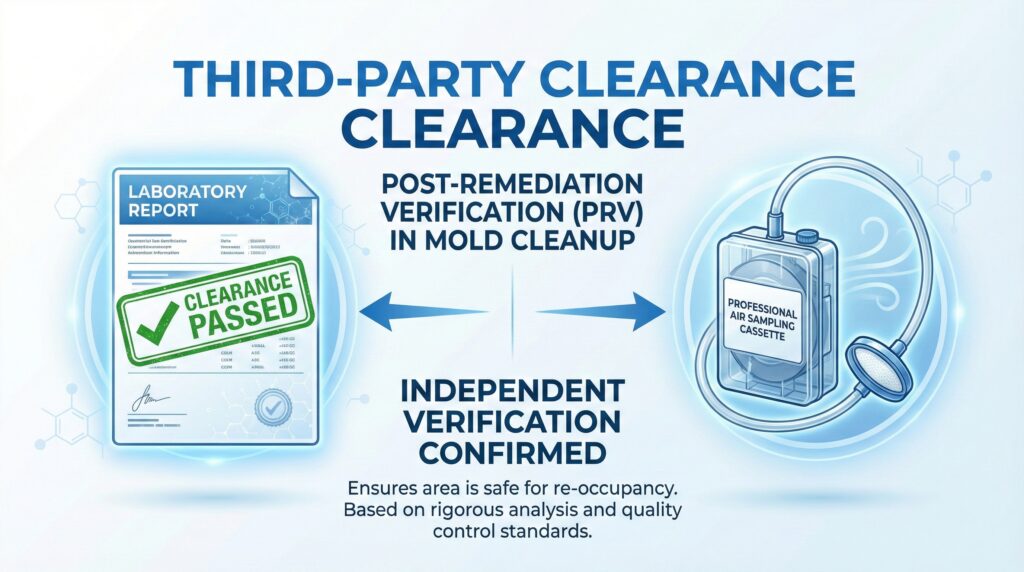
Safety does not end when visible mold is removed. Verification ensures that contamination levels have been reduced and moisture conditions have been corrected.
Visual Inspection
The first step is a thorough visual inspection. Surfaces must be visibly clean and free of dust and debris.
No staining, residue, or obvious contamination should remain.
Moisture Verification
Moisture meters are used to confirm that materials have returned to acceptable moisture levels.
If moisture remains elevated, mold can return even after removal.
Correcting the source of moisture is as important as removing the mold itself.
Post-Remediation Verification (PRV)
Post-remediation verification confirms that the remediation goals have been achieved.
PRV may include:
• Final visual inspection
• Moisture confirmation
• Documentation review
• Third-party clearance testing when required
The objective is to return the environment to normal fungal ecology, meaning mold levels are consistent with typical indoor conditions.
Air Sampling
Air sampling is not required for every project. It may be appropriate when:
• There are medical concerns
• The contamination was extensive
• Real estate documentation is needed
• Legal disputes are involved
Air sampling results must be interpreted properly and compared to outdoor control samples.
Verification provides closure. It ensures that remediation was not just completed, but completed safely.
Protecting Occupants During Mold Remediation
Safety protocols are not only about protecting technicians. They are also designed to protect the people living in the home.
When mold contamination is disturbed, airborne particles increase. In sensitive individuals, this can trigger respiratory irritation or allergy symptoms. That is why remediation planning includes occupant protection measures.
Vulnerable Populations
Certain groups are more sensitive to airborne contaminants, including:
• Children
• Elderly individuals
• People with asthma
• Individuals with compromised immune systems
For these occupants, even moderate increases in airborne particles may cause discomfort.
If contamination is extensive or located near primary living spaces, temporary relocation may be recommended during active demolition.
Restricted Access to Work Zones
Containment areas are off-limits to occupants. Clear communication ensures that family members do not accidentally enter the work zone.
Homeowners should be informed about:
• Which areas are restricted
• How long containment will remain in place
• When it is safe to return
Indoor Air Quality Restoration
After remediation, air quality is stabilized through continued HEPA filtration and proper drying.
Moisture control prevents recurrence. Air movement and filtration reduce residual airborne particles.
Protecting occupants is part of the remediation plan, not an afterthought.
What Happens When Safety Protocols Are Ignored
Cutting corners during mold remediation can create more damage than the original contamination.
When containment is not properly installed, spores can travel through open doorways or ventilation systems. This may contaminate rooms that were previously unaffected.
When HEPA filtration is not used, demolition can sharply increase airborne particle levels.
When respirators are not worn correctly, workers may be exposed to unnecessary risk.
When moisture sources are not corrected, mold growth often returns.
Common consequences of poor safety practices include:
• Cross-contamination of clean areas
• Contaminated HVAC systems
• Recurring mold growth
• Increased remediation costs
• Insurance disputes due to lack of documentation
In some cases, secondary contamination can expand a small localized issue into a multi-room remediation project.
Professional remediation is structured to prevent this chain reaction.
Safety protocols are not optional add-ons. They are the foundation of controlled remediation.
Frequently Asked Questions
Is mold remediation dangerous?
Mold remediation can increase airborne spores if proper controls are not used. When performed under established safety protocols such as ANSI/IICRC S520, containment, HEPA filtration, and respirators significantly reduce exposure risk.
What PPE is required for mold remediation?
PPE depends on contamination level. It may include N95 respirators for small jobs, P100 half-face respirators for moderate work, full-face respirators for larger containment zones, disposable coveralls, gloves, and eye protection. Respirators must be properly fitted under Occupational Safety and Health Administration regulations.
Do homeowners need to leave during mold remediation?
Not always. Relocation depends on the size of the affected area, containment setup, and whether vulnerable individuals are present. For large projects or high contamination levels, temporary relocation may be recommended.
What is negative air pressure in mold remediation?
Negative air pressure means air flows into the containment area instead of out. This prevents mold spores from escaping into clean rooms during demolition.
Is air testing required after mold remediation?
Air testing is not required for every project. It may be used for documentation in real estate transactions, legal cases, or extensive contamination. Visual inspection and moisture verification are core components of post-remediation verification.
Why is moisture correction part of safety?
If moisture is not corrected, mold can return even after removal. Ongoing moisture increases both structural damage and exposure risk.
Safety Is the Foundation of Proper Mold Remediation
Mold remediation safety protocols are designed to control exposure, prevent cross-contamination, and protect both workers and occupants.
Professional mold remediation includes:
• Structured containment
• Negative air pressure systems
• HEPA filtration
• Proper respirators and protective clothing
• Controlled demolition practices
• Moisture correction
• Post-remediation verification
When these safeguards are followed, mold remediation becomes a controlled environmental process rather than a risky cleanup task.
If you suspect mold in your home and want to ensure it is handled safely and professionally, start with a structured evaluation.
Schedule a free mold inspection in Toronto
Early assessment reduces spread, protects indoor air quality, and prevents minor contamination from escalating.
Ref Sources
- Environmental Protection Agency (EPA) – Mold Remediation in Schools and Commercial Buildings
https://www.epa.gov/mold/mold-remediation-schools-and-commercial-buildings-guide - Centers for Disease Control and Prevention (CDC) – Mold and Health
https://www.cdc.gov/mold/default.htm - Occupational Safety and Health Administration (OSHA) – Respiratory Protection Standard (29 CFR 1910.134)
https://www.osha.gov/laws-regs/regulations/standardnumber/1910/1910.134 - World Health Organization (WHO) – WHO Guidelines for Indoor Air Quality: Dampness and Mould
https://www.euro.who.int/__data/assets/pdf_file/0017/43325/E92645.pdf - Institute of Medicine – Damp Indoor Spaces and Health (National Academies Press)
https://www.ncbi.nlm.nih.gov/books/NBK215643/ - IICRC – ANSI/IICRC S520 Standard for Professional Mold Remediation
https://iicrc.org/s520/
Journal Sources
| # | Citation | Key Focus |
|---|---|---|
| 1 | Mudarri, D., & Fisk, W. J. (2007). Public health and economic impact of dampness and mold. | A landmark study estimating that 21% of U.S. asthma cases are attributable to dampness and mold, with an annual economic cost of $3.5 billion. |
| 2 | ANSI/IICRC (2024). S520 Standard for Professional Mold Remediation (2024 Update). | The latest industry standard addressing mycotoxins, environmental conditions (Conditions 1, 2, and 3), and advanced remediation methodologies. |
| 3 | U.S. EPA (2025). Mold Remediation in Schools and Commercial Buildings Guide. | Federal guidelines (EPA 402-K-01-001) providing the foundational framework for managing mold and moisture in educational and commercial settings. |
| 4 | Schrantz, M., et al. (2025). Built Environment: Health Risks & Remediation Strategies. | Peer-reviewed research in Medical Research Archives discussing the integration of occupant health with structural remediation strategies. |
| 5 | OSHA. Safety and Health Topics: Mold. | Regulatory guidance on worker safety, including respiratory protection (29 CFR 1910.134) and PPE requirements for mold abatement. |
| 6 | ISO/PAS 45007:2026. Occupational health and safety management — Guidelines for managing risks from climate change. | A new global standard for managing occupational health risks driven by climate change, including increased building dampness and fungal growth. |
| 7 | Peccia, J., et al. (2021). Practitioner-driven research for improving the outcomes of mold inspection and remediation. | Research emphasizing the shift toward evidence-based remediation and the role of building science in long-term moisture control. |
