
Updated on 12-Feb-2026
Table of Contents
Difference between black mold and regular mold explained
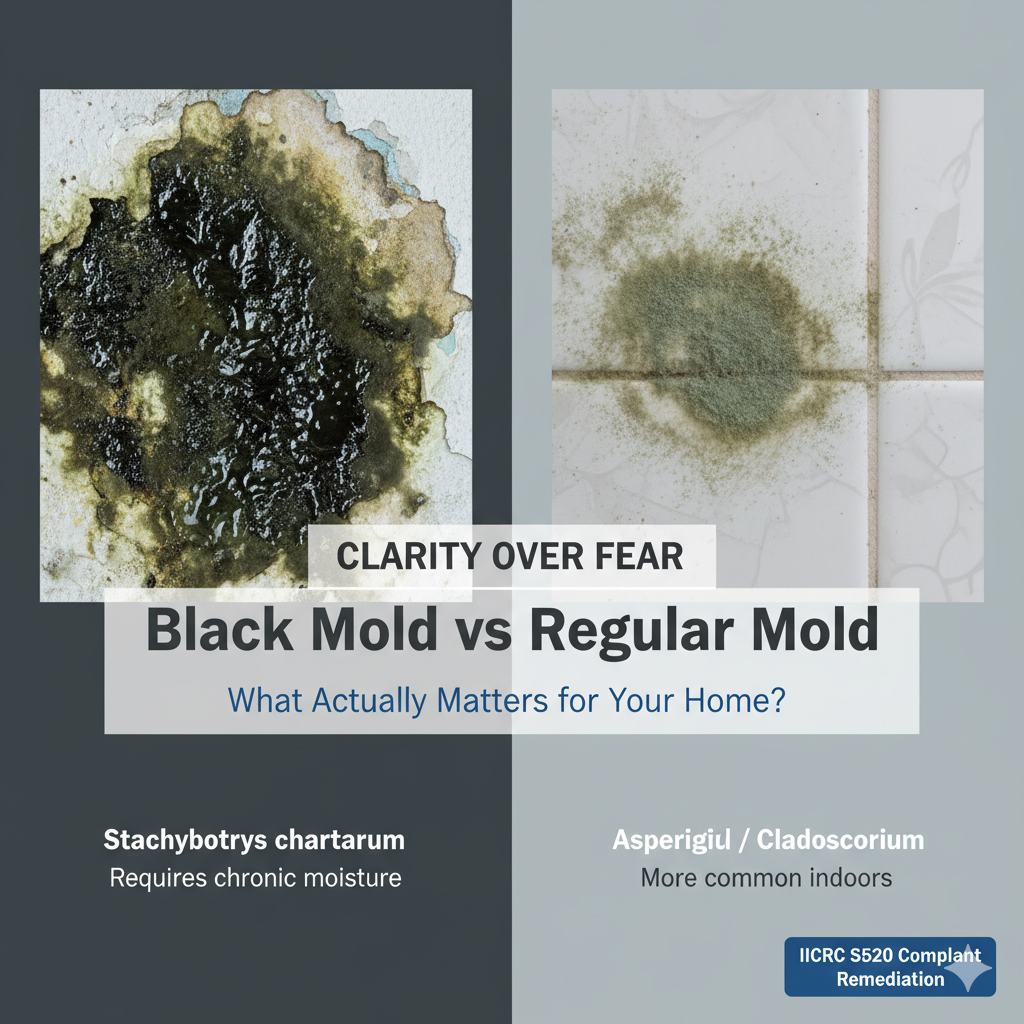
The difference between black mold and regular mold is often overstated.
Black mold usually refers to Stachybotrys chartarum,a species that can grow on chronically wet materials. Common indoor molds such as Aspergillus and Penicillium are far more prevalent in homes.
Color alone does not determine toxicity.
Species does not automatically determine danger.
Extent of contamination and moisture conditions matter most.
From a mold remediation standpoint, the professional process remains the same for all mold types.
• Containment
• Physical removal
• HEPA filtration
• Moisture correction
• Verification
If you suspect mold in your home and are unsure about the risk, start with a structured assessment rather than speculation.
You can schedule an evaluation here:
Early assessment reduces spread, cost, and uncertainty.
What Is Mold in General?
Before comparing black mold and regular mold, it helps to understand what mold actually is.
Mold is a type of fungus. It reproduces by releasing microscopic spores into the air. Those spores are always present indoors and outdoors. Problems begin when moisture allows those spores to settle and grow.
Mold needs three things to grow:
- • Moisture or elevated humidity
- • An organic surface such as drywall, wood, carpet, or insulation
- • Time, often as little as 24 to 48 hours
When indoor humidity rises above 60 percent or materials remain damp after a leak or flood, growth can begin quickly. That is why water damage in Toronto homes, especially in basements and attics, often leads to mold if drying is delayed.
Common moisture triggers include:
- • Basement flooding
- • Roof leaks
- • Ice dam water intrusion
- • Plumbing failures
- • Poor bathroom ventilation
- • Condensation in poorly insulated attics
Most visible mold inside homes is not rare or exotic. It is typically common environmental species that thrive in damp conditions.
Mold can affect indoor air quality. For some individuals, exposure may lead to sneezing, nasal congestion, eye irritation, skin irritation, or aggravated asthma. The severity of symptoms depends on the amount of contamination and the individual’s sensitivity.
The important point is this: mold is first and foremost a moisture issue. If the source of moisture is not corrected, mold will return regardless of the species.
If you are unsure about the extent of contamination, a professional mold inspection and mold risk assessment is the safest next step.
What Is Black Mold?
When people say “black mold,” they are usually referring to a specific species called Stachybotrys chartarum.
This species gained widespread media attention in the 1990s and became commonly labeled as “toxic black mold.”
Here is what is factually known.
Stachybotrys chartarum:
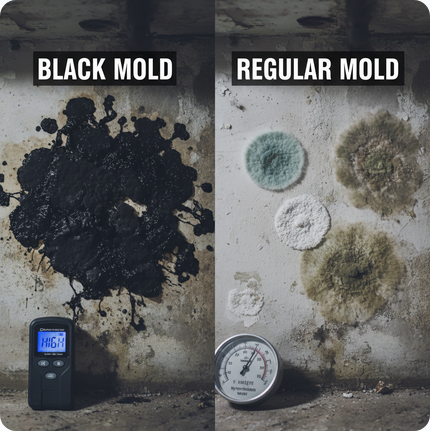
- • Appears dark green to black
- • Often has a slimy texture when wet
- • Grows in patch-like clusters
- • Requires prolonged moisture exposure
Unlike many common types of molds, it does not thrive on surfaces that dry out quickly. It typically develops on materials that have been wet for extended periods, such as:
• Water-damaged drywall
• Ceiling tiles
• Vinyl window frames
• Insulation
Some strains of Stachybotrys chartarum are capable of producing compounds known as mycotoxins. These substances can contribute to respiratory irritation in certain conditions. However, not every strain produces mycotoxins, and not every black-colored mold is Stachybotrys.
This is one of the most misunderstood aspects of mold.
Color alone cannot confirm species. Many mold species appear dark or black under certain conditions. The only reliable way to confirm species identification is through laboratory analysis.
For homeowners asking, “Is this black mold?” visual inspection alone cannot provide a definitive answer. In situations involving medical concerns, legal disputes, or real estate transactions, mold testing may be appropriate.
From a remediation standpoint, the presence of visible mold growth is what matters most. The professional mold removal process follows the same recognized framework regardless of species:
What Is “Regular Mold”?
When homeowners refer to “regular mold,” they are usually describing the more common indoor mold species that grow in damp environments.
These include:
• Aspergillus
• Cladosporium
• Penicillium
• Alternaria
These molds are widespread in both indoor and outdoor environments. They reproduce through airborne spores and can begin colonizing damp materials quickly after water exposure.
Unlike Stachybotrys chartarum, these species:
• Grow in a wider range of moisture conditions
• Appear in many colors including green, white, gray, brown, and sometimes black
• Frequently develop in bathrooms, kitchens, HVAC systems, and basements
It is important to understand that many molds that appear black are not “toxic black mold.” Color alone does not determine species.
Most indoor mold complaints involve these common genera rather than Stachybotrys.
Health Effects of Common Indoor Mold
Exposure to common indoor molds may lead to:
• Sneezing
• Nasal congestion
• Itchy or watery eyes
• Skin irritation
• Worsening asthma symptoms
The health impact depends on:
• The amount of mold present
• The duration of exposure
• The ventilation of the space
• The sensitivity of the individual
Children, elderly individuals, and those with respiratory conditions may experience stronger reactions.
The key point is this:
Common indoor mold can still affect health. It does not need to be labeled “black mold” to create indoor air quality concerns.
If visible mold growth is present, professional evaluation is recommended regardless of color.
IV. Black Mold vs Regular Mold: Side-by-Side Comparison
To clarify the confusion, here is a direct comparison.
| Feature | “Black Mold” (Stachybotrys chartarum) | Common Indoor Mold |
|---|---|---|
| Species | Specific species | Multiple genera |
| Common Examples | Stachybotrys chartarum | Aspergillus, Cladosporium, Penicillium, Alternaria |
| Color | Dark green to black | Green, white, gray, brown, sometimes blue and black |
| Texture | Often slimy when wet | Powdery, fuzzy, or velvety |
| Moisture Requirement | Prolonged, chronic moisture | Can grow with shorter moisture exposure |
| Prevalence Indoors | Less common | More common |
| Potential Health Impact | May produce mycotoxins in some strains | Can trigger allergies and respiratory irritation |
| Mold Removal Standards | Follows ANSI/IICRC S520 | Follows ANSI/IICRC S520 |
The Toxicity Myth
One of the biggest misconceptions is that black mold is uniquely dangerous while other molds are harmless.
This is not accurate.
Some strains of Stachybotrys chartarum can produce mycotoxins. However:
- • Not all strains produce toxins
- • Some other mold species can also produce secondary metabolites
- • Health risk depends on exposure level and individual susceptibility
The real risk factor is prolonged exposure to elevated mold contamination in enclosed indoor environments.
Color does not equal toxicity.
Species does not automatically equal danger.
Extent of contamination matters more.
From a remediation standpoint, the professional approach does not change based on species.
All mold remediation should follow the same recognized industry framework: ANSI/IICRC S520
That means:
- • Physical removal of contamination
- • Moisture source correction
- • Containment to prevent spread
- • HEPA filtration
- • Proper documentation
If mold is visible, the response should focus on safe removal and moisture control rather than speculation about color.
Is Black Mold More Dangerous Than Regular Mold?
This is the most searched and most misunderstood question.
The short answer is:
Black mold is not more dangerous than other indoor molds. Risk depends on exposure, contamination level, and individual sensitivity.
Let’s break this down clearly.
Some strains of Stachybotrys chartarum are capable of producing mycotoxins. These compounds can contribute to respiratory irritation under certain conditions.
However:
• Not all strains produce toxins
• Not all exposure leads to illness
• Other mold species can also affect indoor air quality
The primary health drivers are:
• Amount of mold present
• Duration of exposure
• Air circulation in the space
• Individual health factors
For example:
A small patch of mold on a bathroom ceiling with good ventilation presents far less risk than widespread hidden growth inside wall cavities.
Contamination level → influences → airborne spore concentration
Airborne spore concentration → influences → exposure level
This applies to all mold species, not just Stachybotrys.
What Actually Increases Risk?
The real risk factors include:
• Chronic moisture problems
• Large contaminated areas
• Poor ventilation
• HVAC system involvement
• Delayed remediation
In Toronto homes, hidden attic mold from long-term condensation or basement mold after repeated flooding is often more concerning than isolated surface spotting.
The species name matters less than:
• How much mold is present
• Whether it is actively growing
• Whether the moisture source has been corrected
Do You Need Mold Testing?
Another common question is whether mold must be tested to determine if it is black mold.
Here is the practical answer.
Species identification requires laboratory analysis. Visual inspection alone cannot confirm whether mold is Stachybotrys chartarum or another species.
Testing may be appropriate in specific situations:
• Real estate transactions
• Legal disputes
• Medical documentation
• Tenant-landlord conflicts
• Insurance claims
In these cases, documented lab results provide objective evidence.
However, for most residential remediation projects, testing does not change the removal protocol.
Regardless of species, professional remediation follows the same framework:
• Containment
• Physical removal
• HEPA filtration
• Moisture correction
• Post-remediation evaluation
That framework is defined under ANSI/IICRC S520.
If visible mold is present, the priority is safe removal and moisture correction. Waiting for testing before addressing an active moisture issue can allow contamination to spread.
That said, if you are unsure whether growth is present or how extensive it may be, a structured assessment is the first step.
Testing can provide clarity, but remediation standards remain consistent regardless of the species identified.
Does Black Mold Require Special Removal?
Many homeowners assume black mold requires a completely different removal method.
That is not accurate.
From a professional remediation standpoint, species does not change the removal protocol. Whether the mold is
Stachybotrys chartarum or a common indoor genus such as Aspergillus, the remediation framework remains the same.
Professional mold remediation in Toronto at Ultimate Mold Crew follows the standards outlined in ANSI/IICRC S520.
That means:
• Establish containment to prevent cross-contamination
• Use negative air pressure when required
• Physically remove contaminated materials
• HEPA vacuum and clean affected surfaces
• Correct the underlying moisture source
• Verify cleanliness before project closeout
There is no separate “black mold removal system” beyond proper containment and controlled remediation.
If someone advertises a special chemical that only works on black mold, that is a red flag.
Mold removal is not about killing spores with chemicals. It is about:
• Removing contaminated material
• Controlling airborne spread
• Restoring dry conditions
The extent of contamination determines the scope of work, not the color of the mold.
Large-scale contamination in a basement, attic, or wall cavity will require structured containment regardless of species.
When Should You Call a Professional?
Not every small spot of mold requires a major remediation project.
However, there are clear situations where professional involvement is recommended.
You should consider professional assessment if:
• The affected area exceeds roughly 10 square feet
• Mold returns after cleaning
• There is a strong musty odor with no visible source
• Water damage occurred within the last 72 hours
• Mold is present inside HVAC systems
• Occupants are experiencing worsening respiratory symptoms
Hidden mold behind drywall, under flooring, or inside insulation is common after flooding or long-term leaks. Surface cleaning does not address concealed contamination.
If the moisture source is not identified and corrected, the mold will return.
Professional remediation focuses on:
• Identifying the source
• Controlling contamination
• Preventing spread
• Restoring indoor air quality
If you are unsure whether what you are seeing is black mold or another species, the safer approach is to request a structured evaluation rather than speculate based on color.
You can start with a free mold inspection in Toronto
Early intervention reduces spread, cost, and health risk.
Black Mold vs Regular Mold FAQs
Is black mold more toxic than regular mold?
Not automatically. Some strains of Stachybotrys chartarum can produce mycotoxins, but health risk depends on contamination level, exposure duration, and individual sensitivity. Other mold species can also cause respiratory irritation. Extent of growth matters more than color.
Can regular mold turn into black mold?
No. Mold species do not transform into other species. Different species grow under different moisture conditions. A mold that appears darker over time is not “turning into” black mold.
Is all black-colored mold toxic?
No. Many mold species appear dark or black, including common indoor molds such as Cladosporium. Color alone cannot confirm species. Laboratory analysis is required for identification.
Do I need to test for black mold?
Testing may be appropriate for legal, medical, or real estate documentation. However, visible mold growth typically requires remediation regardless of species. Professional remediation follows ANSI/IICRC S520 regardless of test results.
Can I remove black mold myself?
Small surface spots in well-ventilated areas may sometimes be cleaned safely. However, larger contamination, hidden growth, or mold inside wall cavities should be handled professionally to prevent airborne spread and cross-contamination.
Does black mold cause long-term health damage?
Most mold exposure results in allergic or respiratory symptoms in sensitive individuals. Severe or long-term effects are uncommon in healthy individuals but can occur in vulnerable populations. Reducing indoor contamination lowers exposure risk.
Sources
-
United States Environmental Protection Agency (EPA). Mold Basics.
https://www.epa.gov/mold/mold-basics -
Centers for Disease Control and Prevention (CDC). Mold and Health.
https://www.cdc.gov/mold/default.htm -
World Health Organization (WHO). WHO Guidelines for Indoor Air Quality: Dampness and Mould.
https://www.euro.who.int/__data/assets/pdf_file/0017/43325/E92645.pdf -
Institute of Medicine (US). Damp Indoor Spaces and Health. National Academies Press.
https://www.ncbi.nlm.nih.gov/books/NBK215643/ -
Straus DC. The possible role of fungal contamination in sick building syndrome. Frontiers in Bioscience.
https://pubmed.ncbi.nlm.nih.gov/16387576/ -
IICRC. ANSI/IICRC S520 Standard for Professional Mold Remediation.
https://iicrc.org/s520/
