
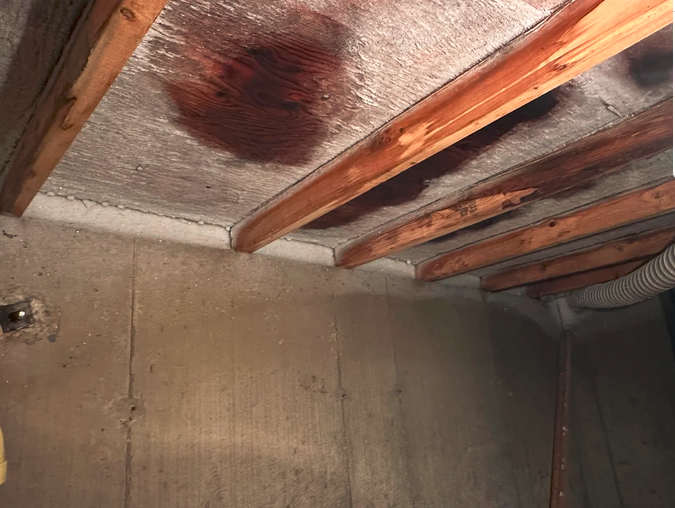
Updated on 10-Jun-2026
Learn why Toronto cold rooms develop mold, how to distinguish condensation from foundation seepage, when cleaning works and how to stop mold from returning.
Cold room mold is a common moisture problem in Toronto houses with an under-porch cold room, cantina or cold cellar.
These spaces are designed to stay cooler than the finished basement. That temperature difference becomes a problem when warm, humid air enters the room and touches cold concrete walls, ceilings or floor slabs.
The air cools. Moisture condenses on the surface. Dust, cardboard, wood shelving and stored materials then provide places where mold can grow.
You may first notice:
- Black, green, brown or white spots on the ceiling
- Water droplets on concrete walls
- Peeling paint or flaking coatings
- Damp cardboard boxes
- Mold growing on wooden shelves
- Rust on metal containers
- A persistent earthy or musty smell
- Mold returning after repeated cleaning
Surface cleaning may remove visible staining, but it will not solve the problem if condensation, seepage or air leakage continues.
Table of Contents
Key Takeaways
- Cold room mold is usually caused by condensation, water entry or a combination of both.
- Summer can be one of the worst seasons because warm, moisture-heavy air contacts cold concrete.
- Opening exterior vents is not always helpful during humid weather.
- A musty cold room can contain hidden mold behind shelving, boxes, wall finishes or insulation.
- Moldy cardboard, paper, fabric and other porous materials are difficult to clean reliably.
- Recurring, widespread or concealed mold requires a moisture assessment before remediation.
- Insulating a cold room without correcting water and air movement can trap moisture inside the wall assembly.
What Is a Residential Cold Room?
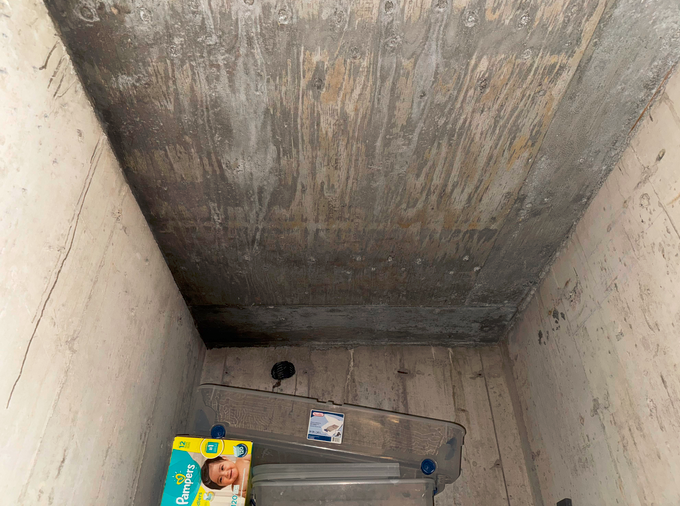
A residential cold room is an unheated storage space that is often located beneath a concrete front porch.
It may also be called a:
- Cold cellar
- Cantina
- Root cellar
- Cold storage room
- Under-porch storage room
The room usually has concrete foundation walls, a concrete ceiling slab and one or more vents to the exterior. The door connects the cold room to the warmer basement.
Unlike a finished basement room, the cold room is intentionally separated from the home’s heated space. Its concrete surfaces remain cool throughout much of the year.
That construction helps keep food and drinks cool, but it also makes the room vulnerable to condensation.
Why Does Mold Grow in a Cold Room?
Mold needs moisture and a material that can support growth.
The concrete itself does not provide much food for mold. However, concrete surfaces collect dust, paint residue, soil, cardboard fibres and other organic particles. Mold can grow on those materials when the surface remains damp.
The main causes of cold room mold include:
Warm, Humid Air Meeting Cold Concrete
This is one of the most common causes of summer cold room condensation.
Warm air can hold more water vapour than cold air. When warm basement air or humid outdoor air enters the cold room, it cools against the concrete.
Once the surface temperature falls below the air’s dew point, water forms on the ceiling, walls, pipes and stored contents.
This is why a cold room can feel dry in winter but become wet or musty during June, July and August.
Air Leakage Around the Cold Room Door
A poorly sealed door allows conditioned basement air to enter the cold room.
During winter, warm interior air can condense against the cold concrete ceiling and exterior walls.
During summer, humid basement air can create the same problem, particularly when the basement itself has elevated relative humidity.
A loose door, missing weatherstripping or gaps around the frame can produce a continuous supply of moisture.
Foundation Seepage
Water may enter through:
- Foundation cracks
- Wall-to-floor joints
- Porous concrete
- Failed exterior waterproofing
- Poor grading
- Short or disconnected downspouts
- Saturated soil beside the foundation
Seepage is often mistaken for condensation because both conditions leave concrete damp.
However, seepage usually follows rain, snowmelt or changes in groundwater. Condensation is more closely connected to humidity and surface temperature.
Water Entry Through the Porch Slab
The cold room ceiling is usually the underside of the front porch.
Cracks, failed joints or deteriorated waterproofing above the room can allow rainwater or melting snow to penetrate the slab.
Signs may include:
- Localized ceiling stains
- Dripping after rain
- Rust marks
- Mineral deposits
- Spalling or crumbling concrete
- Mold concentrated beneath one porch joint
Cleaning the underside of the slab will not stop mold if water continues entering from above.
Poor Air Circulation
Tightly packed boxes and shelving restrict air movement.
Moisture becomes trapped behind stored items and in corners where surfaces remain cold. Mold may grow behind the shelving long before it becomes visible from the doorway.
Unsuitable Storage Materials
Cold rooms are poor places to store materials that readily absorb moisture.
High-risk contents include:
- Cardboard boxes
- Books
- Paper files
- Clothing
- Upholstered items
- Wooden furniture
- Rugs
- Mattresses
- Fabric seasonal decorations
These materials absorb humidity, remain damp and provide nutrients for mold.
Why Is There Mold on the Cold Room Ceiling?
The ceiling is often the coldest and most problematic surface.
Because it forms the underside of the exterior porch, the slab may remain cold even when the basement and outdoor air become warm.
Warm air rises toward the ceiling. When that air contacts the cold concrete, condensation can form across the slab.
Mold may then appear as:
- Scattered black dots
- Circular patches
- Dark growth along cracks
- Staining around pipes or fasteners
- A broad film across painted concrete
- Growth concentrated near the basement door
Ceiling mold can also indicate water entering through the porch. The moisture pattern, timing and condition of the concrete must be assessed before choosing a repair.
Cold Room Condensation Versus Foundation Seepage
Cold room condensation and water seepage require different solutions.
| Observation | More Consistent With Condensation | More Consistent With Seepage or Leakage |
|---|---|---|
| Moisture appears during hot, humid weather | Yes | Possible, but less likely without rain |
| Water forms across several cold surfaces | Yes | Less likely |
| Dampness follows heavy rain | Less likely | Yes |
| Water is concentrated around a crack | Less likely | Yes |
| Ceiling drips below a porch joint | Possible | Likely |
| White mineral residue appears on concrete | Possible moisture history | Common with water movement through masonry |
| Room improves when basement humidity drops | Yes | A leak may continue |
| Moisture returns despite low indoor humidity | Less likely | Inspect for water entry |
| Mold is mainly behind boxes and shelves | Often | Also possible |
| Paint bubbles or concrete deteriorates locally | Possible | More suggestive of water entry |
A cold room can have both problems at the same time.
For example, a small foundation crack may introduce water after storms while humid summer air creates condensation across the ceiling.
Why Does the Basement Cold Room Smell Musty?
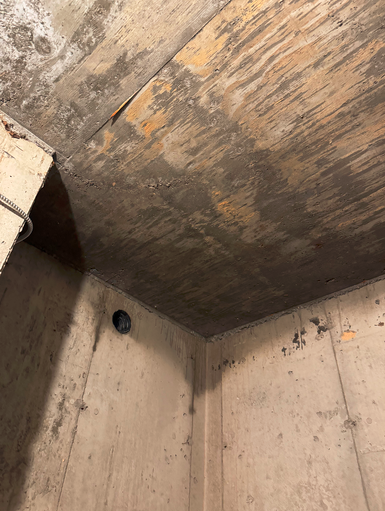
A musty or earthy odour usually indicates ongoing dampness and possible microbial growth.
The source may be visible, but it can also be hidden:
- Behind wooden shelves
- Under cardboard boxes
- Around the door frame
- Beneath peeling paint
- Inside framed or insulated walls
- Behind drywall added during a renovation
- Under flooring or raised platforms
- Inside damp stored materials
Odour absorbers, fragrances and air fresheners do not correct the cause.
The room must be emptied and inspected for moisture, damaged materials and concealed growth.
A strong smell with little visible mold may indicate contamination behind a finish or inside a building cavity.
Cold Room Ventilation Mistakes
Ventilation is often discussed as the main solution for cold room mold. In practice, the wrong ventilation strategy can make the room wetter.
Leaving the Exterior Vents Fully Open During Humid Summer Weather
Opening a vent only helps when the incoming air is drier than the air and surfaces inside the room.
On a hot, humid day, outside air may carry a large amount of moisture. When it enters a cool concrete room, that moisture can condense.
More outdoor air can therefore create more water on the walls and ceiling.
Leaving the Basement Door Open
Some homeowners leave the door open to improve airflow.
This allows warm basement air to enter the cold room continuously. If the concrete remains below the dew point, the increased airflow can produce more condensation.
The door should close properly and be weatherstripped where needed.
Using a Fan Without Controlling the Moisture Source
A fan moves air. It does not remove water vapour unless it is part of a properly designed ventilation or dehumidification strategy.
A fan aimed at wet concrete may help the surface dry after the humidity has been reduced. A fan that continuously brings humid air into the room may worsen condensation.
Blocking the Original Vents
Completely blocking vents without evaluating the room can also create stagnant conditions.
The correct approach depends on:
- Outdoor humidity
- Cold room temperature
- Basement humidity
- The original construction
- Seasonal use
- Whether active water entry is present
There is no single vent position that is correct for every cold room throughout the year.
Should Cold Room Vents Stay Open During Summer?
Cold room vents should not be left open automatically simply because it is summer.
The decision should be based on moisture conditions.
When outdoor air is warm and humid, bringing it into a colder room may cause condensation. During cooler, drier conditions, controlled ventilation may help remove stale air and moisture.
A practical approach is to:
- Install a hygrometer in the cold room.
- Monitor basement and outdoor humidity.
- Look for condensation after vents are opened.
- Keep the basement door closed.
- Avoid permanent vent alterations until the moisture source is understood.
- Have the room assessed if condensation continues despite humidity control.
The goal is not maximum airflow. The goal is controlled moisture.
Can Mold Be Cleaned From Cold Room Concrete?
Small areas of surface mold on sound concrete may sometimes be cleaned after the moisture source has been corrected.
Health Canada advises cleaning concrete with unscented soap and warm water, followed by prompt drying. It does not recommend using bleach as the standard method for indoor mold cleanup.
Before cleaning:
- Empty the room
- Remove contaminated cardboard and paper
- Wear suitable gloves, eye protection and respiratory protection
- Keep children, pets and vulnerable occupants away
- Do not dry-brush or sand moldy surfaces
- Avoid spreading dust into the finished basement
- Correct the leak or humidity problem first
Painting over mold does not remove it. It can conceal staining while moisture and growth continue beneath the coating.
Cleaning Limitations on Porous Materials
Porous materials can absorb mold growth and moisture below the visible surface.
They are more difficult to restore than concrete, metal or smooth plastic.
Cardboard and Paper
Moldy cardboard boxes, paper products and books are rarely practical to clean thoroughly.
They should generally be sealed in bags and discarded.
Replace cardboard storage with washable plastic containers that have secure lids.
Wood Shelving
Finished or solid wood may sometimes be cleaned when growth is limited to the surface.
However, deeply stained, decayed or repeatedly moldy wood may require removal. Particleboard, oriented strand board and unfinished composite wood are particularly difficult to restore after prolonged dampness.
Drywall
Drywall installed against a cold or damp foundation can conceal extensive growth.
If mold has developed beneath the paint or inside the paper facing, the affected drywall usually needs to be removed rather than surface cleaned.
Insulation
Wet or mold-contaminated insulation may need replacement.
Insulation should not be installed over an unresolved foundation leak, damp concrete or active mold.
Fabrics and Upholstered Items
Clothing, cushions, furniture, rugs and other fabrics can retain moisture and spores.
Items that became visibly moldy or remained in a damp cold room for an extended period may not be suitable for reuse.
Can a Cold Room Be Insulated?
A cold room can sometimes be insulated or converted, but the project must be designed carefully.
Simply attaching batt insulation and drywall to cold concrete can create a concealed condensation zone. Moisture may collect behind the finished wall, where mold remains hidden.
Before insulating:
- Repair foundation and porch leaks.
- Remove existing mold and damaged finishes.
- Allow the concrete to dry.
- Decide whether the space will remain a cold room or become part of the conditioned basement.
- Address exterior vents and the basement door as part of one system.
- Select materials suitable for below-grade concrete.
- Include proper air, thermal and moisture control.
- Confirm that the assembly will not trap water against the foundation.
A building-envelope, insulation or renovation professional should evaluate the room before it is finished.
Cold room conversions fail when the homeowner changes one component, such as adding insulation, without considering air movement, drainage and vapour control.
How to Prevent Mold in a Cold Room
Keep Relative Humidity Under Control
Use a hygrometer to monitor the cold room and adjacent basement.
Health Canada recommends maintaining indoor relative humidity between 30 and 50 percent. A dehumidifier may be helpful when condensation appears on cold surfaces or humidity rises above 50 percent.
Equipment should be suitable for the temperature where it operates. In some homes, controlling humidity in the adjacent basement is more practical than placing a standard dehumidifier inside a very cold space.
Seal the Door to the Basement
Check:
- Weatherstripping
- Door sweep
- Latch alignment
- Gaps around the frame
- Cracks between the frame and concrete
The door should not allow a steady flow of warm basement air into the cold room.
Store Items Away From Walls and Floors
Leave space around shelving and containers.
Do not place boxes directly on concrete. Use raised, washable shelving that allows air to circulate.
Metal or smooth plastic shelving is preferable to unfinished wood or particleboard.
Remove Cardboard and Fabric Storage
Use sealed plastic bins for items that must remain in the room.
Avoid storing:
- Important documents
- Books
- Clothing
- Bedding
- Furniture
- Rugs
- Electronics
- Items that can absorb moisture
Inspect the Room After Heavy Rain
Look for:
- New stains
- Drips
- Wet cracks
- Damp wall-to-floor joints
- Peeling coatings
- White mineral deposits
- Water beneath stored items
A recurring wet area after rain points toward leakage rather than humidity alone.
Check the Porch Above
Inspect the exterior slab, joints, edges and nearby drainage.
Water should move away from the porch and foundation. Cracks or failed waterproofing above the room may require repair.
Keep the Room Clean
Dust and debris provide material on which mold can grow.
Clean accessible concrete, shelving and containers periodically. Dry all surfaces promptly.
Do Not Run a Humidifier Nearby
A basement humidifier can increase the amount of water vapour entering the cold room.
Turn off unnecessary humidification when condensation or mold is present.
When Is Professional Cold Room Mold Removal Necessary?
Professional assessment should be considered when:
- A single mold patch is larger than three square metres
- Several areas are affected
- Mold returns after cleaning
- The source of moisture is unclear
- There is a strong musty smell but little visible growth
- Mold may be behind drywall or insulation
- The ceiling is extensively contaminated
- Water enters through the porch or foundation
- Materials are deteriorating
- The room contains extensive wood framing or porous finishes
- Contamination extends into the finished basement
- Previous repairs did not stop the problem
- A vulnerable occupant may be exposed
- Sewage or contaminated floodwater entered the room
A professional cold room mold assessment should identify both the contamination and the moisture pathway.
Removing mold without explaining why the room became wet is not a complete solution.
How Ultimate Mold Crew Handles Cold Room Mold
At Ultimate Mold Crew, we assess the cold room as part of the building rather than treating it as an isolated stained surface.
Depending on the property, the process may include:
- Inspecting the ceiling, walls, floor, door, vents and stored contents
- Measuring relative humidity and material moisture
- Looking for condensation patterns, foundation seepage and porch leakage
- Determining whether concealed finishes are affected
- Establishing containment where required
- Removing unsalvageable porous materials
- Cleaning affected concrete and structural surfaces
- Using HEPA-filtered equipment during remediation
- Drying the room and affected building materials
- Providing recommendations for humidity, ventilation, drainage or repairs
Mold testing is not automatically required when visible growth and moisture are already evident. Sampling may be considered when the source is uncertain, contamination may be concealed or documentation is required.
Cold Room Mold Prevention Checklist
Use this checklist before Toronto’s most humid summer weather arrives:
- Install a hygrometer
- Maintain indoor humidity between 30 and 50 percent
- Inspect the ceiling and walls for condensation
- Check the room after heavy rainfall
- Repair active porch and foundation leaks
- Weatherstrip the basement door
- Do not leave the door open for airflow
- Review vent conditions during humid weather
- Remove cardboard, paper and fabrics
- Replace unfinished wood shelving where practical
- Store items in washable plastic bins
- Leave gaps between storage and concrete walls
- Keep containers raised from the floor
- Clean dust and debris from surfaces
- Do not paint over visible mold
- Investigate recurring musty odours
Frequently Asked Questions
Is black growth on a cold room ceiling always toxic black mold?
No. Mold colour does not identify the species or determine toxicity.
Black staining can also come from dirt, soot, mineral deposits or deteriorating coatings. The moisture source and affected material are usually more important than colour when planning remediation.
Why does my cold room get wetter during summer?
The concrete remains cool while summer air becomes warm and humid.
When that air enters the room and contacts the cold ceiling or walls, moisture condenses. This can make summer more problematic than winter in some cold rooms.
Should I close my cold room vents in summer?
Not automatically.
Open vents may worsen condensation when outdoor air is humid. Fully blocking vents can also create stagnant conditions. Monitor humidity and condensation, and have the room assessed before permanently changing its ventilation.
Can I use bleach on cold room mold?
Health Canada does not recommend bleach as the standard method for indoor mold cleanup.
Small areas on concrete may be scrubbed with unscented soap and warm water, then dried quickly. Widespread, recurring or concealed growth needs further assessment.
Will a dehumidifier solve cold room mold?
A dehumidifier can reduce airborne moisture, but it will not repair foundation seepage, porch leaks or concealed water entry.
Humidity control is one part of the solution. The underlying moisture source must also be corrected.
Can mold grow directly on concrete?
Mold usually grows on dust, paint, organic residue and other materials present on the concrete surface.
A damp concrete wall or ceiling can still support visible mold when those materials are available.
Why does the cold room smell musty when I cannot see mold?
Growth may be concealed behind shelving, stored boxes, drywall, insulation or peeling coatings.
A persistent odour can also come from damp porous contents. Emptying and inspecting the entire room is often necessary.
Can cold room mold affect the rest of the basement?
Odours, particles and humid air can move through gaps around the door and other openings.
The risk is greater when the cold room connects directly to a finished basement or when contaminated materials are disturbed without containment.
Get Cold Room Mold Removal in Toronto
A damp cold room should not be treated as a simple cleaning issue.
Condensation, foundation seepage, porch leakage, storage practices and ventilation can all contribute to the same visible mold problem. The correct solution begins by identifying which moisture pathway is active.
Ultimate Mold Crew provides cold room mold inspection and remediation services throughout Toronto and the Greater Toronto Area.
Call 647-985-2739 to discuss visible mold, ceiling condensation, recurring staining or a persistent musty smell in your basement cold room.
Sources
- Health Canada: Guide to Addressing Moisture and Mould Indoors
https://www.canada.ca/en/health-canada/services/publications/healthy-living/addressing-moisture-mould-your-home.html
- University of Toronto Environmental Health and Safety: Preventing Mould Growth in Cold Rooms
https://ehs.utoronto.ca/wp-content/uploads/2016/02/Preventing-Mould-in-Cold-Rooms.pdf
- Natural Resources Canada: Basement Insulation, Floors, Walls and Crawl Spaces
https://natural-resources.canada.ca/energy-efficiency/home-energy-efficiency/keeping-heat-section-6-basement-insulation-floors-walls-crawl-spaces
- Health Canada: Mould
https://www.canada.ca/en/health-canada/services/air-quality/indoor-air-contaminants/reduce-humidity-moisture-mould.html
- City of Toronto: Mould
https://www.toronto.ca/community-people/health-wellness-care/health-programs-advice/mould/
- Canada Mortgage and Housing Corporation: Mould in Housing, Information for Occupants
https://assets.cmhc-schl.gc.ca/sf/project/cmhc/pdfs/content/en/mould-information-for-occupants.pdf
- Canadian Conservation Institute: Mould Prevention and Collection Recovery
https://www.canada.ca/en/conservation-institute/services/conservation-preservation-publications/technical-bulletins/mould-prevention-collection-recovery.html
