
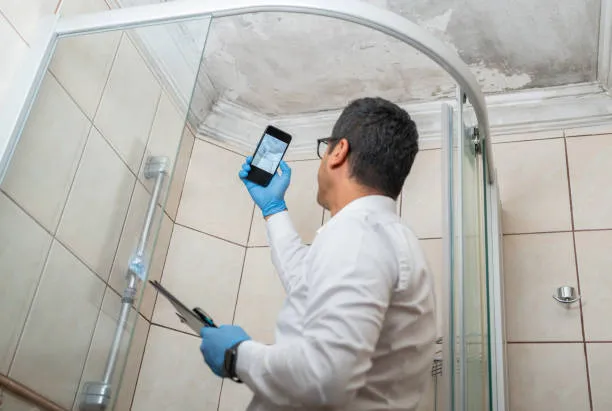
Updated on 19-Aug-2026
How Much Does Mold Testing Cost in Toronto?
Mold inspection in Toronto and across Ontario in Canada costs $200–$900; full remediation ranges $500–$30000 depending on area. Our mold testing prices starts $200 depnding upon the area and various other factors, Get in touch with our Toronto mold specialists for free mold inspection of your property and get affordable estimate.
A basic mold air test may cost less.
A full mold inspection with moisture readings, multiple air samples, surface samples, lab analysis and a written report will cost more.
The price changes because mold testing is not one single service. One homeowner may need a simple surface sample from visible mold on a wall. Another may need multiple air samples across a basement, main floor and upstairs bedroom, plus an outdoor control sample for comparison.
That difference matters. You can learn about the difference between mold inspection and mold testing here.
If mold is clearly visible and the affected material needs removal, testing may not be the best first expense. If the source is hidden, the smell is persistent, the home is being sold, or documentation is needed, professional mold testing in Toronto can help turn suspicion into usable information.
Mold Testing Cost in Toronto: Quick Snapshot
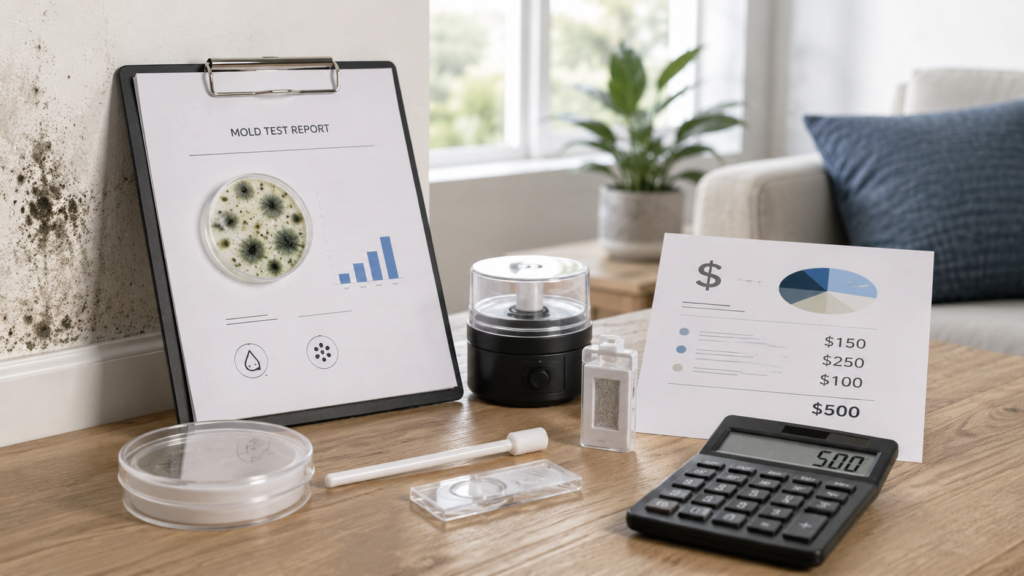
Here is a practical planning range for common mold testing services in Toronto.
| Mold Testing Service | Typical Toronto Cost | What It Usually Includes |
|---|---|---|
| Basic air sampling | $250 to $450 | One or two indoor air samples with lab analysis |
| Indoor and outdoor air comparison | $400 to $700 | Indoor samples compared with an outdoor control sample |
| Surface mold sample | $75 to $150 per sample | Swab or tape-lift sample from visible growth |
| Additional air sample | $75 to $150 per sample | Extra room, floor, basement, attic or comparison zone |
| Moisture inspection without lab sampling | $200 to $400 | Visual inspection, moisture readings, humidity checks |
| Full mold inspection with testing | $500 to $900 | Inspection, moisture assessment, samples and written report |
| Larger home or multi-zone testing | $900 to $1,500+ | Multiple floors, rooms, HVAC zones or documentation needs |
| Commercial mold testing | $800 to $2,500+ | Larger areas, more samples, reporting and coordination |
These are planning numbers, not a final quote.
The final cost depends on the number of samples, property size, reason for testing, access difficulty, report requirements and lab turnaround time.
Why Mold Testing Costs Vary So Much
Two people can ask for “mold testing” and need completely different services.
The cost changes because the inspector may need to answer different questions.
For example:
- Is there hidden mold behind a wall?
- Are indoor mold spores elevated compared with outdoors?
- Is the visible growth actually mold?
- Is the air quality different in the basement than upstairs?
- Did remediation work succeed?
- Is documentation needed for a buyer, tenant, landlord, insurer or property manager?
- Is the problem related to a recent leak, flood or condensation issue?
A good quote should explain what is being tested, how many samples are included, where those samples will be taken, and what the report will tell you.
If a company gives one flat number without asking about the property or the reason for testing, the quote may be too vague to compare.
Toronto Mold Testing Cost by Sample Type
Air Mold Testing Cost
Air mold testing in Toronto usually costs $250 to $700 for most residential jobs, depending on how many samples are collected.
Air samples are commonly used when:
- There is a musty smell but no visible mold
- Hidden mold is suspected
- Symptoms seem worse inside the property
- Mold may be inside a wall, ceiling, basement or HVAC-related area
- A buyer, seller or property manager wants documentation
- Post-remediation verification is being considered
A basic air test may include one or two indoor samples.
A more useful setup often includes at least one outdoor control sample. The outdoor sample helps compare indoor mold spore levels with the normal outdoor background level at the time of testing.
Without that comparison, indoor results can be harder to interpret.
For example, elevated outdoor spores during certain weather conditions can affect what enters the home naturally through open doors, windows and ventilation.
Surface Mold Sampling Cost
Surface mold sampling usually costs $75 to $150 per sample when added to an inspection or air-testing visit.
Surface samples are taken from visible growth using:
- Swabs
- Tape lifts
- Other sample media suitable for the surface
Surface sampling is useful when the question is:
What is growing on this specific surface?
It may be used on:
- Drywall
- Wood
- Window trim
- Ceiling materials
- Baseboards
- Furniture
- HVAC registers
- Attic sheathing
- Basement framing
Surface sampling does not tell you how much mold is in the air across the home. It identifies what was sampled from that surface.
Bulk Material Sampling Cost
Bulk sampling means a small piece of material is collected and sent for lab analysis.
This may be used for:
- Drywall
- Insulation
- Ceiling tile
- Carpet
- Wood-based material
- Other suspect building materials
Bulk sampling is less common for everyday homeowner testing because removing material may not be necessary when mold is already visible.
It can be useful when documentation is needed or when the material condition is unclear.
The cost depends on the material, access and lab requirements.
Moisture Inspection Cost Without Mold Sampling
A moisture inspection without lab testing may cost $200 to $400 for many standard residential situations.
This type of inspection may include:
- Visual review
- Moisture meter readings
- Humidity readings
- Condensation review
- Leak-source review
- Thermal imaging where appropriate
- Checking high-risk areas such as basements, bathrooms, attics and window areas
This can be the better first step when the main question is not “what species is this?” but “where is the water coming from?”
Many mold problems are solved by finding the moisture source first.
Full Cost Of Mold Inspection With Testing in Toronto
A full mold inspection with testing usually costs $500 to $900 for many Toronto residential properties.
This may include:
- Visual inspection
- Moisture readings
- Humidity checks
- Review of water damage
- Air samples
- Surface samples if needed
- Lab analysis
- Written findings
- Recommendations for next steps
The price increases when the inspector needs to test several floors, multiple rooms, hidden areas, a finished basement, an attic, crawl space, rental unit or commercial space.
Cost by Property Type
Condo Mold Testing Cost
Condo mold testing often falls on the lower end when the unit is small and only one or two areas need sampling.
A basic condo test may cost $250 to $600.
The cost can rise when:
- The issue involves a fan coil
- Water came from another unit
- Several rooms are affected
- The condo board or property manager needs documentation
- Air samples need to compare multiple zones
- A report is required for insurance or dispute resolution
Toronto condos can be tricky because water may come from common elements, neighbouring units, risers, windows, balconies or fan-coil systems.
Testing should be paired with a moisture investigation.
Detached or Semi-Detached Home Mold Testing Cost
A typical detached or semi-detached Toronto home may require more samples because there are more zones to compare.
Common sample areas include:
- Basement
- Main floor
- Second floor
- Attic access area
- Area near a leak
- Outdoor control sample
A standard home test may cost $400 to $900.
Larger homes, finished basements and multiple concern areas can push the cost higher.
Basement Mold Testing Cost
Basement mold testing often costs $300 to $800, depending on whether the issue is visible, hidden or related to indoor air.
Basements may need testing when:
- There is a musty smell
- Mold is suspected behind finished walls
- A flood or leak happened recently
- The basement has high humidity
- A tenant, buyer or insurer wants documentation
- Visible mold is present in one area but hidden spread is suspected
If visible mold is already present on drywall, insulation or wood, testing may not be needed before remediation.
A moisture inspection may be more useful.
Attic Mold Testing Cost
Attic mold testing often costs $300 to $900, depending on access, sample type and whether air sampling, surface sampling or moisture investigation is needed.
Attic testing may involve:
- Visual inspection of sheathing and framing
- Moisture readings
- Surface samples from roof sheathing
- Review of bathroom exhaust ducting
- Ventilation and air-leakage review
- Documentation for real estate or insurance
If attic mold is already visible across sheathing, testing may not change the remediation decision.
The more important question may be why the attic became damp.
Commercial Mold Testing Cost
Commercial mold testing often starts around $800 and can exceed $2,500 depending on size, number of samples and report requirements.
Commercial spaces may need more detailed testing because of:
- Multiple HVAC zones
- Employee complaints
- Tenant concerns
- Property-management requirements
- Insurance documentation
- Larger floor area
- Multiple affected rooms
- After-hours access
- Formal reporting needs
A commercial mold test should be scoped carefully before pricing.
What Is Included in the Price?
A mold testing quote should tell you what is included.
Look for:
- Number of air samples
- Number of surface samples
- Outdoor control sample
- Lab fees
- Moisture inspection
- Thermal imaging, if included
- Written report
- Photos
- Interpretation of results
- Recommendations
- Turnaround time
- Travel fees, if any
- Rush lab fees, if any
A cheap quote may not include the lab report, interpretation, extra samples or a proper moisture assessment.
That can make it more expensive later because you may end up paying again for information the first test did not answer.
Lab Fees and Report Fees
Some companies include lab analysis in the quoted price. Others charge per sample.
Before booking, ask:
- Are lab fees included?
- How many samples are included?
- What does each extra sample cost?
- Will I receive a written report?
- Will the report explain what the results mean?
- Will the report compare indoor and outdoor findings?
- Will the inspector recommend next steps?
- How long will results take?
A lab result without interpretation can be confusing.
The report should connect the findings back to the property conditions, moisture source and next decision.
Rush Testing and Faster Lab Results
Standard lab turnaround often takes a few business days.
Rush service may be available when:
- A real estate closing is approaching
- A tenant or landlord needs documentation
- A family is deciding whether to return home
- Remediation is scheduled
- Post-remediation verification is time-sensitive
Rush fees can increase the cost.
Ask whether faster service changes only the lab result time or also the site visit schedule.
Is Mold Testing Always Worth the Cost?
No.
Mold testing is valuable in the right situation.
It can be a waste of money in the wrong one.
Testing is often worth it when:
- You smell mold but cannot see it
- The source is unclear
- You suspect hidden mold behind walls or ceilings
- A home purchase is involved
- A landlord, tenant, insurer or condo manager needs documentation
- You need indoor and outdoor comparison
- Post-remediation clearance is being considered
- Occupants report symptoms that may be linked to the indoor environment
- The same area keeps developing mold after cleaning
Testing may not be necessary when:
- Mold is already visible across a large area
- Drywall, insulation or wood is clearly contaminated
- The material already needs removal
- The moisture source is obvious
- You only want to know whether the visible patch is “mold”
- The cost of testing delays needed cleanup
In many visible mold cases, the money is better spent on moisture correction and remediation.
Why Visible Mold Often Does Not Need Testing
If you can see mold on drywall, wood, insulation or other building materials, a lab test may not change the next step.
The material may still need cleaning, removal or remediation.
The water source still needs to be fixed.
The area still needs to be dried.
The EPA states that in most cases, if visible mold growth is present, sampling is unnecessary. There are also no federal limits for mold or mold spores, so sampling cannot be used to prove a building is compliant with a universal mold standard.
That is why a good mold company should not sell testing as automatic.
The right approach depends on the question you are trying to answer.
What Changes the Final Mold Testing Price?
The final cost depends on the question the test is meant to answer.
A small visible patch under a sink does not need the same testing plan as a musty finished basement, a real-estate transaction or a commercial tenant complaint.
1. Number of Samples
This is usually the biggest cost factor.
Each air, surface or bulk sample may carry a lab fee. More samples mean more collection time, more lab analysis and more interpretation.
A useful testing plan may include:
- One outdoor control sample
- One sample from the area of concern
- One comparison sample from an unaffected area
- Extra samples from bedrooms, basements, attics or HVAC-related areas
- Surface samples from visible growth where identification is needed
A single indoor air sample without context can be hard to interpret.
2. Size of the Property
Larger properties usually require more sampling zones.
A small condo may need one or two indoor areas plus an outdoor comparison. A detached Toronto home with a finished basement, attic concern and several bedrooms may need a broader plan.
3. Type of Mold Concern
The reason for testing affects the scope.
A musty smell with no visible mold may require more investigation than a visible patch on drywall.
Hidden mold concerns may require moisture readings, thermal imaging, inspection openings or multiple samples.
4. Lab Turnaround Time
Standard lab results may take a few business days.
Rush results may cost more.
Rush testing may be useful for:
- Real-estate closings
- Insurance deadlines
- Tenant concerns
- Remediation scheduling
- Post-remediation clearance
Ask whether the rush fee applies per sample or to the whole report.
5. Report Detail
A basic lab result is not the same as a full written interpretation.
A more useful report may include:
- Sample locations
- Photos
- Indoor and outdoor comparison
- Spore-type notes
- Moisture findings
- Conditions observed during inspection
- Recommendations for remediation or prevention
- Notes on whether further investigation is needed
A cheaper test that gives only raw lab numbers may leave you with more questions than answers.
6. Access Difficulty
Cost may increase when the inspector needs to access:
- Attics
- Crawl spaces
- Finished basement cavities
- Mechanical rooms
- Condo fan-coil areas
- Tight storage rooms
- Commercial ceiling spaces
- Multi-unit buildings
Access matters because testing often works best when paired with moisture investigation.
7. Documentation Needs
Testing for personal peace of mind is different from testing for:
- Insurance
- Rental disputes
- Property management
- Condo boards
- Real-estate sales
- Legal documentation
- Post-remediation verification
The more formal the documentation, the more detailed the inspection and report usually need to be.
DIY Mold Test Kits Versus Professional Mold Testing
DIY mold test kits may look attractive because they are cheap.
Some kits cost far less than a professional visit. The problem is that they often do not answer the real question.
A DIY kit may tell you that mold spores exist.
That is not surprising.
Mold spores are common indoors and outdoors. The more useful question is whether the indoor condition is unusual, elevated, connected to a moisture problem or coming from a hidden source.
Professional testing is more useful when:
- You need defensible documentation
- You need air and surface comparison
- You need a moisture assessment
- You need a written report
- You need help deciding whether remediation is required
- You need post-remediation clearance
- You are dealing with a rental, condo, insurance or real-estate situation
A professional test should connect the lab result to the property conditions.
Without that connection, the result may not help you make a decision.
Mold Inspection Versus Mold Testing Versus Mold Remediation
These three services are often confused.
They are related, but they are not the same.
| Service | Main Purpose | When It Helps |
|---|---|---|
| Mold inspection | Find visible mold, moisture sources and affected materials | When you need to know what is happening and where water is coming from |
| Mold testing | Collect air, surface or material samples for lab analysis | When documentation or identification is needed |
| Mold remediation | Remove contamination and correct affected materials | When mold is visible, confirmed or likely inside damaged materials |
In many cases, inspection comes first.
Testing may be added when it will answer a useful question.
Remediation comes after the affected materials and moisture source are understood.
Should You Test Before Mold Removal?
Sometimes, but not always.
Testing before removal can be useful when:
- There is no visible mold
- The source is unclear
- You need documentation before demolition
- A landlord, tenant, buyer or insurer is involved
- The affected area may extend beyond what is visible
- You need a baseline before remediation
Testing may not be needed before removal when:
- Mold is already visible
- Drywall or insulation is clearly contaminated
- The material is wet and damaged
- The source is obvious
- The affected materials already need removal
- Waiting for lab results would delay urgent drying or cleanup
The practical question is:
Will testing change the next decision?
If the answer is no, testing may not be the best first expense.
Should You Test After Mold Removal?
Post-remediation testing may be useful when documentation matters.
It is often considered when:
- The project was large
- Mold was hidden
- Occupants are sensitive
- A property sale is involved
- A rental dispute exists
- A condo board or insurer needs records
- You want independent verification
- The remediation company recommends clearance testing
Post-remediation testing should happen after the work area has been cleaned, dried and prepared for verification.
If the moisture source is still active, testing will not fix the problem.
Example Mold Testing Price Scenarios in Toronto
Scenario 1: Musty Basement With No Visible Mold
A homeowner notices a persistent smell in a finished basement.
Possible testing plan:
- Moisture inspection
- One basement air sample
- One main-floor comparison sample
- One outdoor control sample
Estimated cost: $450 to $800
Scenario 2: Visible Growth Under a Sink
There is visible mold inside a cabinet after a slow plumbing leak.
Possible approach:
- Moisture inspection
- Surface sample only if documentation is needed
- No air test unless hidden spread is suspected
Estimated cost: $200 to $450, depending on whether sampling is needed.
Scenario 3: Condo Buyer Wants Mold Documentation
A buyer is concerned about odour near a fan coil or bathroom wall.
Possible testing plan:
- Visual inspection
- Moisture readings
- Indoor air sample
- Outdoor or hallway comparison where appropriate
- Written report
Estimated cost: $400 to $900
Scenario 4: Attic Sheathing Has Dark Staining
A homeowner sees dark patches on roof sheathing.
Possible approach:
- Attic inspection
- Moisture and ventilation review
- Surface sample if identification is needed
- Photos and written recommendations
Estimated cost: $300 to $800
Scenario 5: Post-Remediation Clearance
Mold removal has been completed in a basement or attic.
Possible testing plan:
- Visual review
- Moisture confirmation
- Air samples or surface samples
- Written clearance report
Estimated cost: $400 to $900+, depending on scope.
Scenario 6: Commercial Tenant Complaint
A commercial tenant reports musty odours and symptoms.
Possible testing plan:
- Multiple indoor air samples
- Outdoor control sample
- HVAC zone review
- Moisture inspection
- Formal written report
Estimated cost: $800 to $2,500+
Questions to Ask Before Booking Mold Testing
Before paying for mold testing, ask the company:
- How many samples are included?
- Are lab fees included in the price?
- Is an outdoor control sample included?
- What does each extra sample cost?
- Will you inspect for moisture, or only collect samples?
- Will I receive a written report?
- Will the report explain what the results mean?
- How long will lab results take?
- Is rush reporting available?
- Will testing change the remediation recommendation?
- Do I need testing if the mold is already visible?
- Can the same visit include inspection and sampling?
- Is post-remediation clearance available?
- Will the report be suitable for insurance, real estate or rental documentation?
A good mold testing quote should be clear enough that you understand what you are buying.
How Ultimate Mold Crew Approaches Mold Testing Costs
Ultimate Mold Crew does not recommend testing for every mold concern.
If mold is visible and the affected material clearly needs removal, an inspection and remediation plan may be the better first step.
Testing may be recommended when it helps answer a real question, such as:
- Is there a hidden mold source?
- Are indoor air samples elevated compared with outdoors?
- Is documentation needed?
- Was remediation successful?
- Is a musty smell linked to mold?
- Is contamination limited to one area or more widespread?
During a mold inspection, our team may review visible conditions, moisture levels, humidity, recent leaks, building materials and the reason testing is being requested.
The goal is to avoid unnecessary sampling while still giving homeowners, buyers, landlords, tenants and property managers useful information.
Frequently Asked Questions
How much does mold testing cost in Toronto?
Most residential mold testing in Toronto costs $250 to $900, depending on the number of samples, property size, inspection needs and report requirements. Larger homes, commercial spaces and post-remediation verification can cost more.
How much does an air mold test cost?
A basic air mold test often costs $250 to $450. Testing with multiple indoor samples and an outdoor comparison sample commonly costs $400 to $700 or more.
How much does a surface mold sample cost?
Surface samples often cost $75 to $150 per sample when added to an inspection or air-testing visit.
Do I need mold testing if I can see mold?
Not always. If mold is visible and the material needs cleaning or removal, testing may not change the next step. A moisture inspection may be more useful.
Is mold testing the same as a mold inspection?
No. A mold inspection looks for visible mold, moisture sources and affected materials. Mold testing collects samples for lab analysis. Many projects need inspection first, and testing only when it adds value.
Are DIY mold test kits reliable?
DIY kits may show that mold exists, but they often do not identify the moisture source, compare indoor and outdoor conditions properly or provide a professional interpretation. They may not be enough for insurance, real estate or rental documentation.
How many mold samples do I need?
It depends on the concern. A useful plan may include an outdoor control sample, one or more indoor air samples and surface samples where visible growth needs identification.
How long do mold test results take?
Standard lab results often take a few business days. Rush reporting may be available for an additional fee.
Is mold testing covered by insurance?
It depends on the policy and the cause of damage. Testing tied to a sudden water event may be treated differently than testing for a long-term maintenance issue. Check with your insurer.
Should I test before buying a house?
Testing may be useful if there is a musty smell, visible staining, past water damage, basement dampness, attic staining or concern about hidden mold.
Can mold testing prove a home is safe?
No test can prove a home is permanently safe or mold-free. Testing provides information about the sampled conditions at the time of collection.
What is better: air testing or surface testing?
Air testing helps compare airborne conditions. Surface testing identifies what is on a specific material. The right choice depends on the question being asked.
Final Word
Mold testing in Toronto can be useful, but only when it answers the right question.
If mold is visible and the material is already damaged, testing may not be necessary before remediation. If the smell is hidden, the source is unclear, or documentation is needed, professional testing can provide valuable direction.
The best mold testing plan should include more than sample collection.
It should connect the lab results to moisture, building conditions and the next practical step.
Ultimate Mold Crew provides mold inspection, mold testing and mold remediation services in Toronto and the Greater Toronto Area.
Call 647-985-2739 if you need help deciding whether mold testing is worth it for your property.
sources
- https://www.epa.gov/mold/brief-guide-mold-moisture-and-your-home
- https://www.epa.gov/mold/mold-testing-or-sampling
- https://www.epa.gov/mold/mold-cleanup-your-home
- https://www.canada.ca/en/health-canada/services/publications/healthy-living/addressing-moisture-mould-your-home.html
- https://www.canada.ca/en/health-canada/services/air-quality/indoor-air-contaminants/reduce-humidity-moisture-mould.html
- https://www.ccohs.ca/oshanswers/chemicals/iaq/iaq_mould.html
