

Updated on 27-Jul-2026
Table of Contents
How Much Does Interior Demolition Cost in Toronto?
Interior demolition in Toronto usually costs $4 to $25 per square foot. Standard residential demolition often falls around $7 to $15 per square foot, while light selective demolition may start near $1,000 to $3,000. Larger projects such as kitchen demolition, basement strip-outs, condo demolition and full interior guts cost more because they involve more labour, debris removal, access planning, material handling and possible permit or hazardous-material checks.
Full-home interior gut projects can range from $15,000 to $50,000+, depending on square footage, debris, access and structural complexity.
The final price depends on what is being removed, how carefully it needs to be removed, where the property is located and what hidden risks such as mold infestations are discovered before or during the work.
Ultimate Mold Crew provides interior demolition, selective demolition, mold-related demolition and water-damage demolition services throughout Toronto and the Greater Toronto Area. Call 647-985-2739 Get a free affordable estimate today.
Transparent pricing. No surprise charges. Controlled demolition. Clean job sites.
Interior Demolition Cost in Toronto: Quick Breakdown
| Interior Demolition Project | Typical Toronto Cost | Common Scope |
|---|---|---|
| Light selective demolition | $1,000 to $3,000 | Small drywall, flooring, trim or cabinet removal |
| Bathroom demolition | $1,500 to $4,000 | Vanity, tile, tub, shower, drywall, flooring removal |
| Kitchen demolition | $3,000 to $8,000 | Cabinets, counters, backsplash, flooring, fixtures |
| Basement strip-out | $4,000 to $10,000+ | Drywall, flooring, insulation, ceiling, debris removal |
| Condo interior demolition | $5,000 to $25,000+ | Selective demolition with access and building rules |
| Full interior gut | $15,000 to $50,000+ | Removing non-structural interior finishes throughout |
| Commercial interior strip-out | $8 to $20+ per sq ft | Partitions, ceilings, flooring, fixtures, debris |
| Mold or water-damage demolition | Varies by scope | Controlled removal, containment, HEPA filtration if needed |
These are planning ranges, not guaranteed quotes.
A proper demolition estimate should separate labour, disposal, access, material type, hazardous-material concerns and any work that requires permit review or trade coordination.
Interior Demolition Cost Per Square Foot in Toronto
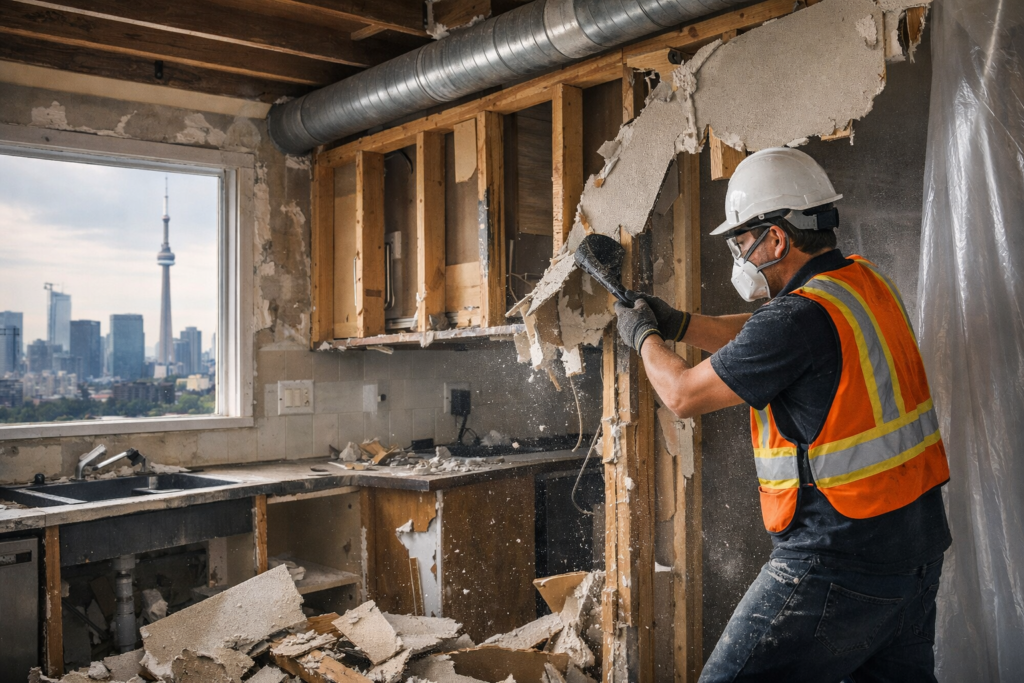
Cost per square foot is the most searched pricing metric.
Light Selective Demolition
- $4 – $8 per sq ft – Applies to drywall removal, flooring removal, or small bathroom strip-outs.
Standard Residential Demolition
- $7 – $15 per sq ft – Includes kitchen demolition, insulation removal, and ceiling removal.
Full Interior Gut
- $12 – $25 per sq ft – Includes full non-structural interior removal down to framing.
Commercial Strip-Out
- $8 – $20 per sq ft – Applies to office partitions, drop ceilings, and retail build-outs.
Higher-density materials, tile removal, plaster walls, or concrete flooring increase labour intensity and disposal weight.
NOTE – These are just estimates and are subject to change depending on various factors
What Interior Demolition Usually Includes
Interior demolition means removing interior building materials while leaving the main structure intact.
It can include removing:
- Drywall
- Flooring
- Tile
- Cabinets
- Countertops
- Trim
- Doors
- Ceiling materials
- Non-load-bearing partitions
- Insulation
- Built-ins
- Fixtures
- Damaged materials
- Water-damaged finishes
- Mold-contaminated materials when handled under a remediation scope
Interior demolition is different from exterior demolition or full building demolition.
Most homeowners need interior demolition before renovation, water damage repair, mold remediation, basement finishing, kitchen remodeling, bathroom remodeling or commercial tenant improvements.
Interior Demolition Cost Per Square Foot
Cost per square foot is useful for planning, but it should not be the only pricing metric.
In Toronto, interior demolition commonly falls into these ranges:
| Demolition Type | Typical Cost Per Square Foot | What It Means |
|---|---|---|
| Light selective demolition | $4 to $8 per sq ft | Limited removal of finishes or small areas |
| Standard residential demolition | $7 to $15 per sq ft | Common room-level demolition before renovation |
| Full interior gut | $12 to $25+ per sq ft | Larger removal of finishes across several rooms |
| Commercial strip-out | $8 to $20+ per sq ft | Tenant improvements, offices, retail or industrial interiors |
Per-square-foot pricing can be misleading when the job is small.
A 60-square-foot bathroom may not be priced only by square footage because tile, tub removal, plumbing disconnection, disposal and access take time.
A 1,000-square-foot open commercial unit may cost less per square foot than a small condo bathroom because access is easier and materials are more repetitive.
Why Interior Demolition Costs More in Toronto
Toronto demolition projects often cost more than smaller Ontario markets because of practical job-site realities.
Costs may increase because of:
- Parking limitations
- Downtown access
- Elevator bookings
- Condo loading dock rules
- Limited disposal access
- Dense neighbourhoods
- Narrow laneways
- Older homes
- Plaster and lath walls
- Possible asbestos-containing materials
- Working-hour restrictions
- Debris-bin placement challenges
- Permit or property-management coordination
A detached home with driveway access is usually easier to price than a downtown condo where all debris must be carried through service elevators during approved hours.
Cost by Project Type
Kitchen Demolition Cost in Toronto
Kitchen demolition in Toronto commonly costs $3,000 to $8,000.
The cost depends on:
- Number of cabinets
- Countertop material
- Tile backsplash
- Flooring type
- Appliance removal
- Sink and plumbing disconnection
- Electrical coordination
- Bulkhead or soffit removal
- Debris volume
- Condo or parking restrictions
A basic cabinet and countertop removal costs less.
A kitchen with stone countertops, tile flooring, plaster walls, heavy backsplash material or condo access restrictions costs more.
Kitchen demolition should also be careful enough to protect areas that are staying, such as adjacent flooring, walls, ceilings, plumbing rough-ins and electrical lines.
Bathroom Demolition Cost in Toronto
Bathroom demolition in Toronto commonly costs $1,500 to $4,000 for many standard projects.
The cost can increase when the bathroom includes:
- Full tile walls
- Mortar bed tile floors
- Cast iron tubs
- Shower bases
- Old plaster
- Water-damaged subfloor
- Mold behind tile or drywall
- Tight access
- Condo water shutoff coordination
- Disposal challenges
Bathrooms are small, but they can be labour-heavy.
Tile removal, tub removal and subfloor inspection can take more time than homeowners expect.
Basement Demolition Cost in Toronto
Basement demolition in Toronto commonly costs $4,000 to $10,000+.
A finished basement strip-out may include:
- Drywall removal
- Insulation removal
- Flooring removal
- Carpet and underpad removal
- Ceiling tile or drywall ceiling removal
- Baseboard and trim removal
- Paneling removal
- Built-in shelving removal
- Debris removal
- Mold or moisture review
Basements cost more when there is water damage, mold, old insulation, limited stair access or a large amount of debris.
If the basement had previous flooding or a musty smell, demolition may need to be coordinated with mold inspection or remediation.
Condo Interior Demolition Cost in Toronto
Condo interior demolition commonly costs $5,000 to $25,000+, depending on scope and building rules.
Condo projects can cost more because contractors may need to coordinate:
- Service elevator bookings
- Loading dock access
- Parking
- Noise rules
- Working-hour restrictions
- Property-management approvals
- Protection of common areas
- Debris removal through hallways
- Insurance documents
- Water shutoff requests
- Fan-coil or mechanical access
The demolition itself may be straightforward, but the logistics add time.
A condo kitchen demolition may cost more than a similar kitchen in a detached home because of access, protection and disposal requirements.
Full Interior Gut Cost in Toronto
A full interior gut can cost $15,000 to $50,000+.
The final price depends on:
- Square footage
- Number of rooms
- Number of floors
- Wall and ceiling materials
- Flooring type
- Kitchen and bathroom count
- Waste volume
- Bin access
- Structural review
- Hazardous-material concerns
- Salvage requirements
- Permit requirements
- Whether the property is occupied
A full gut is not just “rip everything out.”
Good demolition protects what needs to remain and avoids damaging structural, plumbing, electrical and HVAC elements that the renovation team still needs.
Commercial Interior Demolition Cost
Commercial interior demolition in Toronto often costs $8 to $20+ per square foot.
Commercial strip-outs may include:
- Office partitions
- Ceiling grid
- Acoustic ceiling tiles
- Flooring
- Millwork
- Washroom finishes
- Retail fixtures
- Lighting coordination
- Mechanical coordination
- Debris removal
- After-hours work
- Building-management approvals
Commercial projects need clear scope documents because tenants, landlords and property managers may each be responsible for different parts of the space.
Selective Demolition Versus Full Gut Demolition
Selective demolition removes only specific materials.
Full gut demolition removes most interior finishes within the agreed area.
Selective demolition may include:
- Removing one wall
- Removing flooring only
- Removing kitchen cabinets
- Removing damaged drywall
- Removing bathroom tile
- Removing wet insulation
- Opening a wall cavity for inspection
Full gut demolition may include:
- Removing drywall throughout
- Removing flooring throughout
- Removing ceilings
- Removing interior doors and trim
- Removing cabinets and fixtures
- Removing insulation
- Preparing the home for a full renovation
Selective demolition costs less overall but may cost more per hour because the crew must work carefully around materials that are staying.
Full gut demolition costs more overall but may be more efficient per square foot when access is easy and the scope is clear.
Interior Demolition for Mold or Water Damage
Interior demolition becomes more complex when mold or water damage is involved.
This is one of the most important differences between UMC and a general demolition crew.
If materials are mold-contaminated, demolition may require:
- Containment
- Negative air pressure
- HEPA filtration
- Controlled removal
- Bagging contaminated debris
- Protecting clean areas
- Cleaning exposed surfaces
- Moisture-source investigation
- Post-remediation documentation
If materials are water-damaged, demolition may need to expose wet cavities so the area can dry properly.
This can include removing:
- Wet drywall
- Wet insulation
- Wet flooring
- Swollen baseboards
- Moldy trim
- Damaged ceiling materials
- Contaminated porous materials
The goal is not only to remove materials. The goal is to prevent cross-contamination, allow drying and protect the next stage of repair.
“Our Toronto Interior demolition estimates change when mold removal or water damage is involved because the job is no longer just debris removal. We have to think about containment, moisture, air movement, worker safety and what happens before the space gets rebuilt.”
— Ultimate Mold Crew
What Changes the Final Interior Demolition Quote?
Interior demolition looks simple from the outside.
Remove the old material. Haul it away. Prepare the space for renovation.
In reality, the quote depends on what is being removed, how the material is attached, how much debris is created, how easy the property is to access and whether the job has safety or environmental concerns.
A small bathroom can cost more per square foot than a large open basement because tile, tub removal, plumbing protection and debris handling are labour-heavy.
A downtown condo can cost more than a detached home because the crew may need elevator bookings, hallway protection, limited work hours and more controlled debris removal.
1. Labour and Crew Size
Labour is usually the largest part of the demolition cost.
The crew size depends on:
- Project size
- Material weight
- Access difficulty
- Timeline
- Whether items must be removed carefully
- Whether containment is needed
- Whether debris must be carried by hand
- Whether the property is occupied
A simple flooring removal may need a small crew.
A full basement strip-out or condo gut may need more workers, more equipment and more coordination.
2. Debris Volume and Disposal
Demolition creates more waste than homeowners expect.
Disposal cost depends on:
- Weight of the material
- Volume of debris
- Bin size
- Bin placement
- Number of disposal trips
- Sorting requirements
- Contaminated material handling
- Dumping fees
- Whether debris must be carried through the home or building
Tile, plaster, drywall, flooring, cabinets and wet materials can fill bins quickly.
Disposal becomes more expensive when debris cannot be loaded directly into a bin and must be bagged, carried through hallways, taken down elevators or removed through narrow staircases.
3. Access, Parking and Bin Placement
Access is a major Toronto cost factor.
A detached home with a private driveway is usually easier to service than a downtown condo, laneway property or busy main-street commercial space.
Costs may increase when:
- There is no driveway
- Street parking is limited
- A bin cannot be placed nearby
- Debris must be carried long distances
- Elevators must be booked
- The property has narrow stairs
- Work is on an upper floor
- The site is downtown
- The building has strict loading rules
If a bin, equipment or materials need to occupy public property such as a sidewalk, boulevard, curb lane or road allowance, the City of Toronto may require a permit or approval depending on the situation. Confirm this before the project begins.
4. Condo Rules and Building Requirements
Condo demolition often requires more planning than house demolition.
Property management may ask for:
- Contractor insurance documents
- Elevator booking
- Loading dock booking
- Work-hour restrictions
- Noise-control rules
- Common-area protection
- Waste removal plan
- Security sign-in
- Water shutoff request
- Notice to neighbouring units
- Renovation application
- Drawings or scope description
These requirements add time.
They can also affect price because the crew may have fewer working hours each day and more protection work before demolition begins.
5. Material Type and Removal Difficulty
Not all materials come out the same way.
Costs are usually lower when removing:
- Floating floors
- Standard drywall
- Simple trim
- Basic cabinets
- Lightweight shelving
- Non-tiled finishes
Costs are usually higher when removing:
- Mortar-bed tile
- Stone countertops
- Plaster and lath
- Cast iron tubs
- Glued-down flooring
- Multiple flooring layers
- Wet insulation
- Built-in millwork
- Heavy cabinets
- Ceiling drywall
- Concrete toppings
- Old basement finishes
Older Toronto homes often have layered renovations.
A wall may contain drywall over plaster, paneling over drywall, or flooring installed over multiple previous floors. Those layers increase time, debris and disposal costs.
6. Hazardous Materials and Asbestos
Hazardous-material concerns can change the entire demolition plan.
In Ontario, asbestos rules apply to construction, renovation, repair and demolition work where asbestos-containing material may be encountered or disturbed. Ontario’s asbestos regulation requires asbestos-containing material that may be disturbed during demolition to be removed to the extent practicable before demolition continues.
This matters because many older Toronto homes and buildings may contain asbestos in materials such as:
- Vinyl floor tiles
- Sheet flooring
- Flooring adhesive
- Pipe insulation
- Boiler insulation
- Duct wrap
- Plaster
- Texture coats
- Ceiling tiles
- Drywall joint compound
- Vermiculite insulation
- Old cement board
Demolition should not disturb suspect materials until they are assessed.
If asbestos is suspected, testing or a designated-substance review may be needed before demolition.
Asbestos abatement is separate from regular interior demolition and can add significant cost.
7. Lead Paint, Silica Dust and Other Safety Concerns
Asbestos is not the only concern.
Older homes and commercial spaces may also involve:
- Lead-based paint
- Silica dust from concrete, tile or mortar
- Mold-contaminated materials
- Sewage-contaminated materials
- Rodent contamination
- Water-damaged insulation
- Electrical hazards
- Structural instability
These conditions can require extra containment, protective equipment, disposal procedures or specialty contractors.
A proper demolition quote should identify possible risks before walls, ceilings or flooring are opened.
8. Permits and Structural Changes
Interior demolition does not always require a building permit, but demolition connected to structural changes, new layouts, plumbing, HVAC or major renovation may require review.
Permit needs can depend on whether the project involves:
- Removing load-bearing walls
- Changing structural elements
- Creating new openings
- Altering plumbing
- Altering HVAC systems
- Altering fire separations
- Renovating multi-unit buildings
- Changing occupancy or use
- Major commercial tenant improvements
A demolition crew should not guess about structural walls.
If a wall may be load-bearing, a qualified contractor, engineer or designer should review it before removal.
Interior Demolition Cost Examples in Toronto
Scenario 1: Small Selective Drywall Removal
A homeowner needs one damaged wall opened before plumbing repair.
Likely scope:
- Protect nearby surfaces
- Remove drywall section
- Bag debris
- Expose wall cavity
- Clean work area
Estimated cost: $1,000 to $2,500
Cost increases if mold, insulation, electrical hazards or limited access are involved.
Scenario 2: Bathroom Demolition Before Renovation
A standard bathroom is being stripped for renovation.
Likely scope:
- Remove vanity
- Remove toilet
- Remove tile
- Remove tub or shower
- Remove flooring
- Remove damaged drywall
- Dispose of debris
Estimated cost: $1,500 to $4,000
Cost increases with heavy tile, cast iron tubs, condo access rules, mold or water-damaged subflooring.
Scenario 3: Kitchen Demolition Before Remodel
A Toronto homeowner is replacing an older kitchen.
Likely scope:
- Remove cabinets
- Remove countertops
- Remove backsplash
- Remove appliances
- Remove flooring if needed
- Protect adjacent areas
- Dispose of debris
Estimated cost: $3,000 to $8,000
Cost increases with stone countertops, tile floors, plaster walls, bulkheads, condo restrictions or salvage requirements.
Scenario 4: Finished Basement Strip-Out
A finished basement has old flooring, drywall, ceiling materials and possible moisture damage.
Likely scope:
- Remove flooring
- Remove baseboards
- Remove drywall
- Remove insulation
- Remove ceiling materials
- Dispose of debris
- Inspect for moisture or mold
Estimated cost: $4,000 to $10,000+
Cost increases if water damage, mold, poor stair access or heavy debris is present.
Scenario 5: Condo Interior Demolition
A condo unit needs partial demolition before renovation.
Likely scope:
- Building approval coordination
- Elevator booking
- Floor and hallway protection
- Cabinet, flooring or drywall removal
- Debris bagging
- Controlled removal through common areas
- Disposal
Estimated cost: $5,000 to $25,000+
Cost increases when the building restricts work hours, requires extra protection, limits elevator access or involves several rooms.
Scenario 6: Full Interior Gut
A house is being gutted before a major renovation.
Likely scope:
- Remove interior drywall
- Remove flooring
- Remove ceilings
- Remove trim and doors
- Remove cabinets and fixtures
- Remove non-structural partitions
- Dispose of large debris volumes
- Coordinate with renovation trades
Estimated cost: $15,000 to $50,000+
Cost increases with hazardous materials, plaster, multiple floors, structural changes, heavy fixtures and limited bin access.
Scenario 7: Mold-Related Demolition
A basement wall or ceiling area has mold after a leak.
Likely scope:
- Containment
- Controlled material removal
- Bagging contaminated debris
- HEPA filtration
- Cleaning exposed framing
- Moisture investigation
- Preparing the area for remediation or rebuild
Estimated cost: varies by contamination and scope
This should not be priced like standard renovation demolition because cross-contamination control matters.
DIY Interior Demolition: When It Makes Sense and When It Does Not
Some homeowners can handle very small demolition tasks safely.
DIY may be reasonable for:
- Removing loose shelving
- Pulling small trim pieces
- Removing a small amount of carpet
- Taking down non-hazardous fixtures
- Clearing furniture before contractors arrive
DIY becomes risky when the work involves:
- Suspect asbestos materials
- Old flooring or adhesive
- Plaster and lath
- Ceiling texture
- Mold
- Water-damaged drywall
- Sewage-contaminated materials
- Electrical wiring
- Plumbing
- Load-bearing walls
- Condo rules
- Large debris disposal
- Heavy tubs, tile or countertops
The most expensive DIY mistake is removing material that should have been tested, contained or reviewed first.
If the home is older, the material is unknown or mold/water damage is involved, get professional advice before demolition starts.
How to Reduce Interior Demolition Costs in Toronto
The best way to lower demolition costs is not to hire the cheapest crew.
It is to reduce uncertainty before the crew arrives.
You can help control cost by:
- Sending photos before quoting
- Clearly marking what stays and what goes
- Removing personal belongings
- Clearing access routes
- Booking condo elevators early
- Confirming parking or bin placement
- Testing suspect materials before work begins
- Separating salvage items from waste
- Avoiding last-minute scope changes
- Confirming whether plumbing or electrical disconnection is needed
- Having renovation drawings ready if available
A clear scope prevents arguments, delays and change orders.
Questions to Ask Before Hiring an Interior Demolition Contractor in Toronto
Before approving a quote, ask:
- What exactly is included?
- What is not included?
- Is debris removal included?
- Are disposal fees included?
- Is bin rental included?
- Will materials be bagged or loaded directly?
- Will you protect floors, hallways and common areas?
- Is condo coordination included?
- Are permits needed for this scope?
- Are plumbing or electrical disconnections included?
- Are hazardous materials suspected?
- Do we need asbestos testing before demolition?
- How will dust be controlled?
- Is mold containment needed?
- How many days will the job take?
- What happens if hidden damage is found?
- Will you provide photos after demolition?
- Is the space left broom-clean or construction-ready?
- Who handles reconstruction after demolition?
- Is the quote fixed or subject to change after opening walls?
A good contractor should explain the scope in plain language.
If the quote is vague, the final invoice may not be.
Red Flags in Interior Demolition Quotes
Be careful when a contractor:
- Quotes without seeing photos or visiting
- Ignores asbestos risk in older homes
- Says permits never matter
- Does not ask what needs to stay
- Does not include disposal
- Does not mention floor or hallway protection
- Treats moldy demolition like regular demolition
- Cannot explain dust control
- Plans to remove unknown materials without testing
- Does not ask about condo rules
- Gives a low price but excludes debris removal
- Refuses to put the scope in writing
Interior demolition is supposed to prepare the space for the next stage.
Bad demolition can damage that next stage before it even starts.
How Ultimate Mold Crew Prices Interior Demolition
Ultimate Mold Crew prices interior demolition based on scope, access, material type, disposal volume and whether the work overlaps with mold or water damage.
During the estimate, we may consider:
- Area size
- Rooms affected
- Materials being removed
- Debris volume
- Bin or disposal needs
- Parking and access
- Condo or building rules
- Dust control
- Mold or moisture concerns
- Water-damaged materials
- Suspect asbestos-containing materials
- Whether containment is required
- Whether photos or documentation are needed
- Whether the space is being prepared for remediation, drying or renovation
For regular renovation demolition, the goal is to remove materials cleanly and safely.
For mold or water-damage demolition, the goal is more controlled: prevent cross-contamination, expose affected cavities, remove damaged porous materials and prepare the area for proper cleaning, drying or remediation.
That difference matters.
Frequently Asked Questions
How much does interior demolition cost in Toronto?
Interior demolition in Toronto usually costs $4 to $25 per square foot. Most standard residential projects fall around $7 to $15 per square foot, while full interior gut projects can cost more depending on access, debris, materials and hazardous-material concerns.
How much does kitchen demolition cost in Toronto?
Kitchen demolition commonly costs $3,000 to $8,000. The price depends on cabinet volume, countertop material, backsplash, flooring, appliance removal, access and disposal.
How much does bathroom demolition cost in Toronto?
Bathroom demolition commonly costs $1,500 to $4,000. Heavy tile, cast iron tubs, water damage, mold, condo access and subfloor issues can increase the cost.
How much does basement demolition cost?
Basement demolition commonly costs $4,000 to $10,000+. Finished basements cost more when drywall, insulation, flooring, ceilings, moisture damage or mold are involved.
How much does a full interior gut cost in Toronto?
A full interior gut can cost $15,000 to $50,000+ depending on square footage, number of rooms, material type, debris volume, access and whether hazardous materials are present.
Is debris removal included in demolition cost?
Sometimes. Always ask whether debris removal, bin rental, disposal fees and cleanup are included in the estimate.
Do I need a permit for interior demolition in Toronto?
Not always. Permit requirements depend on the scope. Structural changes, load-bearing wall removal, plumbing, HVAC, fire separations, major renovations or commercial work may require permit review.
Do I need asbestos testing before interior demolition?
You may need asbestos testing if the building is older or suspect materials may be disturbed. Ontario asbestos rules apply to construction, renovation, repair and demolition work where asbestos-containing materials may be encountered or disturbed.
Why is condo demolition more expensive?
Condo demolition can cost more because of elevator bookings, loading dock rules, work-hour limits, common-area protection, insurance requirements, parking restrictions and debris removal logistics.
Can I do interior demolition myself?
Small non-hazardous tasks may be manageable. DIY demolition is risky when the work involves asbestos risk, old materials, mold, water damage, electrical wiring, plumbing, structural walls, heavy tile or condo rules.
Is mold demolition different from regular demolition?
Yes. Mold-related demolition may require containment, HEPA filtration, controlled removal, bagging, cleaning and moisture investigation. It should not be treated like ordinary debris removal.
What is selective demolition?
Selective demolition removes only specific materials or sections while protecting surrounding areas. It is common before renovation, plumbing repair, mold remediation or water damage restoration.
What is a full interior gut?
A full interior gut removes most non-structural interior finishes from the agreed area, such as drywall, flooring, ceilings, trim, doors, cabinets and fixtures.
Why did my demolition quote increase after walls were opened?
Hidden conditions can change the scope. Mold, water damage, asbestos-containing materials, multiple material layers, damaged framing or unexpected mechanical systems can increase labour and disposal costs.
Does UMC handle demolition after water damage?
Yes. Ultimate Mold Crew handles selective interior demolition connected to water damage, mold remediation and restoration projects throughout Toronto and the GTA.
Final Word
Interior demolition cost in Toronto depends on more than square footage.
The final price is shaped by labour, debris, access, material type, condo rules, hazardous-material risk, permits and whether the job involves mold or water damage.
A simple selective demolition project may cost a few thousand dollars.
A basement strip-out, condo demolition or full interior gut can cost much more because the work requires more planning, protection, disposal and coordination.
The best demolition job is not the fastest one. It is the one that removes the right materials, protects what stays, controls dust, avoids unsafe disturbance and prepares the property properly for the next phase.
References
- https://www.ontario.ca/document/guide-regulation-respecting-asbestos-construction-projects-and-buildings-and-repair-2
- https://www.ontario.ca/laws/regulation/050278
- https://www.ontario.ca/laws/regulation/r05278
- https://www.toronto.ca/services-payments/building-construction/apply-for-a-building-permit/
- https://www.toronto.ca/services-payments/streets-parking-transportation/apply-for-a-street-occupation-permit/
- https://achievesafety.ca/working-at-heights-training-ontario/
- https://www.ontario.ca/page/working-heights-training
