
Updated on 12-Jun-2026
A dehumidifier is supposed to help prevent mold in basement.
That is why finding black spots, slime or a musty smell inside the machine can be so frustrating.
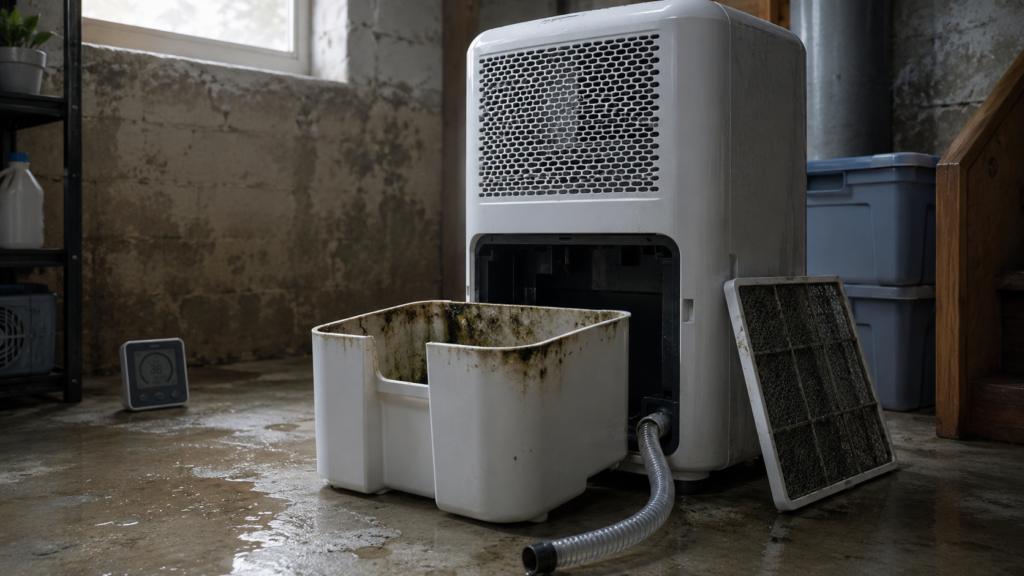
The problem is more common than many homeowners realize. A dehumidifier constantly collects water from the air. Its bucket, filter, drain connection and internal components can remain damp for long periods, especially in a humid Toronto basement.
Add dust, lint and stagnant water, and the appliance meant to control moisture can develop its own maintenance problem.
The good news is that light contamination inside an accessible bucket or washable filter may be manageable. Mold deeper inside the coils, fan, pump or sealed housing is a different situation.
Lets learn what you can reasonably clean, when the dehumidifier may need repair or replacement, and how to determine whether the musty smell is coming from the appliance or the basement around it.
Table of Contents
Key Takeaways
- A dehumidifier can develop mold when water, dust and organic debris remain inside it.
- Common problem areas include the bucket, filter, drain hose, condensate outlet and internal water channels.
- The machine should be unplugged before any cleaning or inspection.
- Wash only the parts identified as owner-serviceable in the manufacturer’s manual.
- Filters must dry fully before being reinstalled.
- A persistent musty smell may indicate contamination inside inaccessible coils, fans or internal insulation.
- Cleaning the appliance will not fix a basement leak, wet drywall or mold behind stored contents.
- Replacing an older or deeply contaminated unit may be more practical than dismantling and cleaning it.
Can a Dehumidifier Grow Mold?
Yes.
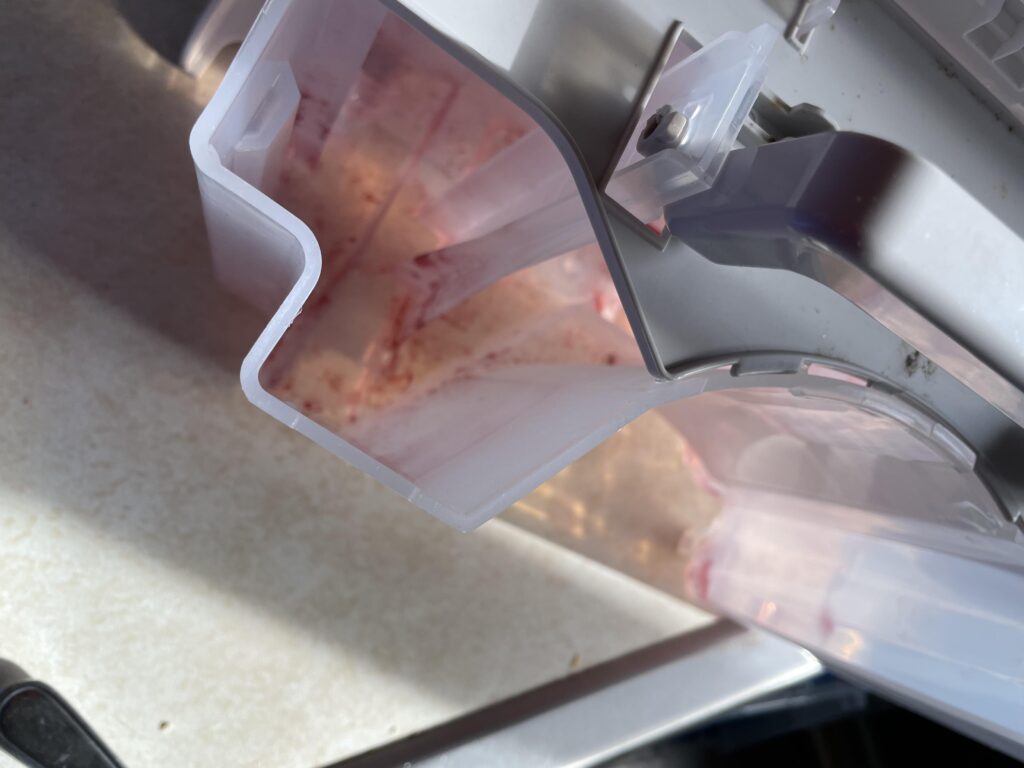
A dehumidifier removes moisture from indoor air by cooling the air until water condenses. That water then collects in a removable bucket or travels through a hose to a floor drain, sink, sump or condensate pump.
The machine may run for hours each day during humid weather.
This creates several places where water can remain:
- Inside the collection bucket
- Around the bucket seal
- In the drain outlet
- Inside a continuous drainage hose
- Around an internal pump
- On the evaporator coil
- In the condensate channel
- On the air filter
- Inside the fan housing
Mold does not need to grow on the plastic itself. It can grow on dust, lint, skin particles and other organic material that collects on damp surfaces.
Standing water can also support slime, bacterial buildup and unpleasant odours.
Why Does My Dehumidifier Smell Musty?
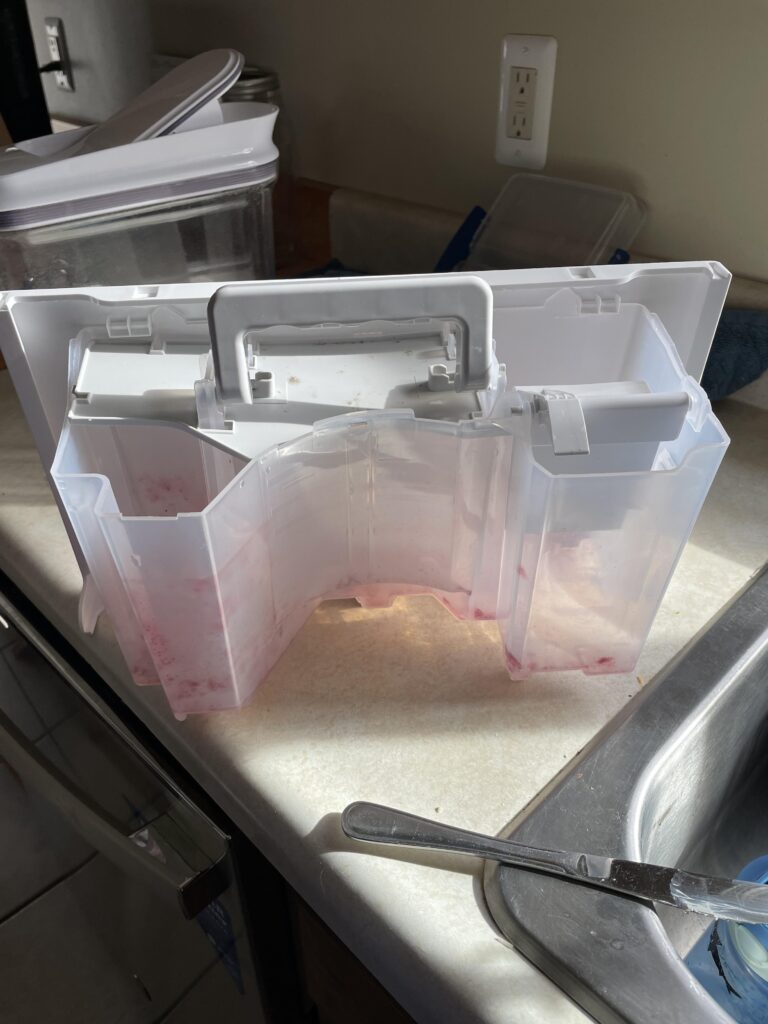
A musty smell usually means moisture and organic debris have remained somewhere inside the appliance.
Possible sources include:
- Water left in the bucket
- A dirty air filter
- Slime around the drain outlet
- A blocked drain hose
- Mold inside the bucket lid or handle area
- Wet dust on the evaporator coil
- Contamination on the blower fan
- Water trapped inside an internal pump
- A basement mold problem unrelated to the appliance
The timing of the odour can provide a clue.
If the smell becomes stronger as soon as the fan starts, the source may be inside the airflow path.
If the smell remains after the appliance is unplugged and removed, the basement itself should be inspected.
Where Mold Commonly Develops Inside a Dehumidifier
Collection Bucket
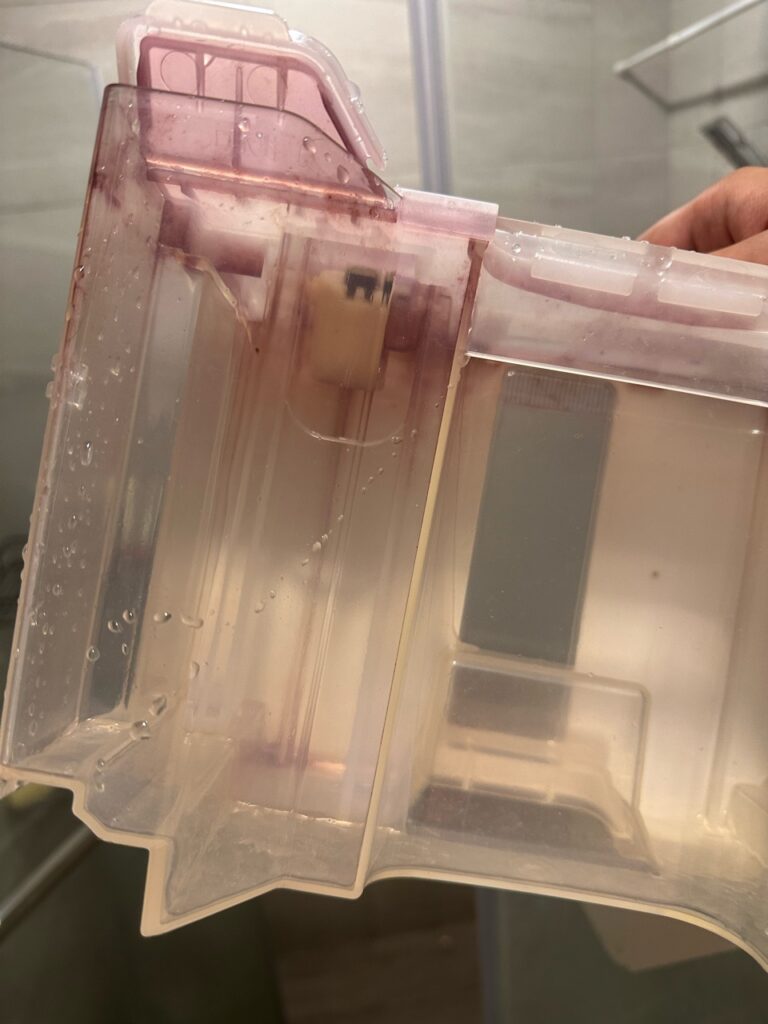
The bucket is the most obvious location.
Water may sit in it overnight, during a power interruption or after the full-bucket switch turns the machine off.
The bottom and corners can collect:
- Dust
- Hair
- Insects
- Slime
- Mineral deposits
- Mold spots
- Residue from previous cleaning products
A bucket that looks clean from above may still have buildup under the handle, around the float or along the upper rim.
Air Filter
The filter catches airborne dust before it reaches the internal coil.
A neglected filter can become loaded with lint and debris. If it is reinstalled while damp or remains close to wet internal surfaces, it may develop a musty smell or visible spotting.
A dirty filter also restricts airflow and reduces the machine’s ability to remove moisture.
Drain Hose
A continuous drain hose can become one of the most overlooked parts of the system.
Water flows through it slowly, and sections with poor slope may hold water continuously.
Buildup is more likely when:
- The hose sags
- The drain end is submerged
- The hose runs uphill
- The connection is loose
- The outlet is blocked
- The hose has not been cleaned for several seasons
- Basement debris enters the open end
A dirty hose may smell musty even when the collection bucket is clean.
Drain Connection
The small fitting where the hose attaches can collect slime, lint and mineral residue.
A partial blockage may cause water to back up into the bucket or leak around the connection.
Internal Pump
Some dehumidifiers use a built-in pump to move water upward into a sink or drain.
The pump reservoir, tubing and check valve can retain water. These parts are usually not designed for routine homeowner disassembly.
A pump that smells, leaks or fails to drain should be assessed using the model-specific instructions or by an appliance technician.
Evaporator Coil
The evaporator coil is where water condenses.
Dust can build up between the fins, especially when the filter is missing, damaged or rarely cleaned.
The coil is delicate. Bent fins, excessive water or the wrong cleaning product can damage the appliance.
Deep coil cleaning should not be attempted unless the manufacturer provides clear owner instructions.
Fan and Internal Air Path
The fan moves room air across the coil and back into the basement.
Dust can collect on the blades and surrounding housing. If the buildup remains damp, the unit may release a musty odour whenever it runs.
Accessing the fan often requires taking apart the cabinet. That is usually a job for a qualified technician.
What Does Mold in a Dehumidifier Look Like?
Contamination may appear as:
- Black dots
- Green or brown patches
- White fuzzy growth
- Pink or orange slime
- Grey film
- Dark residue around the drain
- Spots inside the filter mesh
- Sticky buildup in the bucket
- Staining that returns after cleaning
Not every mark is mold.
Mineral deposits from hard water may look white or chalky. Dust can look grey or black. Rust may appear around metal fasteners or internal components.
Regardless of the exact substance, a dirty water-handling appliance should be cleaned and dried.
Can a Moldy Dehumidifier Spread Mold?
A contaminated appliance can move odours and particles through the air passing across its internal components.
However, it is important not to assume that every mold problem in a basement came from the machine.
A dehumidifier may become dirty because it is operating in an already damp environment. The same moisture conditions may also be affecting:
- Drywall
- Wood framing
- Cardboard boxes
- Carpeting
- Upholstered furniture
- Baseboards
- Foundation walls
- Insulation
- Stored clothing
- Cold water pipes
Cleaning the machine without inspecting the room can leave the actual source untouched.
Before Cleaning a Dehumidifier
Start with the owner’s manual for the exact model.
Different manufacturers use different bucket designs, drain systems, filter locations and internal pumps.
Before cleaning:
- Turn the machine off.
- Unplug it from the wall.
- Move it away from standing water.
- Empty the bucket.
- Disconnect the drain hose if applicable.
- Allow hot internal components to cool.
- Wear gloves when handling visible mold or slime.
- Do not open sealed electrical compartments.
- Do not spray water directly into the cabinet.
- Do not mix cleaning products.
A heavy unit should be moved carefully. Water left inside can spill into electrical areas if the machine is tilted.
How to Clean a Dehumidifier Bucket
The bucket is usually the safest and easiest component to maintain.
Step 1: Empty the Water
Do not leave collected water sitting in the bucket when the machine is not being used.
Pour it into a suitable drain.
Step 2: Remove Loose Debris
Rinse out hair, dust and loose particles.
Avoid shaking dirty water into the appliance cabinet.
Step 3: Wash the Bucket
Use warm water and mild, unscented dish soap unless the manufacturer specifies another method.
Clean:
- The bottom
- Corners
- Sidewalls
- Handle
- Lid
- Float mechanism
- Rim
- Drain opening
A soft cloth, sponge or bottle brush can help reach corners.
Step 4: Rinse Thoroughly
Soap residue can collect dust and create odours.
Rinse the bucket with clean water.
Step 5: Dry It Fully
Allow the bucket to air dry before reinstalling it.
Wiping it dry may be helpful, but check the corners and float area for trapped moisture.
Step 6: Clean the Bucket Compartment
Wipe accessible smooth surfaces where the bucket sits.
Do not pour water into the machine or reach into electrical sections.
Can You Use Bleach in a Dehumidifier Bucket?
Do not assume bleach is safe for the appliance.
Bleach may damage plastics, seals, metal components or nearby parts. Strong fumes may also remain inside the machine.
Use the cleaning method approved in the owner’s manual.
For routine bucket care, warm water and mild soap are often sufficient. If the manufacturer permits a disinfectant, follow its exact dilution, contact-time and rinsing instructions.
Never mix bleach with vinegar, ammonia or another cleaner.
How to Clean a Dehumidifier Filter
A clogged filter should be cleaned according to the model instructions.
A common process is:
- Unplug the machine.
- Remove the collection bucket if required.
- Slide or lift out the filter.
- Remove loose dust gently.
- Wash the filter in warm, soapy water if it is labelled washable.
- Rinse it thoroughly.
- Allow it to dry completely.
- Reinstall it in the correct direction.
- Reset the filter indicator if required.
Do not place the filter in a dishwasher unless the manufacturer explicitly allows it.
Do not run the machine without the filter.
Replace the filter when it is torn, warped, deteriorated or remains musty after proper washing and drying.
How to Clean a Dehumidifier Drain Hose
Check the manual before removing or cleaning the hose.
The process will depend on whether the unit uses gravity drainage or a pump.
For a basic gravity hose:
- Unplug the dehumidifier.
- Place towels or a shallow container below the connection.
- Disconnect the hose.
- Drain the remaining water.
- Check for visible slime or blockages.
- Flush the hose if the manufacturer permits it.
- Use a flexible hose brush only when it will not damage the tubing.
- Rinse and allow the hose to drain.
- Reconnect it securely.
- Restore a continuous downward slope.
Replace the hose when it is:
- Cracked
- Brittle
- Kinked
- Permanently discoloured
- Strongly musty
- Difficult to clean
- Too narrow for reliable drainage
A new hose is often inexpensive compared with the damage caused by a leak.
Why Does Water Stay in the Drain Hose?
Gravity drainage depends on a clear downhill path.
Water can remain in the hose when:
- The hose sags between the machine and drain
- The outlet sits higher than the connection
- The end is submerged in water
- The hose is too long
- The hose is partially blocked
- The floor drain is backing up
- The connection fitting is obstructed
Standing water creates odour and buildup.
Shorten or reposition the hose according to the manufacturer’s requirements.
How Often Should a Dehumidifier Be Cleaned?
There is no universal schedule for every machine.
Maintenance frequency depends on:
- How many hours it runs
- Basement dust
- Pet hair
- Indoor humidity
- Bucket use versus continuous drainage
- Whether the basement has active mold
- Manufacturer recommendations
A practical routine is to:
- Check the bucket whenever it is emptied
- Wash the bucket regularly during heavy use
- Check the filter every few weeks
- Inspect the drain hose monthly during continuous operation
- Clean the machine before seasonal storage
- Inspect it again before restarting it
The owner’s manual should take priority over a general schedule.
When Cleaning Is Not Enough
Surface cleaning does not solve contamination inside inaccessible components.
Professional appliance servicing or replacement should be considered when:
- The musty smell continues after the bucket and filter are cleaned
- Mold is visible on the coil
- The fan is heavily soiled
- Water leaks into the electrical cabinet
- The internal pump contains slime
- The machine makes unusual noises
- The filter becomes dirty again quickly
- The unit no longer lowers humidity
- The cabinet has been opened previously and reassembled poorly
- Contamination extends through multiple internal areas
Do not continue running an appliance with wet electrical components.
Should a Moldy Dehumidifier Be Replaced?
Replacement may be the better choice when the unit is old, inexpensive or deeply contaminated.
| Condition | Cleaning May Be Reasonable | Replacement or Service Is More Likely |
|---|---|---|
| Light residue in the bucket | Yes | No |
| Washable filter is dusty | Yes | No |
| Drain hose has minor buildup | Yes | Replace hose if needed |
| Musty smell disappears after cleaning | Yes | No |
| Smell remains during operation | Limited | Yes |
| Mold is visible on internal coil | No | Yes |
| Fan housing is contaminated | No | Yes |
| Internal pump has recurring slime | Limited | Yes |
| Unit leaks around electrical parts | No | Yes |
| Machine cannot maintain humidity | Unlikely | Yes |
| Replacement parts are unavailable | Rarely | Yes |
| Basement mold exists beyond the appliance | Appliance cleaning only | Building assessment required |
The value of professional servicing should be compared with the cost of a new unit.
A newer whole-basement model may justify repair. A small aging appliance may not.
How to Store a Dehumidifier Without Creating Mold
Seasonal storage is a common source of odour.
Before storing the unit:
- Turn it off and unplug it.
- Empty the bucket.
- Wash and dry the bucket.
- Clean and dry the filter.
- Drain the hose and internal pump as directed.
- Allow the machine to stand and dry.
- Coil the hose loosely.
- Store it upright.
- Choose a clean, dry area.
- Do not wrap a damp machine tightly in plastic.
Check the manual because some units require a waiting period before being moved or stored.
Can a Dehumidifier Stop Basement Mold?
A dehumidifier can reduce airborne humidity. It cannot repair water entry.
It may help when the problem is:
- High summer humidity
- Condensation on cold surfaces
- Slow drying after minor dampness
- Moisture from normal household activities
It cannot solve:
- Foundation cracks
- Sewer backups
- Plumbing leaks
- Roof leaks
- Failed exterior drainage
- Wet insulation
- Mold behind drywall
- Flood-damaged flooring
- Water trapped under finished walls
A basement that stays musty at 45 percent relative humidity may have a concealed moisture source.
What Humidity Should a Basement Be?
Health Canada recommends keeping indoor relative humidity between 30 and 50 percent.
A hygrometer can be used to monitor the basement independently from the dehumidifier’s built-in display.
The machine’s sensor measures the air close to the unit. Conditions may be different:
- Behind stored boxes
- Inside closets
- Near foundation walls
- Under stairs
- In finished wall cavities
- Inside a cold room
Place a separate hygrometer in a representative location and compare the readings.
Why Is My Basement Still Musty With a Dehumidifier Running?
Possible reasons include:
- The unit is too small for the space
- The filter is clogged
- The coil is dirty
- The bucket or hose contains buildup
- The humidity setting is too high
- Windows are open
- The basement door is frequently open
- Water is entering through the foundation
- Wet materials remain from an earlier leak
- Cardboard and fabrics are absorbing moisture
- Mold is concealed behind walls or flooring
- The unit is not operating correctly
A dehumidifier should not be used to mask a recurring water problem.
Where Should a Basement Dehumidifier Be Placed?
The unit needs space for airflow.
Follow the manufacturer’s clearance requirements and avoid placing it:
- Directly against a wall
- Behind boxes
- Under hanging fabric
- Inside a closed cabinet
- Beside standing water
- Where the hose will be crushed
- In a very cold area below its operating range
Keep the intake and outlet unobstructed.
For continuous drainage, position the machine so the hose can run directly downhill without becoming a tripping hazard.
How to Prevent Mold Inside a Dehumidifier
Empty the Bucket Promptly
Do not let collected water sit for days.
Wash the Bucket
Rinsing alone may not remove the film that develops along the bottom and sides.
Clean the Filter
A clean filter improves airflow and reduces the dust reaching internal components.
Check the Hose
Look for sagging, slime, leaks and loose fittings.
Maintain the Correct Humidity
Avoid setting the unit unnecessarily low. Running it constantly creates more collected water and energy use without fixing active leaks.
Keep the Basement Clean
Dust and clutter increase the amount of debris entering the machine.
Do Not Store It Wet
Dry the bucket, filter, hose and accessible components before seasonal storage.
Repair Water Problems
The dehumidifier should support moisture control, not replace foundation, plumbing or drainage repairs.
When Does the Basement Need a Mold Inspection?
Cleaning the machine may not be enough when:
- A musty smell remains after the unit is removed
- Mold is visible on walls, ceilings or stored contents
- Drywall feels soft
- Baseboards are swollen
- Flooring is lifting
- Water appears after rain
- Humidity rises quickly when the machine stops
- Cardboard boxes are damp
- Mold returns after cleaning
- The basement previously flooded
- The dehumidifier runs continuously without controlling humidity
In these situations, the appliance may be reacting to a larger moisture problem.
How Ultimate Mold Crew Handles This Type of Problem
Ultimate Mold Crew does not repair household dehumidifiers.
We inspect the building materials and moisture conditions around the appliance.
An assessment may include:
- Measuring basement humidity
- Checking foundation walls and floors
- Inspecting drywall, baseboards and framing
- Looking for plumbing and drainage problems
- Checking stored materials
- Evaluating visible mold
- Identifying concealed moisture
- Determining whether remediation is required
Where mold has affected building materials, the work may involve containment, removal of damaged porous materials, HEPA-filtered cleaning and structural drying.
The appliance can then be cleaned, serviced or replaced separately.
Frequently Asked Questions
Can mold grow in dehumidifier water?
Yes.
Standing water can collect dust and organic material. The bucket may develop mold, slime or bacterial buildup if it is not emptied and cleaned.
Is it safe to run a musty dehumidifier?
A persistent musty smell should be investigated.
Clean the owner-serviceable parts first. Stop using the machine and seek repair or replacement advice if the odour continues.
Can I put vinegar in a dehumidifier bucket?
Only use a cleaning product permitted by the manufacturer.
Vinegar can affect some materials and should not be poured into internal components, pumps or drain channels without approved instructions.
Can I put bleach in a dehumidifier?
Do not use bleach unless the manufacturer specifically allows it.
Bleach can damage components and create strong fumes inside the machine.
Why is there black slime in my dehumidifier hose?
The hose may contain stagnant water, dust and biological buildup.
Disconnect and clean it according to the manual, or replace it when cleaning is impractical.
Can I run the dehumidifier without a filter?
No.
Operating without the filter allows more dust to reach the coil and fan, which can reduce performance and make internal cleaning harder.
How do I know whether the smell is from the machine or basement?
Remove the dehumidifier from the room after cleaning it.
If the musty smell remains, inspect the basement for wet materials, water entry and concealed mold.
Should I leave water in the bucket?
No.
Empty the bucket when the unit stops or when it is no longer being used.
Why does my dehumidifier fill so quickly?
The basement may be very humid, the unit may be drying wet materials, or water may be entering the building continuously.
Rapid filling is not always an appliance fault.
Why does the bucket fill when a drain hose is connected?
The hose may be loose, kinked, blocked or installed without the necessary downward slope.
Check the model-specific drainage instructions.
Does a dehumidifier kill mold?
No.
A dehumidifier reduces humidity. It does not remove existing mold from drywall, wood, insulation or contents.
When should I replace the drain hose?
Replace it when it is cracked, permanently musty, repeatedly blocked, badly stained or unable to maintain reliable drainage.
Is the Dehumidifier the Only Mold Problem?
A dirty bucket can be cleaned.
A basement with recurring water entry, moldy drywall or wet insulation needs a broader solution.
Ultimate Mold Crew provides mold inspections and remediation throughout Toronto and the Greater Toronto Area.
Call 647-985-2739 if your basement remains musty, visible mold is spreading or the dehumidifier runs constantly without resolving the moisture problem.
