
Updated on 18-Jun-2026
Ever notice this?
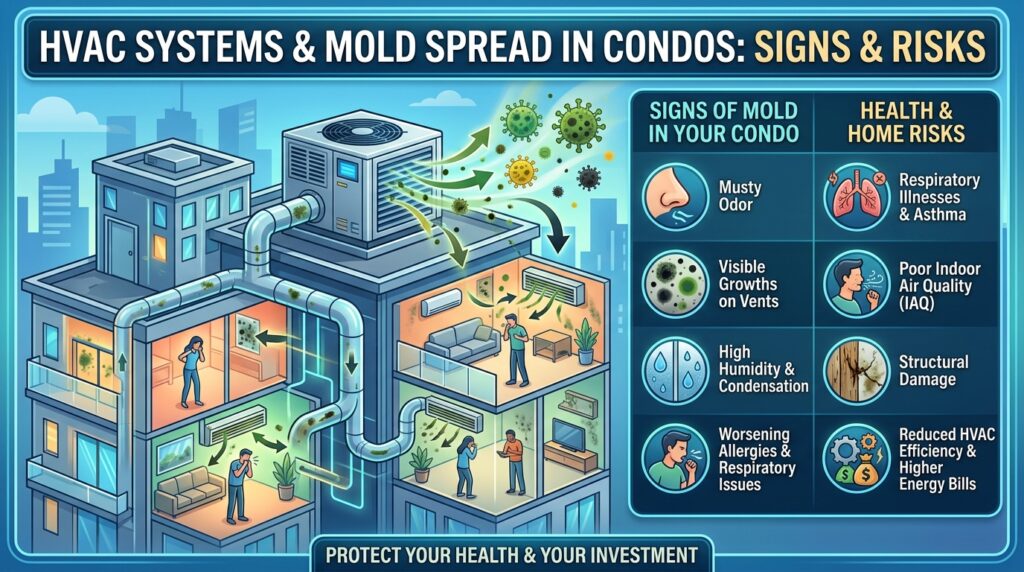
You feel fine outside… but symptoms get worse when your AC turns on.
That’s not random.
What Should You Do If You Find Mold In A Condo?
Is Mold In A Condo Serious?
Mold in a condo is serious when it is spreading, returning, connected to water damage, affecting porous materials, or linked to symptoms. It is also serious when responsibility is unclear, because delays can allow the moisture problem to continue.
Not every small patch is an emergency. A small spot on bathroom caulking is different from mold behind drywall after a leak. The risk depends on:
- size of the affected area
- whether the material is porous
- whether moisture is active
- whether air movement can spread particles
- whether vulnerable occupants live in the unit
- whether the source involves common elements or another unit
People react to mold differently. eye, nose and throat irritation, sinus congestion, frequent cold-like symptoms, increased asthma attacks and allergic reactions as common health problems associated with mold exposure. Infants, young children, older adults, pregnant women, people with allergies, people with chronic respiratory illness and people with weakened immune systems may be more likely to experience health effects.
Common Signs Of Mold In A Condo
Mold in a condo can be visible, hidden, or suspected because of smell and moisture patterns.
Look for:
- black, green, grey, brown, or white patches
- fuzzy growth on drywall, wood, baseboards, silicone, grout, or vents
- musty smell in one room, closet, bathroom, or HVAC area
- bubbling paint or soft drywall
- ceiling stains below another unit
- recurring condensation on windows or balcony doors
- swollen flooring or dark staining near baseboards
- damp carpet or underpad
- staining around fan-coil units, vents, or drain lines
- symptoms that improve when you leave the condo
Do not identify mold species by color. Black-looking mold is not always Stachybotrys. Testing or lab analysis is needed when species-level identification matters.
Where Mold Usually Grows In Condo Units
Condo mold usually follows moisture. The location often tells you what to check next.
| Mold location | Likely cause | Who may need to be involved |
|---|---|---|
| Bathroom ceiling or grout | Shower humidity, weak exhaust, leak above | Owner, tenant, landlord, plumber |
| Bedroom wall or closet | Cold exterior wall, condensation, poor airflow | Owner, property manager, building envelope specialist |
| Around windows or balcony door | Condensation, failed seal, water intrusion | Owner, condo manager, window contractor |
| Ceiling stain | Leak from unit above, roof, pipe, or sprinkler line | Condo management, plumber, insurer |
| Baseboards or flooring | Plumbing leak, appliance leak, exterior wall moisture | Owner, landlord, plumber, remediation pro |
| Fan-coil or HVAC closet | Condensation, drain issue, dirty coil, wet insulation | HVAC contractor, condo management, mold inspector |
| Vent cover or air return | Dust, condensation, HVAC contamination | HVAC contractor, mold inspector |
| Locker or storage area | Humidity, water intrusion, poor airflow | Condo management |
This table should guide the first conversation. It does not replace inspection, because condo assemblies often hide moisture behind finished surfaces.
Who Is Responsible For Mold In A Condo In Ontario?
Responsibility depends on where the mold is, what caused the moisture, and what your condo corporation’s governing documents say.
In Ontario condos, repair and maintenance responsibilities can depend on the Condominium Act, the standard unit definition, common elements, exclusive-use common elements, the declaration, by-laws, rules, insurance, and any lease agreement.
The Condominium Authority of Ontario says condo corporations are generally responsible for repairing damage to common elements and standard unit elements, while owners are responsible for decorative or non-standard unit elements. It also says condo corporations must maintain common elements and owners must maintain their units, subject to the governing documents.
Use this general guide:
| Situation | Common responsibility path |
|---|---|
| Mold caused by an in-suite shower or poor bathroom ventilation | Owner or tenant/landlord path, depending on occupancy |
| Mold from a pipe inside the unit | Owner, landlord, plumber, insurer may be involved |
| Mold from a pipe serving multiple units | Condo corporation and insurer may be involved |
| Mold from a roof, exterior wall, window system, or common element | Condo corporation may need to investigate |
| Mold around a fan-coil unit | Depends on the building documents and maintenance obligations |
| Mold in a rented condo | Tenant should notify landlord; landlord may need to coordinate with condo management |
| Mold affecting multiple units | Condo management and board should investigate building-level causes |
This is not legal advice. The right answer depends on your documents and the source of water. If responsibility is disputed, document the issue and consider legal or condo-specific advice.
What Condo Owners Should Do
If you own the unit, act quickly and keep records.
Steps for condo owners:
- Photograph the affected area before cleaning.
- Check for active leaks, condensation, and damp materials.
- Notify the condo manager if common elements, another unit, the building envelope, a riser, or fan-coil equipment may be involved.
- Review the standard unit definition and governing documents.
- Contact your insurer if water damage or another unit may be involved.
- Book inspection if the source is hidden or the affected area is larger than a small surface patch.
- Keep invoices, reports, photos, emails, and moisture readings.
Condo mold disputes often become harder when nobody documents the early signs. Keep your first report simple: what you saw, where it is, when you noticed it, whether it is wet, whether odour is present, and whether the issue is spreading.
What Condo Tenants Should Do
If you rent a condo, tell the landlord in writing as soon as you notice mold, water damage, or a musty odour. Include photos and dates.
Ontario’s residential rental rules apply to most rented condos. The Government of Ontario says Ontario’s Residential Tenancies Act applies to most private residential rental units, including condominiums. The standard lease includes information about who is responsible for maintenance and repairs.
Tenant steps:
- Photograph the mold and moisture source.
- Email or message the landlord with details.
- Avoid damaging materials or disturbing suspected mold.
- Use exhaust fans and reduce humidity where possible.
- Keep records of symptoms, odours, leaks, and responses.
- If the landlord says the issue involves the building, ask them to contact condo management.
- Seek advice from the Landlord and Tenant Board or a legal clinic if repairs are not addressed.
Do not withhold rent or make legal decisions based only on a blog article. Use the proper Ontario rental process.
When Condo Management Or The Board Should Be Involved
Contact condo management when mold may involve common elements, building systems, or another unit.
Management should be involved when:
- water appears to come from the ceiling, riser, wall cavity, roof, window system, or unit above
- more than one unit reports a similar issue
- fan-coil or HVAC maintenance access is needed
- the problem affects hallways, shafts, amenity areas, lockers, or mechanical rooms
- the unit owner cannot access the suspected source
- the issue may involve insurance, deductibles, or common element repair
Condo management can coordinate access, contractors, board communication, and building records. This matters because mold remediation can fail if the building-level moisture source remains active.
Can HVAC Or Fan-Coil Systems Cause Mold In Condos?
Yes, HVAC and fan-coil systems can contribute to mold in condos when condensation, dust, poor drainage, and poor maintenance come together. But HVAC is only one possible cause.
Many Toronto condos use fan-coil units, heat pumps, vertical systems, make-up air, exhaust systems, or other building-specific setups. Some systems serve only one suite. Others connect to building infrastructure. That is why the article should not claim that all condo HVAC systems spread mold between units.
HVAC or fan-coil involvement is more likely when:
- the musty smell starts when heating or cooling turns on
- staining appears around vents, fan-coil cabinets, or access panels
- the fan-coil drain pan or condensate line is clogged
- the filter is wet, dirty, or overdue
- the coil area smells musty
- multiple rooms smell stale at the same time
- air testing shows unusual indoor mold spore patterns when the system runs
If the issue appears to be vents, ducts, or central HVAC rather than general condo mold, read our guide to black mold in air vents, ducts and HVAC.
Bathroom Mold In Condos
Bathrooms are one of the most common places for condo mold. Showers create moisture quickly, and many condo bathrooms have limited natural ventilation.
Bathroom mold often appears on:
- ceiling paint
- silicone caulking
- grout lines
- exhaust fan covers
- drywall near the shower
- vanity backs and baseboards
Common causes include weak exhaust, blocked fan grilles, long hot showers, poor airflow, plumbing leaks, and moisture trapped behind finishes.
Clean small surface areas only if the material is sound and the moisture source is clear. If the paint is bubbling, drywall is soft, the ceiling is stained, or mold keeps returning, inspect for hidden moisture.
Mold Around Windows And Balcony Doors
Condensation around windows and balcony doors is common in condos during cold weather. Warm indoor air meets cold glass, frames, or nearby wall surfaces. If the moisture repeats, mold can grow on caulking, drywall, trim, blinds, and sill areas.
Possible causes include:
- high indoor humidity
- poor air circulation near windows
- damaged or aging window seals
- thermal bridging
- water intrusion around the frame
- blocked drainage paths
- furniture placed tightly against exterior walls
Wiping the surface may help for a small early patch, but recurring mold means the moisture condition remains. Track humidity, improve airflow, and report possible exterior leaks or window system issues to condo management.
Mold Behind Basement Walls, Ceilings Or Flooring
Hidden mold is more likely after leaks, floods, repeated condensation, or slow plumbing failures. Condo units can hide moisture behind drywall, under laminate flooring, inside ceiling cavities, behind kitchen cabinets, and around bathroom walls.
Signs include:
- soft drywall
- bubbling paint
- musty smell with no visible mold
- stains that grow or darken
- warped flooring
- baseboards pulling away
- insects near damp areas
- recurring symptoms in one room
Do not open walls without a plan. Cutting into contaminated material can release particles and complicate insurance or responsibility questions. A moisture inspection can locate damp areas before demolition.
Should You Test For Mold In A Condo?
Mold testing can help when the source is hidden, documentation is needed, or responsibility is unclear. It is not always required when there is visible mold and an obvious moisture source.
Testing may help if:
- you smell mold but cannot see it
- symptoms worsen in the unit
- the affected area involves HVAC or fan-coil equipment
- a landlord, condo board, insurer, buyer, or seller needs documentation
- there is a dispute about whether mold is present
- remediation work needs clearance testing
Inspection and testing work best together. Air samples without a moisture investigation can miss the real cause.
For pricing support, see air quality testing cost in Toronto. For interpretation, see mold spore levels.
Can You Clean Condo Mold Yourself?
You may be able to clean a small surface patch if it is on a non-porous or washable surface, the area is small, and the moisture source is fixed.
Do not clean it yourself when:
- the area is larger than a small patch
- mold is on drywall, insulation, carpet, underpad, or wood framing
- the mold returns after cleaning
- there is active leakage
- the smell is strong
- HVAC or fan-coil components are involved
- vulnerable occupants live in the unit
- documentation is needed for a landlord, board, insurer, buyer, or seller
City of Toronto guidance says larger or extensive mold contamination of 4 square metres or more should be addressed by a professional trained in mold remediation. In condos, even smaller areas may need professional assessment when responsibility, insurance, or hidden moisture is involved.
How Much Does Condo Mold Remediation Cost In Toronto?
Toronto Condo mold remediation cost depends on the source, size, material, access, containment needs, documentation, and whether building systems are involved.
Main cost drivers:
- size of the affected area
- whether drywall, flooring, cabinetry, insulation, or baseboards must be removed
- whether the source is active or hidden
- whether fan-coil or HVAC access is required
- whether containment and negative air are needed
- whether testing or clearance documentation is required
- whether condo management, landlord, insurer, or board approval is needed
Small surface remediation usually costs less than work that involves wall cavities, flooring, ceiling leaks, fan-coil closets, or multiple rooms. The right estimate should follow inspection. A flat online number can mislead condo owners because access and responsibility are often part of the job.
How To Prevent Mold In A Condo
Prevention starts with moisture control and fast reporting.
Use this checklist:
- Run bathroom and kitchen exhaust fans during and after moisture-heavy use.
- Keep indoor humidity under control.
- Leave space between furniture and cold exterior walls.
- Report leaks, ceiling stains, and window leaks quickly.
- Dry small spills and appliance leaks immediately.
- Replace or clean HVAC and fan-coil filters as required.
- Keep fan-coil access panels clear.
- Do not block vents or exhaust grilles.
- Watch for condensation on windows and balcony doors.
- Document recurring odours or stains.
The most important rule is simple: mold returns when moisture returns.
When To Call Ultimate Mold Crew
Call Ultimate Mold Crew if you have visible mold, recurring musty odour, water damage, suspected hidden moisture, or a condo mold issue that needs documentation.
We can help with:
- condo mold inspection in Toronto
- air quality testing
- moisture investigation
- mold remediation
- post-remediation guidance
- documentation for owners, landlords, tenants, property managers, and real estate situations
Call 647-985-2739 or request a quote if you need help deciding whether the problem is surface mold, hidden mold, HVAC-related mold, or a building moisture issue in Toronto GTA.
FAQs About Mold In Condos Toronto
Is mold common in condos?
Mold can occur in condos when moisture gets trapped indoors. Common causes include bathroom humidity, window condensation, plumbing leaks, fan-coil issues, water intrusion, and poor airflow.
Who pays for mold remediation in a condo?
It depends on the source, affected materials, condo documents, insurance, and whether the issue involves the unit, common elements, another unit, or a rented condo. Document the issue and review the condo corporation’s governing documents.
Should I tell condo management about mold?
Yes, tell condo management if the mold may involve common elements, another unit, exterior walls, windows, ceiling leaks, risers, fan-coil systems, or building-level moisture.
What if I rent the condo?
Tell your landlord in writing and include photos. If the issue may involve the building, the landlord may need to coordinate with condo management.
Can mold spread through condo HVAC?
HVAC and fan-coil systems can move odours, dust, particles, and spores if contaminated material is in the airflow path. The level of risk depends on the building system and source of moisture.
Is black mold in a condo always toxic?
No. Black-looking mold is not always Stachybotrys or “toxic black mold.” Colour alone cannot confirm species. Treat visible mold seriously, but avoid panic language.
Can I sell a condo with mold?
Mold can affect buyer confidence, inspection results, disclosure discussions, and repair negotiations. Fix the moisture source and keep professional documentation where possible.
Does insurance cover mold in condos?
Coverage depends on the cause, policy wording, timing, and whether water damage is sudden or long-term. Contact your insurer and condo management if water damage is involved.
What is the fastest way to confirm hidden mold?
A professional inspection with moisture readings is usually the fastest first step. Air or surface testing may help when documentation or hidden contamination is a concern.
How do I stop condo mold from coming back?
Fix the water source, dry the affected material, remove contaminated porous materials when needed, improve ventilation, control humidity, and maintain fan-coil or HVAC components.
Sources
- City of Toronto: Mould. https://www.toronto.ca/community-people/health-wellness-care/health-programs-advice/mould/
- Condominium Authority of Ontario: Repairs After Damage. https://www.condoauthorityontario.ca/before-you-buy-or-rent-a-condo/how-condos-work/condo-operations/repairs-and-maintenance/
- Condominium Authority of Ontario: Roles and Responsibilities. https://www.condoauthorityontario.ca/condo-living/roles-responsibilities/
- Condominium Authority of Ontario: Tenant’s Guide for renting a condo. https://www.condoauthorityontario.ca/resource/guide-for-residential-condominium-tenants/
- Government of Ontario: Renting in Ontario, your rights. https://www.ontario.ca/page/renting-ontario-your-rights
- EPA: A Brief Guide to Mold, Moisture and Your Home. https://www.epa.gov/mold/brief-guide-mold-moisture-and-your-home
Research-Based Citations for HVAC Mold in Condominiums
| # | Citation | Key Focus |
|---|---|---|
| 1 | University of Toronto (2025). Fan Coil Contamination of Growing Concern: Mechanical, Biological, and Legal Complexities of Mould in Condos. | Landmark technical paper analyzing the specific risks of mold growth within fan coil units (FCUs) in Toronto high-rises, detailing how dust and condensation create ideal microbial reservoirs. |
| 2 | Liu, Y., et al. (2025). Fungal communities in split air conditioners and associated respiratory health risks in residential buildings. | 2025 study in Building and Environment identifying common fungal species like Aspergillus and Cladosporium in residential AC units and their direct link to indoor respiratory symptoms. |
| 3 | Beswick, A., et al. (2025). Exposure Risks from Microbiological Hazards in Buildings and Their Control—A Rapid Review of the Evidence. | 2025 review in Atmosphere examining how high-rise apartment infrastructure and shared HVAC systems facilitate the aerosolization and spread of harmful microorganisms between units. |
| 4 | Mycometer (2025). Successful Mold Growth Remediation in HVAC Systems: Strategies and Lessons from Industrial Hygiene. | 2025 technical report on remediation strategies for HVAC systems, emphasizing the importance of addressing evaporator coils and drain pans to prevent spore distribution. |
| 5 | Fylak, N. M. (2025). Moisture issues and the growth of mold in Multi-Unit Residential Buildings (MURBs) and Condos. | 2025 research thesis investigating how pressurized corridor systems and ventilation faults in modern condos contribute to humidity imbalances and subsequent mold colonization. |
| 6 | ASCE Civil Engineering (2025). An unintended consequence of energy-efficient structures: Insufficient ventilation and mold growth. | 2025 report from the American Society of Civil Engineers discussing how airtight, energy-efficient condo designs can trap moisture and accelerate mold growth in HVAC components. |
| 7 | Alassafi, H. T., et al. (2024). HVAC maintainability risks in residential facilities: A design optimization and maintenance perspective. | 2024 study in Facilities identifying maintenance risks in fan coil units (FCUs) and air handling units (AHUs) that lead to biofilm formation and persistent indoor odors. |
| 8 | RubyHome (2026). Mold Statistics 2026: Leakage Issues and Asthma Links in Residential and Office Buildings. | 2026 statistical report highlighting that 21% of asthma cases are linked to indoor dampness and that HVAC systems are a primary vector for allergen distribution in multi-family units. |
