
Updated on 18-Jun-2026
Table of Contents
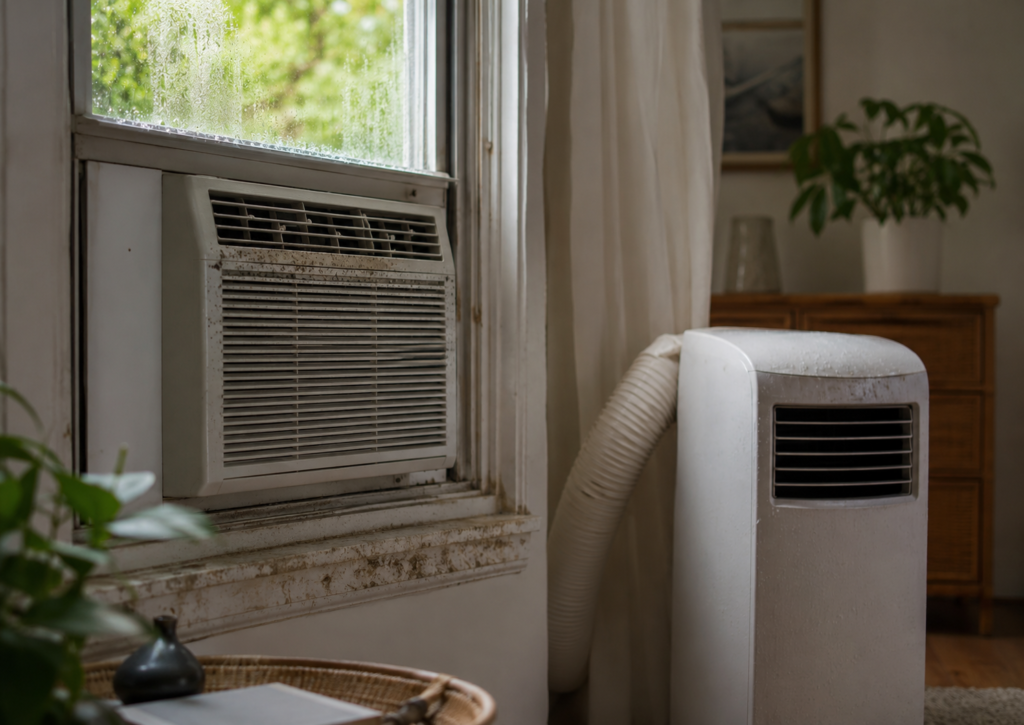
Black Mold in Window and Portable AC
Found mold in a window or portable air conditioner?
Learn where it grows, what your ac needs mold remediation.
The guide helps Toronto homeowners determine:
- Where mold is growing inside their unit
- Why moisture remains inside window and portable AC systems
- Which parts can reasonably be cleaned
- Which internal components cannot be accessed safely
- When the unit should be professionally serviced or replaced
- Whether surrounding walls, window framing or flooring also need mold inspection or removal
NOTE: Appliance servicing belongs to an AC technician, while Ultimate mold crew handles mold affecting the window opening, wall, framing, flooring, or surrounding materials.
You switch on your air conditioner for the first hot day of the year. Within a few minutes, the room smells damp, earthy or stale.
You remove the filter and find dark spots on the plastic grille. Looking deeper, you may also see staining on the Styrofoam liner, dust stuck to the coil or dirty water sitting at the bottom of the unit.
At this point, most homeowners want to know one thing:
Can Black Mold Grow in an AC?
Yes, black-looking mold can grow in or around an air conditioner when moisture, dust and poor drainage come together.
The important point is this: “black mold” is a visual description, not a confirmed species. Mold colour alone does not tell you whether it is Stachybotrys, Cladosporium, Aspergillus or another indoor mold. The safer approach is to treat any visible mold inside an AC or around the unit as a moisture problem that needs correction.
An air conditioner can support mold because it naturally handles condensation. Warm indoor air passes over cold coils. Moisture collects. If that water does not drain properly, the system can create a damp surface where dust, skin cells and organic debris collect.
Common AC areas where mold may develop include:
- The filter
- Evaporator coils
- Drain pan
- Condensate line
- Blower compartment
- Foam insulation inside the unit
- Flexible duct lining
- Supply vents
- Window frame, sill or drywall around a window AC
- Flooring or wall materials below a leaking unit
In Toronto homes, this is common in older houses, rental units and condos where window or portable AC units are installed seasonally. A unit that is tilted incorrectly, stored while damp, blocked by curtains or left with a dirty filter can quickly become a moisture source.
Mold inside the appliance is one concern. Mold affecting the surrounding building materials is another. Ultimate Mold Crew handles mold affecting the window opening, wall, drywall, insulation, framing, flooring or nearby surfaces. Appliance servicing, refrigerant issues and internal AC repairs should be handled by a qualified HVAC or appliance technician.
If the AC leak has affected drywall, flooring or insulation, the concern may extend beyond the appliance. In that case, a targeted mold inspection in Toronto can help determine whether the problem is limited to the unit or has spread into nearby building materials.
Can I clean this air conditioner, or should I replace it?
The answer depends on where the mold is growing.
A washable filter or accessible plastic grille is one situation. Mold spread through an internal blower wheel, insulation, drain pan or electrical compartment is another. There is also a third possibility that is easy to miss: the air conditioner may have leaked into the window sill, drywall or framing around it.
This guide covers window-mounted, through-the-wall and portable room air conditioners. It does not cover central HVAC systems or condo fan-coil systems, which require a different inspection and remediation approach.
Key Takeaways
- Air conditioners naturally produce condensation while cooling warm indoor air.
- Mold can grow when water, dust and organic debris remain inside the unit.
- A musty smell that begins when the AC turns on is a warning sign worth investigating.
- Removable filters and accessible hard plastic may be cleanable according to the manufacturer’s instructions.
- Mold inside the blower, coils, insulation or sealed compartments may require appliance servicing or replacement.
- Water leaking into the room can damage the window sill, drywall, insulation and wood framing.
- Ultimate Mold Crew handles mold affecting the building around an AC unit. Appliance repairs should be completed by a qualified air-conditioning technician.
Signs of Mold in an Air Conditioner
Mold in an air conditioner is not always obvious at first. Many homeowners notice the smell before they see visible growth.
The most common signs include:
A Musty Smell When the AC Turns On
A damp, earthy or stale smell that becomes stronger when the AC starts can point to microbial growth inside the unit, on a wet filter, in the drain pan or around the air path.
This odour may fade after a few minutes, but that does not mean the source is gone. It may simply be diluted as air continues moving through the room.
Visible Spots on the Unit or Nearby Surfaces
Look for dark, green, grey or fuzzy patches on:
- The front grille
- Filter
- Interior plastic surfaces
- Foam insulation
- Louvers
- Window sill
- Trim
- Drywall around the unit
- Floor beneath the AC
Visible mold around the window opening may mean the unit has been leaking into the wall or sill. If drywall or insulation is affected, UMC’s guide to mold in insulation explains why porous materials often need closer inspection before they can be considered safe to keep.
Water Leaking From the Unit
Water dripping indoors, pooling on the sill or running down the wall is a red flag.
Possible causes include:
- Poor unit slope
- Blocked drain holes
- Dirty coils
- Damaged drain pan
- Clogged condensate line
- Frozen coil thawing
- Poor installation
- High indoor humidity
A leaking AC can damage drywall, baseboards, flooring and framing. When water has travelled beyond the appliance, follow a broader water damage restoration checklist instead of treating the issue as a simple cleaning job.
Dirty or Wet Filters
A dirty filter traps dust and organic debris. A wet filter creates a better surface for mold growth.
Filters should be cleaned or replaced according to the manufacturer’s instructions. A filter that keeps getting damp may indicate drainage, humidity or coil problems.
Allergy-Like Symptoms That Improve Away From the Room
Some occupants notice irritation when the AC is running, especially in a small bedroom, nursery, basement room or condo suite.
Possible symptoms may include:
- Sneezing
- Coughing
- Wheezing
- Throat irritation
- Eye irritation
- Stuffy nose
- Worsening asthma symptoms
Symptoms alone cannot prove that the AC has mold. They can, however, support the need for inspection when combined with odour, visible growth or moisture. When the concern is airborne exposure, professional mold testing may be considered as part of a broader moisture and contamination assessment.
Mold Keeps Coming Back After Cleaning
Recurring mold usually means the moisture condition remains active.
The issue may be poor drainage, high humidity, a dirty coil, hidden wet insulation, a contaminated air path or mold in materials around the AC opening. Cleaning visible spots without correcting the source usually leads to regrowth.
Why Do Window Air Conditioners Develop Mold?
A window air conditioner cools warm room air by passing it across a cold evaporator coil.
As the air cools, some of its moisture condenses into water. That water collects inside the unit and is managed through a drain pan, channel, pump or model-specific drainage design.
A certain amount of water inside an operating air conditioner can be normal. The problem begins when moisture remains in contact with accumulated dust and debris for long periods.
Several conditions can make mold more likely.
Dirty Air Filters
The filter catches dust, lint, pet hair and other airborne particles before they reach the internal components.
When the filter is not cleaned, airflow drops and debris accumulates. A dirty filter can also contribute to dust building up deeper inside the unit.
That dust gives mold something to grow on when moisture is present.
Standing Water
Water can remain inside the base pan, portable AC tank, drainage channel or hose.
Standing water may develop because of:
- A blocked drainage path
- Incorrect installation
- A kinked hose
- A loose or missing drain cap
- A full portable AC reservoir
- Heavy indoor humidity
- Debris inside the pan
- A failed condensate pump
Some window AC designs intentionally retain water and use the fan to splash it over the outdoor condenser coil. Do not drill a drainage hole or remove a plug unless the manufacturer’s instructions specifically permit it.
Improper Window Installation
Many window units need to sit at a specific angle so water moves toward the outdoor side.
If the unit slopes inward, condensation may run into the room or collect where it should not.
An AC that drips outside may be operating normally. An AC that leaks onto the interior window sill, wall or floor needs attention.
Always follow the installation instructions for the exact model. The correct angle and drainage setup are not identical for every appliance.
Dust Inside the Blower and Coil Area
The air filter does not capture everything.
Fine dust can pass through gaps or build up after years of use. Once that debris reaches damp internal surfaces, cleaning becomes more difficult.
A filter can look reasonably clean while the blower wheel and evaporator area remain heavily soiled.
Storing the Unit While It Is Damp
Window units are often removed in the fall and placed in a basement, garage or storage room.
If water remains in the pan or the unit is covered before it dries, moisture becomes trapped inside for months. The problem may not become obvious until the appliance is turned on the following summer.
Running the Unit in a Humid Room
A room air conditioner removes moisture while cooling, but prolonged high humidity can create more condensate than the appliance can manage effectively.
Basement bedrooms, poorly ventilated rooms and spaces with frequent indoor drying may place a heavier moisture load on the unit.
Why Do Portable Air Conditioners Get Moldy?
Portable air conditioners face many of the same problems as window units, but their design creates a few additional trouble spots.
A portable AC may contain:
- One or more removable filters
- An internal condensate tank
- Upper and lower drain ports
- A continuous drainage hose
- An exhaust hose
- Internal coils
- A pump or self-evaporation system
Water may collect inside the machine even when the unit is described as self-evaporating.
During humid Toronto weather, the internal tank can fill faster. A blocked hose, dirty filter or neglected reservoir may leave moisture sitting inside the appliance.
Portable units are also commonly stored without being drained. Closing the drain cap and wrapping the machine while water remains inside can create a musty surprise the following season.
Where Mold Commonly Hides Inside an AC Unit
Finding one dark spot does not tell you how far the problem extends.
Inspect the accessible parts without reaching into electrical or moving components.
Air Filter
Filters collect dust and remain close to cold, damp internal parts.
A washable filter may sometimes be cleaned according to the owner’s manual. A damaged, deteriorated or heavily contaminated filter may be better replaced.
Never reinstall a filter while it is still wet.
Front Grille and Air Louvers
These are among the easiest parts to inspect.
Dark spots on smooth plastic may be surface contamination. However, visible mold around the outlet can also indicate growth farther inside the airflow path.
Evaporator Coil
The evaporator coil becomes cold during operation and collects condensation.
Dust packed between the fins can hold moisture. Coil cleaning is delicate because the fins bend easily, electrical parts may be nearby and the wrong product can damage the equipment.
A deeply contaminated coil is not a good do-it-yourself cleaning project.
Blower Wheel or Fan
The blower moves cooled air into the room.
Its curved blades can collect a thick layer of damp dust that is difficult to see from the front. When the blower spins, air passes directly across that buildup.
Accessing and cleaning the blower often requires disassembling the appliance. This work is better left to an appliance or HVAC technician.
Drain Pan and Condensate Channels
The bottom of the unit may contain water, dust, insects and organic debris.
If drainage is restricted, the pan can stay wet between cooling cycles. Portable units may also develop buildup around the tank, plug or hose connection.
Internal Insulation
Many window air conditioners use moulded foam, often expanded polystyrene, to direct airflow and limit heat transfer.
This is the white or grey material homeowners often call AC Styrofoam.
Its textured surface can trap dust. Once deeply stained or contaminated, it can be difficult to clean without damaging the shape or breaking pieces away.
Mold on AC Styrofoam: Can It Be Cleaned?
A few dark marks on accessible foam do not automatically mean the appliance is beyond saving.
First, determine whether you are seeing:
- Loose surface dust
- Old staining
- Mineral residue
- Insect debris
- Active mold growth
- Contamination extending into inaccessible foam
Do not soak the foam or scrub it aggressively.
The insulation may be part of the air channel. Damaging it can affect drainage, efficiency, noise and airflow. Strong chemicals may also degrade the material or leave residue in the air stream.
Check whether the manufacturer offers a replacement insulation component. For an older or inexpensive unit, professional disassembly and cleaning may cost more than replacing the appliance.
Replacement becomes more reasonable when:
- Mold covers a large area of the foam
- The material remains musty after accessible cleaning
- Contamination extends into cracks and hidden sections
- The foam is crumbling
- Replacement parts are unavailable
- Other internal components are also heavily contaminated
Window AC vs Portable AC vs Central HVAC
Different air-conditioning systems create different mold risks. The right response depends on where the moisture is collecting and which materials are affected.
| AC type | Where mold often appears | Main concern | Typical next step |
|---|---|---|---|
| Window AC | Filter, coils, drain pan, foam insulation, grille, window sill, drywall around the unit | Water leaking into the wall, sill or framing | Clean small surface areas only if safe, repair drainage or installation issues, inspect nearby building materials |
| Portable AC | Filter, internal tank, exhaust hose, window kit, condensate reservoir, floor below unit | Water overflow, poor hose setup, damp storage | Empty and dry the unit, clean accessible parts, check nearby flooring and baseboards |
| Central HVAC | Evaporator coil, drain pan, condensate line, air handler, supply plenum, ducts, vents | Mold spread through air distribution or hidden moisture in HVAC components | Turn off the affected system when contamination is suspected and contact qualified HVAC and mold professionals |
Window Air Conditioners
Window AC units are common in Toronto apartments, older homes and rooms without central cooling.
They are also one of the most common AC-related mold sources because they sit directly inside a window opening. If drainage fails, water can enter the sill, drywall, trim and wood framing.
A window unit should drain outdoors. If water is dripping indoors or the sill feels soft, the issue is no longer just inside the appliance.
Small surface staining on a removable grille may be cleanable. Mold on drywall, trim, insulation or the window frame should be treated as a building-material problem. This is where a mold remediation company can inspect the affected area while an AC technician handles the appliance.
Portable Air Conditioners
Portable AC units remove moisture from indoor air and move heat through an exhaust hose.
Mold risk increases when:
- The internal tank is not emptied
- The drain plug leaks
- The exhaust hose is loose
- The window kit allows humid air back in
- The unit is stored while damp
- The filter is dirty
- Condensation collects on nearby flooring
Portable units can also create hidden problems in condos and bedrooms when water runs under laminate, vinyl plank or baseboards. If flooring near the unit is soft, cupping or musty, the problem may connect to mold beneath flooring materials.
Central HVAC Systems
Central HVAC systems are more complex because air moves through a shared network of equipment and ducts.
Possible mold locations include:
- Evaporator coil
- Drain pan
- Condensate line
- Air handler cabinet
- Blower compartment
- Supply plenum
- Return duct
- Flexible duct lining
- Registers and diffusers
Central HVAC mold should not be treated like a simple household cleaning task. If contaminated components are disturbed, spores and dust can spread through the system.
For condo owners, HVAC concerns may also involve fan coils, risers, shared mechanical systems or building maintenance rules. UMC’s article on how HVAC systems spread mold in condos explains why shared air pathways and hidden moisture need a different inspection approach than a single room appliance.
Can a Moldy Air Conditioner Affect Indoor Air?
Air moves across the filter, coil, blower and internal housing before entering the room.
If those surfaces are damp and contaminated, the operating unit may disturb particles or carry odours into the occupied space.
People living in damp or mold-affected homes are more likely to report symptoms such as eye, nose and throat irritation, coughing, wheezing or worsening asthma symptoms. Some people are more sensitive than others.
The colour of the growth does not tell you how someone will react. A black spot does not automatically mean Stachybotrys, and pale growth should not be assumed harmless.
In most household situations, identifying the exact mold species is less important than finding the moisture source and correcting the contamination.
Anyone concerned about symptoms should speak with a healthcare professional. A mold remediation company in Toronto can assess the building, but it cannot diagnose a medical condition.
When to Clean, Replace, or Call a Professional
The decision depends on the affected area, the type of AC, the material involved and whether moisture has spread beyond the unit.
You May Be Able to Clean When
Cleaning may be reasonable when all of the following are true:
- The mold is limited to a small, accessible, hard surface
- The filter, grille or removable cover is affected
- The unit is unplugged before cleaning
- The source of moisture is understood
- No drywall, insulation, flooring or wood framing is affected
- The person cleaning has suitable gloves, eye protection and respiratory protection
- The unit can dry fully before use
Use detergent and water on washable hard surfaces. Follow the manufacturer’s cleaning instructions for filters, coils and removable parts.
Do not spray chemicals deep into an AC unit. Do not mix bleach with vinegar, ammonia or other cleaners. Do not run the unit while visible contamination is being disturbed.
Replace the Unit When
Replacement may be the safer choice when:
- Mold is inside foam insulation or porous lining
- Growth covers a large internal area
- The unit smells musty after cleaning
- The unit leaks repeatedly
- The AC is old, rusty or mechanically unreliable
- Mold returns soon after cleaning
- The unit was stored damp for months
- Cleaning would require dismantling beyond safe homeowner access
This is especially true for inexpensive window or portable units where internal porous materials are contaminated. Replacing the appliance may cost less than repeated cleaning and still does not remove the need to inspect wet building materials around it.
Call an HVAC Technician When
An HVAC or appliance technician should be involved when the issue appears mechanical.
Examples include:
- Frozen coils
- Refrigerant problems
- Electrical issues
- Damaged drain pans
- Blocked condensate lines
- Poor cooling performance
- Fan or blower problems
- Internal disassembly
- Central air handler contamination
A mold remediation contractor should not be used as a substitute for appliance repair.
Call a Mold Professional When
A mold professional should be contacted when the concern affects the home, not just the AC unit.
Call for help when:
- Mold is visible on drywall, trim, insulation, flooring or framing
- Water has leaked into the wall or floor
- A musty smell remains after the AC is removed
- The affected area is larger than a small surface patch
- Mold returns after cleaning
- The source is unclear
- Central HVAC contamination is suspected
- Occupants have asthma, allergies or immune concerns
- The property is a rental, condo, daycare, workplace or managed building
- Documentation is needed for insurance, tenants, property management or sale preparation
Professional remediation focuses on containment, source correction, removal of contaminated material and drying. UMC’s guide to ANSI/IICRC S520 mold remediation standards explains why mold work is not just surface cleaning when contamination may spread to air pathways or porous materials.
For Toronto homeowners, the most practical rule is simple:
Clean the appliance only when the issue is small, visible and accessible. Replace the appliance when contamination is internal or recurring. Call a professional when moisture has reached the building or the HVAC system may spread contamination.
To confirm whether AC-related mold is limited to the unit or affecting nearby materials, contact Ultimate Mold Crew for a targeted inspection.
A Safe Moldy AC Cleaning DIY Approach
This approach is intended only for removable, owner-serviceable parts.
Step 1: Disconnect the Power
Turn the appliance off and unplug it.
Do not rely only on the control button.
Step 2: Check the Manual
Find the cleaning, filter and drainage sections for the model.
The manual should tell you:
- Which filters are washable
- Which panels may be removed
- Where drainage ports are located
- Which cleaners are prohibited
- How to prepare the unit for storage
Step 3: Remove the Filter
Inspect both sides.
If the filter is washable, clean it using the method permitted by the manufacturer. This is often warm or cool water with mild soap.
Allow it to dry completely.
Replace the filter if it is damaged, deteriorating or cannot be cleaned properly.
Step 4: Clean Accessible Hard Surfaces
Wipe the grille and approved exterior surfaces with a damp cloth and mild detergent.
Do not flood the appliance. Do not spray cleaner directly into the outlet.
Step 5: Drain a Portable Unit as Directed
Place a suitable container beneath the drainage port.
Remove the cap or plug according to the manual. Drain the tank, clean accessible components and reinstall the cap correctly.
If the unit uses a continuous hose, inspect it for kinks, buildup and poor slope.
Step 6: Let Everything Dry
Do not reassemble a wet filter or close a damp appliance for storage.
If the musty smell remains after approved maintenance, deeper contamination may be present.
Cleaning Mistakes That Can Damage the Air Conditioner
A quick online cleaning hack can turn a working appliance into an electrical or drainage problem.
Avoid these mistakes:
Drilling a Hole in the Base Pan
Some window AC units are designed to retain water for efficiency.
Drilling into the bottom can damage the coil, wiring or refrigerant line. It can also defeat the original drainage design.
Pouring Bleach Into the Unit
Bleach may damage metal, plastic, insulation or coil coatings. It can also leave strong residue inside the airflow path.
Use only products approved in the manufacturer’s manual.
Pressure Washing the Appliance
High-pressure water can bend coil fins and force water into electrical components, insulation and places that do not drain properly.
Spraying Fragrance Into the Vents
Air freshener may hide the smell briefly. It does not remove damp dust, standing water or mold.
Reinstalling a Damp Filter
A wet filter immediately returns moisture to a dusty environment.
Running the Unit Without a Filter
Operating without the filter allows more dust to reach the coil and blower.
When Should You Replace a Moldy Air Conditioner?
Not every moldy appliance needs to be discarded.
Replacement should be based on the extent of contamination, the condition of the unit and the cost of proper servicing.
| Condition | Cleaning May Be Reasonable | Servicing or Replacement Is More Likely |
|---|---|---|
| Light dirt on a washable filter | Yes | No |
| Small marks on accessible hard plastic | Possibly | If growth returns |
| Musty odour disappears after approved maintenance | Yes | No |
| Musty odour remains when the unit runs | Unlikely | Yes |
| Mold is visible deep in the blower | No | Yes |
| Internal Styrofoam is widely contaminated | Limited | Often |
| Coil is packed with damp debris | No | Yes |
| Unit leaks water into the room | Repair first | Replace if repair is uneconomical |
| Electrical parts have been wet | No | Professional assessment required |
| Unit is old and replacement parts are unavailable | Rarely | Often |
| Mold has spread into the window or wall | Appliance cleaning alone is insufficient | Building remediation may be required |
A basic window unit may not justify hours of disassembly and specialist cleaning.
A newer, higher-capacity or through-the-wall model may be worth professional servicing. Get an appliance repair quote before deciding.
Window AC Mold Versus Mold Around the Window
This distinction matters.
The air conditioner can be dirty while the building remains dry. It can also leak into the building and create a larger mold problem.
After removing or inspecting the unit, check:
- The interior window sill
- Wood trim
- Caulking
- Drywall below the window
- Flooring beneath the unit
- The wall cavity around the sleeve
- Insulation around gaps
- The exterior drainage path
Warning signs include:
- Soft or swollen wood
- Bubbling paint
- Brown water stains
- Peeling caulking
- Crumbling drywall
- A musty smell after the unit has been removed
- Dark staining below the window
- Water marks extending down the wall
- Mold returning around the same opening
An appliance technician can service the air conditioner. They may not inspect or remediate mold inside the surrounding wall.
Why Is Water Dripping Inside From My Window AC?
Water dripping from the outdoor side can be normal.
Water dripping into the room is not.
Possible causes include:
- Incorrect installation angle
- A blocked condensate path
- A damaged drain pan
- Heavy debris inside the base
- An improperly fitted window kit
- A failed seal around the opening
- A frozen coil that later melts
- A damaged or undersized unit
- Rain entering around exterior gaps
Do not keep running an appliance that is soaking drywall, wood or flooring.
Stop the water, protect the area and have the installation checked. Building materials that remain wet can develop mold even after the AC itself has been replaced.
When Does the Surrounding Wall Need a Mold Inspection?
Consider a professional mold inspection when:
- Water has repeatedly leaked indoors
- Drywall feels soft or swollen
- The window sill is deteriorating
- Mold extends beyond the appliance
- A musty smell remains after the AC is removed
- Paint bubbles below the window
- The floor beneath the unit has been wet
- The wall cavity was open to humid outdoor air
- Mold returns after surface cleaning
- The affected area is larger than a minor surface patch
Testing is not always necessary when visible mold and water damage are already present.
A moisture assessment may provide more useful information than collecting an air sample. The first goal is to locate wet materials and determine how far the damage extends.
How Ultimate Mold Crew Handles Mold Around an AC Unit
Ultimate Mold Crew does not repair window or portable air conditioners.
Our role begins when condensation or leakage affects the property around the appliance.
When we inspect this type of problem, we may assess:
- The window sill and trim
- Drywall above and below the opening
- Wood framing
- Insulation around the AC sleeve
- Flooring beneath the unit
- Moisture inside accessible wall cavities
- The spread of visible mold
- The source and duration of the water damage
If remediation is needed, the work may include containment, removal of damaged porous materials, HEPA-filtered cleaning, structural drying and treatment of salvageable surfaces.
The appliance should be repaired or replaced separately.
This division of work prevents a common mistake: cleaning the air conditioner while leaving wet drywall or moldy framing behind it.
How to Prevent Mold in a Window or Portable AC
Clean the Filter on Schedule
Follow the manufacturer’s interval.
Homes with pets, smoke, renovation dust or heavy summer use may need more frequent checks.
Control Indoor Humidity
Keep indoor relative humidity between 30 and 50 percent where practical.
High humidity creates more condensate and slows drying inside the unit.
Check for Indoor Leakage
Look beneath the appliance during operation.
Water should not run onto the sill, wall or floor.
Follow the Correct Installation Angle
Use the instructions for your model.
Do not assume every unit uses the same tilt or drainage method.
Keep the Intake Clear
Do not block the filter or intake with curtains, furniture or stored items.
Restricted airflow can reduce performance and contribute to moisture problems.
Drain Portable Units Before Storage
Empty the tank and drainage system according to the manual.
Let the appliance dry before closing the ports and covering it.
Store the Unit in a Dry Location
Avoid wrapping a damp unit tightly in plastic.
Protect it from rain and pests, but do not trap existing moisture inside.
Inspect the Window Opening Each Season
Before installing the unit, check the sill, caulking, trim and wall for old water damage.
After removal, inspect the same area again.
Frequently Asked Questions
Is black mold in a window air conditioner always toxic?
No.
Colour alone cannot identify the mold species or determine its health effects. Black staining may also be dirt, residue or old contamination.
The practical issue is that moisture and organic debris are present where room air passes through the appliance.
Can I run an air conditioner that smells musty?
A musty smell suggests that damp debris or microbial growth may be present.
Turn the unit off and inspect the owner-serviceable parts. If the odour remains after approved maintenance, have the appliance serviced or replaced.
Can I spray vinegar inside my window AC?
Do not spray vinegar or another cleaner into the unit unless the manufacturer specifically approves that method.
Acidic liquids can contact coils, wiring, adhesives, insulation and other sensitive materials.
Can I use bleach to clean AC mold?
Bleach is not a suitable default cleaner for an air conditioner.
Manufacturers commonly advise against chlorine bleach, harsh chemicals and spray cleaners on appliance components. Follow the owner’s manual.
How often should I clean the filter?
The correct schedule depends on the model.
Some manufacturers recommend checking or cleaning portable AC filters every two weeks during use. Others use an operating-hour interval or filter reminder.
Heavy dust and pet hair may require more frequent cleaning.
Why does my portable AC smell musty after winter storage?
Water may have remained in the internal tank or drainage system. Dust and moisture may also have been trapped inside while the unit was covered.
Drain and store the appliance according to the manual at the end of each season.
Is water in the bottom of a window AC normal?
It can be.
Some models retain water and use the outdoor fan to move it across the condenser. Do not drill a hole or remove a drainage plug without checking the manual.
Who cleans mold inside an air conditioner?
A qualified appliance or HVAC technician should handle internal coils, blowers, electrical parts and mechanical repairs.
A mold remediation company handles contaminated drywall, framing, insulation, flooring and other building materials around the unit.
Can mold spread into the wall below a window AC?
Yes, when condensate or rainwater leaks indoors.
Drywall, insulation and wood framing can remain wet even when the surface appears dry. Recurring stains, soft materials or persistent odours should be investigated.
Does a moldy air conditioner need air testing?
Not necessarily.
When visible contamination and a clear moisture problem are present, the priority is usually correcting the moisture and cleaning, servicing or replacing the affected materials.
Testing may be considered when contamination is uncertain, hidden mold is suspected or documentation is required.
Mold Around Your Window AC in Toronto?
A moldy filter may be an appliance-maintenance problem.
A wet window sill, damaged drywall or musty wall cavity is a property-remediation problem.
Ultimate Mold Crew inspects and remediates mold affecting window openings, walls, insulation, flooring and other building materials throughout Toronto and the Greater Toronto Area.
Call 647-985-2739 if an air conditioner has leaked into your home, mold has spread beyond the unit or a musty smell remains after the appliance has been removed.
Sources
- Health Canada: Guide to Addressing Moisture and Mould Indoors
https://www.canada.ca/en/health-canada/services/publications/healthy-living/addressing-moisture-mould-your-home.html - Health Canada: Mould and Indoor Air Quality
https://www.canada.ca/en/health-canada/services/air-quality/indoor-air-contaminants/reduce-humidity-moisture-mould.html - City of Toronto: Mould
https://www.toronto.ca/community-people/health-wellness-care/health-programs-advice/mould/ - U.S. Environmental Protection Agency: A Brief Guide to Mold, Moisture and Your Home
https://www.epa.gov/mold/brief-guide-mold-moisture-and-your-home - Centers for Disease Control and Prevention: Mold
https://www.cdc.gov/mold-health/about/index.html - U.S. Department of Energy: Air Conditioner Maintenance
https://www.energy.gov/energysaver/air-conditioner-maintenance - U.S. Department of Energy: Room Air Conditioners
https://www.energy.gov/energysaver/room-air-conditioners - GE Appliances: Air Conditioner Water Dripping Inside the Room
https://products.geappliances.com/appliance/gea-support-search-content?contentId=16756 - GE Appliances: Air Conditioner Water Dripping Outside
https://products.geappliances.com/appliance/gea-support-search-content?contentId=16755
