
Updated on 07-Aug-2026
Table of Contents
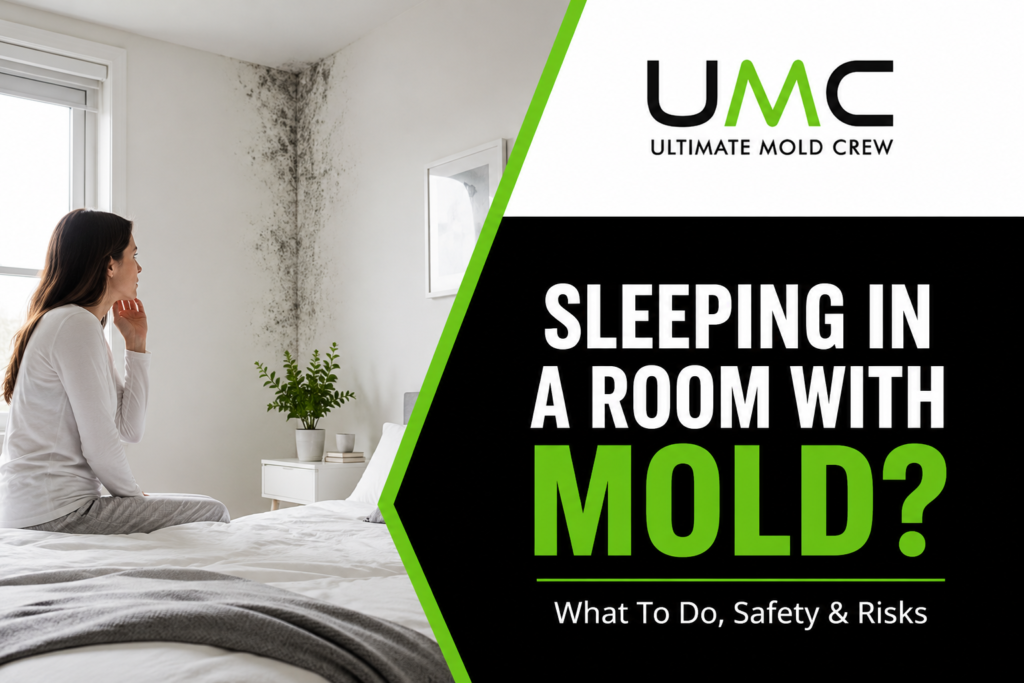
Is It Safe to Sleep in a Bedroom With Mold?
Sleeping in a room with visible mold or a persistent musty smell is not recommended. Spending several hours in the same room increases the time you breathe air from the affected space. This may irritate your eyes, nose or throat, trigger allergies, or worsen asthma.
The level of concern changes from one bedroom to another. A few spots of surface growth around a window create a different situation from mold spreading across drywall, behind a headboard or through a ventilation system. Your health, the amount of growth and the source of moisture all affect whether you should move to another room.
Health Canada does not set a “safe” indoor mold exposure limit because people respond differently. Children, seniors, people with asthma or severe allergies, and anyone with a weakened immune system may be more susceptible to the effects of dampness and mold.
If another clean and dry sleeping area is available, use it until you understand the extent of the problem.
Should I Sleep Somewhere Else Tonight?
Move to another room when the bedroom has widespread growth, a strong musty odour, wet building materials or worsening respiratory symptoms.
Temporary relocation becomes more important when:
- Mold is growing on or beside the mattress.
- Growth covers a wall, ceiling or several separate areas.
- Drywall, carpet, insulation or wood remains wet after a leak.
- The musty smell becomes stronger when the door or windows are closed.
- A child, older adult or person with asthma sleeps in the room.
- Air from the affected room circulates through a forced-air HVAC system.
- Mold returns soon after cleaning.
- The room was affected by flooding or contaminated water.
- Coughing, wheezing, congestion or eye irritation gets worse in the bedroom.
Leaving the bedroom reduces further exposure. It does not solve the moisture problem or prevent contaminated air from reaching nearby rooms. Close off the affected space when practical, avoid disturbing the growth and arrange an inspection when the source or extent remains unclear.
A person with severe breathing difficulty, chest tightness, blue lips or an asthma attack that does not respond to their prescribed medication needs urgent medical attention. Mold remediation professionals can assess a building, but they cannot diagnose symptoms or determine their medical cause.
Is One Night in a Moldy Room Dangerous?
One night does not produce the same outcome for every person. Some occupants notice no immediate symptoms. Others develop nasal congestion, irritated eyes, coughing or wheezing within a shorter period.
The absence of symptoms does not prove that the room is suitable for continued use. Mold may be growing inside the wall, beneath flooring or behind furniture while releasing particles into the occupied space. A musty smell can also remain the first noticeable clue.
Your decision should account for four conditions:
| Bedroom condition | More cautious response |
|---|---|
| A few spots around a window with no active leak | Use another room if available, then inspect the window, condensation and surrounding wall |
| Mold on drywall, carpet, pillows or a mattress | Stop using the affected area until the material can be assessed |
| Strong odour with no visible growth | Investigate for hidden moisture behind walls, under flooring or around the HVAC system |
| Widespread growth or symptoms that worsen indoors | Leave the room and arrange professional assessment |
| Recent sewage backup or contaminated floodwater | Keep occupants out and use qualified remediation help |
Why Mold in a Bedroom Deserves Prompt Attention
People often spend six to nine hours in a bedroom each night. The door may stay closed, windows may remain shut during Toronto winters, and furniture can restrict airflow along exterior walls. These conditions allow moisture to collect in places that receive little light or air movement.
Common bedroom moisture sources include:
- Condensation on cold windows and exterior walls
- A roof or plumbing leak above the ceiling
- Moisture entering around a window frame
- A humidifier operating too often
- Damp carpet or underpad after water damage
- Poor airflow behind beds, dressers and wardrobes
- An air conditioner that leaks or drains poorly
- Warm indoor air reaching an inadequately insulated surface
The visible patch is often only the symptom. The underlying moisture condition determines whether the growth stops, returns or spreads into surrounding materials.
Health Canada advises keeping indoor relative humidity between 30% and 50%, repairing leaks promptly and improving airflow around windows and heating vents. A small hygrometer can show whether bedroom humidity remains elevated, although a normal reading at one moment cannot rule out a concealed leak.
What Does Visible Mold in a Bedroom Mean?
Visible mold means moisture has supported fungal growth on a surface or within a material. It may appear as black, green, white, grey, brown or orange spots. Color alone does not identify the mold species or show how harmful the growth may be.
Look beyond the most obvious patch. Check:
- The wall behind the headboard
- The underside of the mattress and box spring
- Window frames, sills and drywall returns
- Baseboards and carpet edges
- Closets built against exterior walls
- The ceiling below a bathroom, roof or attic
- Supply vents and return-air grilles
Growth on washable glass or a sealed window frame may be easier to address than contamination inside drywall, carpet, ceiling tile, insulation or a mattress. Porous materials absorb moisture. Mold can extend below the visible surface, which makes wiping or spraying the top layer an incomplete remedy.
Avoid brushing, sanding or vacuuming visible growth with a standard household vacuum. These actions can disturb particles and spread contaminated dust around the bedroom.
Can a Musty Smell Mean Hidden Mold?
A persistent earthy or musty odour can indicate damp materials or hidden microbial growth, even when the room looks clean. The smell may become stronger after the bedroom has remained closed overnight or during humid weather.
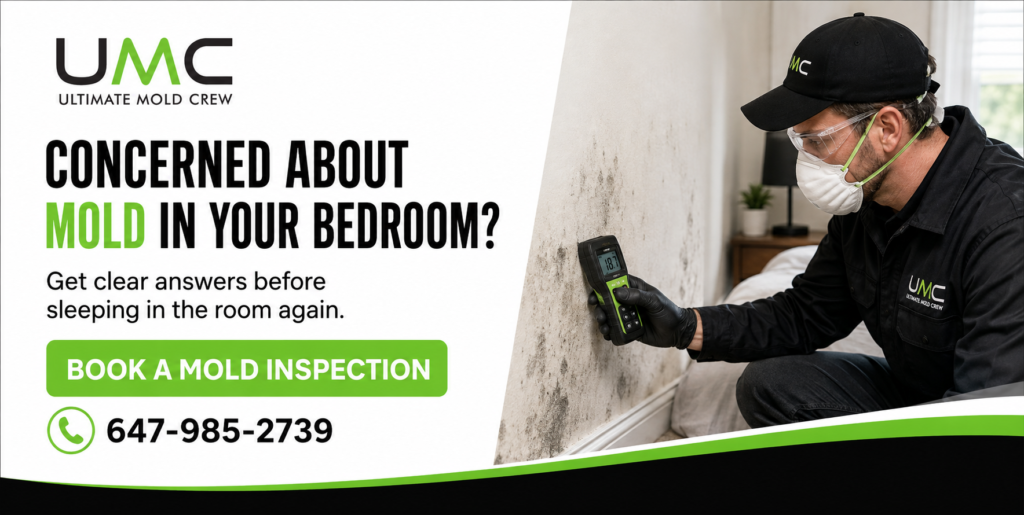
Follow the odour rather than masking it with an air freshener. Inspect areas around plumbing, windows, exterior walls, closets and ventilation openings. Moisture readings and a visual assessment may locate the source without immediately relying on air sampling.
Professional mold inspection in Toronto may be appropriate when the odour persists, materials feel damp, previous water damage was never opened or the suspected area sits inside a wall or ceiling.
Painting over the area or spraying fragrance into the room only hides a warning sign. Hidden moisture continues feeding growth until the leak, condensation or ventilation problem is corrected.
Is Bedroom Mold More Concerning for Children?
Children should not continue sleeping in a mold-affected bedroom when a clean alternative is available. Their lungs are still developing, and they breathe more air relative to their body size than adults.
Health Canada includes children among the groups that can be more susceptible to health effects in damp and moldy homes. Reported effects associated with indoor dampness and mold include:
- Eye, nose and throat irritation
- Coughing and mucus buildup
- Wheezing
- Shortness of breath
- Worsening asthma symptoms
- Allergic reactions in sensitive individuals
These symptoms have many possible causes. Their presence cannot confirm that mold is responsible. A healthcare professional should assess persistent coughing, wheezing, breathing changes or symptoms that disturb a child’s sleep.
Keep children away from mold cleanup and remediation areas. Removing drywall, lifting carpet or scrubbing dry growth can release dust and fungal particles into the air. The affected room should remain outside their play and sleeping space until cleanup is complete.
Should Someone With Asthma Sleep in a Room With Mold?
A person with asthma should avoid sleeping in a room with visible mold, an unexplained musty smell or active moisture damage. Indoor dampness and mold can worsen asthma symptoms in susceptible people, and disturbed growth may increase exposure to airborne particles.
Pay attention to changes that occur in the room:
- More frequent coughing at night
- Wheezing after going to bed
- Chest tightness
- Needing a reliever inhaler more often
- Waking because breathing feels difficult
- Symptoms improving after leaving the home
Follow the person’s asthma action plan and seek medical advice when symptoms change. Severe breathing difficulty or symptoms that do not respond to prescribed rescue medication require urgent care.
A portable air purifier may reduce some airborne particles, but it cannot remove mold growing inside building materials. Moisture correction and physical removal remain necessary.
Can Mold Spread Through a Bedroom HVAC System?
Mold near a supply vent does not automatically mean the ductwork is contaminated. The growth may come from condensation on the grille, a cold section of drywall or humid air reaching the vent surface.
The situation needs closer attention when:
- Mold appears inside the vent rather than around its outer edge.
- A musty smell becomes stronger when the furnace or air conditioner starts.
- Fibreglass duct liner or insulation looks wet or stained.
- Several rooms develop similar odours or visible growth.
- Water entered the air handler, return duct or nearby wall cavity.
- Mold keeps returning after the grille has been cleaned and dried.
A forced-air system moves air between rooms. If fungal growth reaches the duct liner, air handler or return-air pathway, operating the system may carry particles beyond the bedroom. The U.S. Environmental Protection Agency advises against running an HVAC system when mold contamination is known or suspected within the system.
Turning off the entire system may create other moisture, freezing or temperature problems during a Toronto winter or humid summer. A qualified HVAC or mold professional should assess the equipment when the source cannot be seen safely.
Cleaning the grille will not resolve growth inside wet insulation or porous duct material. The moisture source and each affected component need to be identified before deciding what can be cleaned and what needs replacement.
Will Closing the Bedroom Door Stop Mold From Spreading?
Closing the door can reduce movement between the bedroom and the rest of the home. It does not create proper containment.
Air can still move through:
- Supply and return vents
- Gaps beneath the door
- Shared wall and ceiling cavities
- Plumbing and electrical openings
- Stairwells and nearby hallways
- Clothing, bedding and items carried out of the room
Keep the room unoccupied when possible. Avoid carrying loose bedding or upholstered belongings through the home before you know whether they are affected.
Do not aim a fan out of the bedroom window as a casual solution. A fan can disturb visible growth or pull contaminated air through wall cavities. Fans used during professional remediation are placed according to a containment and pressure-control plan.
What Should You Do Before Sleeping Somewhere Else?
You can take a few immediate steps without disturbing the mold.
- Move occupants to a clean, dry room. Choose a space without visible growth, damp materials or a musty smell.
- Keep children and pets out of the bedroom. They may touch contaminated surfaces or disturb settled particles.
- Photograph the affected area. Record the growth, surrounding damage and possible water source before cleaning or moving furniture.
- Stop active water entry when it is safe. Shut off the relevant water supply for a plumbing leak. Place a container beneath a minor drip if this can be done without touching damaged ceilings or electrical fixtures.
- Check nearby materials. Look for wet carpet, swollen baseboards, peeling paint and staining around windows or ceilings. Do not open the wall yourself to investigate.
- Measure the room’s humidity. A hygrometer can reveal elevated relative humidity. Health Canada recommends maintaining indoor relative humidity between 30% and 50%.
- Avoid disturbing the affected surface. Scraping, brushing, sanding and using an ordinary vacuum can release contaminated dust.
- Arrange an assessment when the extent remains uncertain. This is especially important after repeated leaks, flooding, recurring growth or a persistent odour with no visible source.
Air fresheners, scented sprays and candles can hide the smell for a short period. They offer no information about where the moisture entered or how far the growth extends.
Should You Remove Bedding, Clothing and the Mattress?
Clean belongings should remain away from visible mold and active water damage. Their condition will determine whether they can be washed, HEPA-vacuumed, professionally cleaned or discarded.
Bedding and washable clothing
Items without visible mold can often be laundered according to their care labels. Dry them fully before placing them in a clean room. Bagging affected laundry before moving it through the home can limit the spread of loose particles.
Pillows and upholstered items
Pillows, fabric headboards and upholstered furniture contain porous filling. Visible growth or a persistent musty smell can be difficult to remove throughout the material. Surface wiping may leave contamination inside foam, batting or fabric layers.
Mattresses
A mattress with visible mold, water saturation or an odour coming from within should be assessed carefully. Its layered construction makes complete cleaning difficult. Sleeping on the opposite side or covering the affected area does not correct the problem.
A clean mattress may still pick up dust if drywall or carpet is removed nearby without containment. Move or protect bedroom contents before demolition begins, based on the remediation plan.
Can You Clean a Small Patch and Sleep in the Room Again?
A small patch on a washable, non-porous surface may be suitable for careful household cleaning. The room should remain dry, and the moisture source must be corrected.
Health Canada classifies a small amount as one to three patches, with each patch measuring less than 1 square metre. Its mold cleanup guidance recommends professional mold removal in Toronto for extensive growth and assessment for more complicated conditions.
Patch size alone does not settle the decision. A small visible mark may sit in front of a larger wet cavity. Professional assessment makes sense when:
- The drywall feels soft or swollen.
- Water entered from above or behind the wall.
- Growth returns after cleaning.
- The room smells musty after the visible patch is gone.
- Several surfaces are affected.
- The mold reaches carpet, insulation or a mattress.
- The bedroom was exposed to sewage or contaminated floodwater.
- An occupant has asthma, severe allergies or a weakened immune system.
- The source may involve the HVAC system.
- Cleanup would require removing drywall, flooring or ceiling material.
For a genuinely small patch on glass, metal or another washable surface, wear gloves, eye protection and a well-fitting mask. Clean the area with unscented soap and water, then dry it completely. Health Canada states that bleach is not needed for routine household mold cleanup.
Do not paint or caulk over active growth. A finished-looking surface can conceal damp material and delay the repair that the room needs.
When Does Bedroom Mold Require Professional Removal?
Professional remediation becomes appropriate when the work needs containment, controlled demolition, specialized air filtration or access to concealed building materials.
The affected area may extend beyond what can be seen from the bed. A professional mold assessment looks at the visible growth, moisture pattern, material condition and possible pathways into adjoining spaces.
A bedroom remediation plan may include:
- Locating and correcting the moisture source
- Protecting floors and clean belongings
- Isolating the work area from occupied spaces
- Controlling airflow during material removal
- Removing contaminated drywall, insulation or carpet
- HEPA-vacuuming and detailed surface cleaning
- Drying framing and surrounding materials
- Checking the work area before reconstruction
Mold testing is not required every time visible growth is present. Inspection and moisture tracing may provide enough information to plan straightforward removal.
Testing becomes more useful when growth is hidden, the source remains uncertain, occupants need documented findings or post-remediation verification forms part of the project. Our guide to mold testing in Toronto explains where air and surface sampling may fit into an investigation.
Do You Have to Leave the Home During Bedroom Mold Removal?
Many contained bedroom projects do not require every occupant to leave the entire home. The decision depends on the work area, access route, demolition, HVAC layout and health of the people living there.
Sleeping elsewhere becomes more sensible when:
- The bedroom is the only practical sleeping area.
- Workers must carry contaminated material through occupied rooms.
- The project involves extensive drywall, ceiling or flooring removal.
- Containment blocks access to a bathroom or essential hallway.
- Mold affects more than one room.
- The ventilation system may be contaminated.
- A baby, older adult or medically vulnerable person lives in the home.
- Noise, equipment or odours will make the space unsuitable overnight.
Ask the local mold remediation contractor which rooms will remain accessible, how debris will leave the property and when the containment will be removed. A household with young children may need a more cautious occupancy plan than adults living in a home with a separate floor and sleeping area.
When Is It Safe to Sleep in the Bedroom Again?
Return after the moisture source has been corrected, affected materials have been cleaned or removed and the bedroom is dry.
Before using the room again, confirm that:
- Visible mold and contaminated debris are gone.
- The leak, condensation or humidity problem has been corrected.
- Drywall, framing, carpet and other retained materials are dry.
- Dust from removal has been cleaned.
- The room has no persistent musty odour.
- HVAC openings used during the project are clean and restored.
- Containment has been removed according to the work plan.
- Rebuilt walls or flooring are installed only after drying is confirmed.
A room can look clean while moisture remains inside a wall or beneath carpet. Moisture readings provide better evidence than touch alone.
Post-remediation air sampling is not necessary after every small project. It may be valuable after extensive contamination, HVAC involvement or work in a home with medically sensitive occupants. Visual inspection, moisture verification and confirmation that the work scope was completed remain central parts of clearance.
How Can You Prevent Mold From Returning to the Bedroom?
Prevention starts with the surface that became wet.
For window condensation, improve airflow and keep furniture or heavy curtains from trapping moisture against cold glass. Wipe condensation promptly and inspect caulking, seals and the surrounding drywall.
Leave a small gap between large furniture and cold exterior walls. This allows room air to reach the surface and makes early staining easier to see.
Use a humidifier only when indoor air is dry. Clean its reservoir regularly and monitor humidity with a hygrometer. A humidifier running overnight can raise moisture around windows, exterior corners and closets.
Bathroom moisture may reach a nearby bedroom when the exhaust fan is weak, dirty or vented incorrectly. Run the fan during showers and long enough afterward to clear the humidity. The fan should exhaust outdoors.
Roof, window and plumbing leaks need repair at their source. Repainting a stain after each storm leaves the wall cavity exposed to repeated wetting.
Check the bedroom again after heavy rain, a rapid winter thaw or the first sustained use of air conditioning. Those conditions can reveal leaks and condensation patterns that stay hidden during dry weather.
Frequently Asked Questions
How long can you safely sleep in a room with mold?
There is no established number of safe nights in a mold-affected bedroom. Risk varies with the amount of growth, moisture source, ventilation and occupant health. Use a clean sleeping area until the mold and underlying moisture problem have been addressed.
Can opening a window make a moldy bedroom safe?
Opening a window may lower humidity when outdoor air is dry. It cannot remove mold from drywall, carpet, furniture or wall cavities. During humid weather, an open window may introduce more moisture and make indoor conditions worse.
Can an air purifier make it safe to sleep in the room?
A HEPA air purifier may capture some airborne particles. It cannot remove growth from building materials or repair the water problem feeding it. The EPA confirms that portable air cleaners do not resolve mold and moisture problems.
Can you sleep in a room after cleaning mold?
You can return after a small surface problem has been cleaned, the source has been corrected and the area is fully dry. Wait for professional clearance when cleanup involved widespread growth, porous materials, containment, demolition or suspected HVAC contamination.
Does black mold mean you must leave immediately?
Colour does not determine the level of risk or the required cleanup method. Any visible indoor mold deserves attention. Leave the room promptly when growth is extensive, materials remain wet, breathing symptoms worsen or a vulnerable person uses the bedroom.
Get Clear Answers About Mold in Your Bedroom
A musty smell behind a wall, recurring growth near a window and mold after a roof leak require different solutions. The useful first step is finding where the moisture came from and which materials it reached.
Ultimate Mold Crew provides mold inspection and removal in Toronto for visible, hidden and recurring bedroom mold. Call 647-985-2739 to discuss what you found and whether the room needs an inspection, testing or professional remediation
